.svg)
.svg)

.svg)


ترجمه مقاله یک سنتز ادبیات موجود در مورد اثربخشی حسابرسی داخلی تجربی با اشاره به فرصت های جدید تحقیق - نشریه امرالد

عنوان فارسی
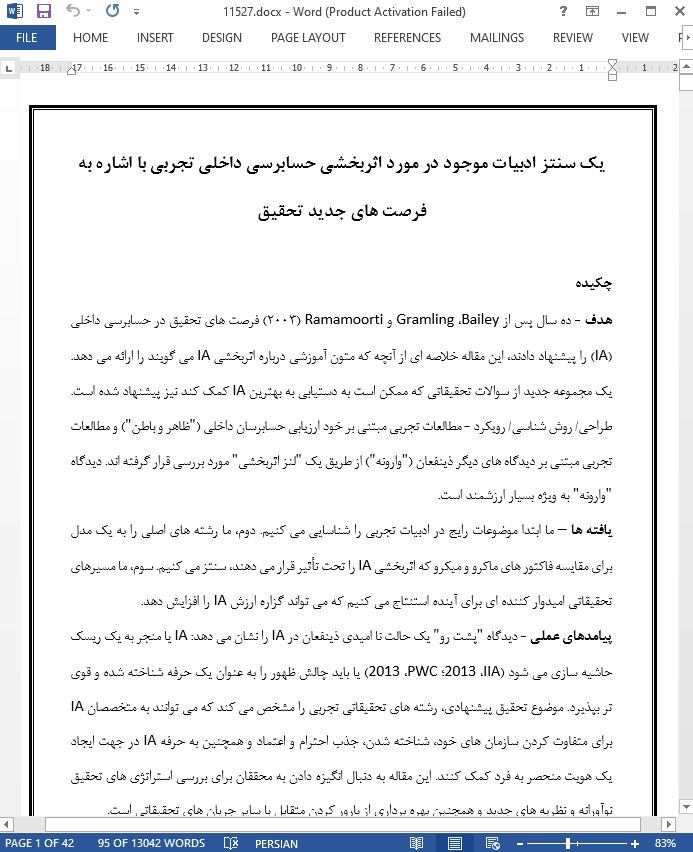
یک سنتز ادبیات موجود در مورد اثربخشی حسابرسی داخلی تجربی با اشاره به فرصت های جدید تحقیق
عنوان انگلیسی
A synthesis of empirical internal audit effectiveness literature pointing to new research opportunities
صفحات مقاله فارسی
42
صفحات مقاله انگلیسی
43
سال انتشار
2015
رفرنس
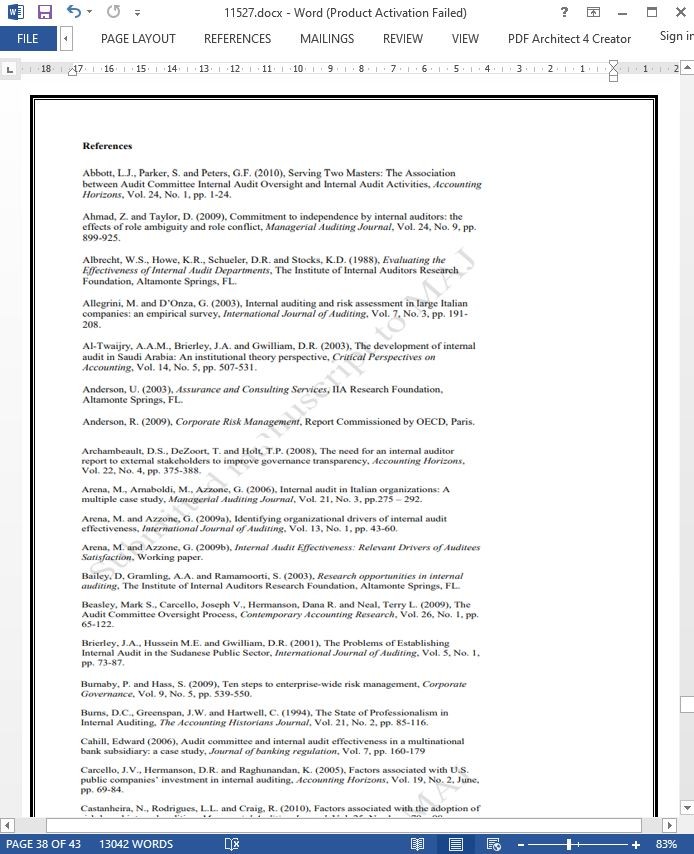
دارای رفرنس در داخل متن و انتهای مقاله
سایز ترجمه مقاله
14
فرمت ترجمه مقاله
pdf و ورد تایپ شده با قابلیت ویرایش
فرمت مقاله انگلیسی
pdf و ورد تایپ شده با قابلیت ویرایش
فونت ترجمه مقاله
بی نازنین
نشریه
امرالد - Emerald
نوع ارائه مقاله
ژورنال
نوع مقاله
ISI
نوع نگارش
مقالات مفهومی
ایمپکت فاکتور(IF) مجله
2.390 در سال 2020
شاخص H_index مجله
52 در سال 2021
شاخص Q یا Quartile (چارک)
Q2 در سال 2020
شاخص SJR مجله
0.468 در سال 2020
شناسه ISSN مجله
1986-2020
کد محصول
11527
بیس
نیست ☓
پرسشنامه
ندارد ☓
رفرنس در ترجمه
در انتهای مقاله درج شده است
ضمیمه
ندارد ☓
متغیر
ندارد ☓
مدل مفهومی
ندارد ☓
وضعیت ترجمه عناوین تصاویر و جداول
ترجمه شده است ✓
وضعیت ترجمه متون داخل تصاویر و جداول
ترجمه شده است ✓
وضعیت ترجمه منابع داخل متن
ترجمه نشده است ☓
doi یا شناسه دیجیتال
https://doi.org/10.1108/MAJ-08-2014-1072
دانشگاه
دانشکده مدیریت لوون، دانشگاه کاتولیک لوین، لووین لا نوو (بلژیک)
رشته و گرایش های مرتبط با این مقاله
حسابداری، حسابداری مدیریت و حسابرسی
کلمات کلیدی
حسابرسی داخلی، اثربخشی، تثبیت موقعیت، ارتباط، حرفه، رابطه، هیئت مدیره، ذی نفع، فرصت های تحقیقاتی جدید
کلمات کلیدی انگلیسی
Internal audit - effectiveness - positioning - relevance - profession - relationship - board - stakeholder - new research opportunities
۰.۰
(هنوز امتیازی ثبت نشده است)