Abstract
Objective: The purpose of this trial was to appraise the effects of preeclampsia and its intensity on maternal serum neutrophil gelatinase-associated lipocalin (NGAL) and kidney injury molecule-1 (KIM-1) levels during pregnancy and the post-pregnancy period.
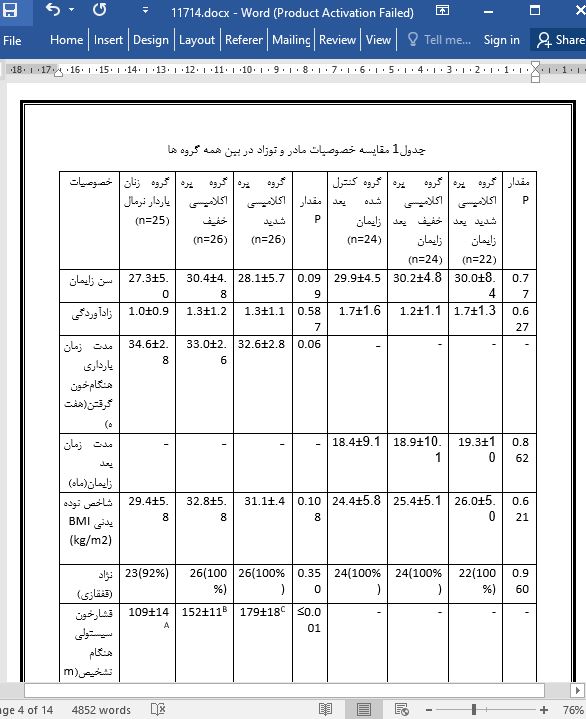
Study design: Firstly pregnant participants (n = 156) were separated into three groups, as control, mild, and severe preeclampsia. Secondly women in post-pregnancy period (n = 368) were separated into three groups according to history of pregnancy, as healthy control, mild, and severe preeclampsia. These women were identified through the hospital data system and contacted by telephone to participate in the study.
Results: Our study comprised 147 patients, 77 of whom were pregnant and 70 of whom were in their postpregnancy period after the exclusion criteria had been applied. In terms of maternal serum NGAL levels, there is a significant increase in the severe preeclampsia group compared with that in the mild preeclampsia and normal pregnancy groups (p < 0.001). During the post-pregnancy period, the maternal serum NGAL levels were found significantly higher in the severe preeclampsia group than in the mild preeclampsia group and non-hypertension control group (p < 0.001). Maternal serum KIM-1 levels were found as significantly higher in the severe and mild preeclampsia groups than in the non-hypertension pregnancy group (p = 0.004). During the post-pregnancy period, maternal serum KIM-1 levels were found as similar among all post pregnant groups (p = 0.792).
Conclusions: Our results indicated that as the severity of preeclampsia increases, kidney damage as assessed using NGAL levels continues for a long period of time, even during the post-pregnancy period.
Introduction
Preeclampsia, which launches in the placenta at first and then affects all mother body and her baby, is a pregnancy disorder and is seen at about 5% frequency in the world [1]. One of the most important morbidity and mortality factors in terms of mother and her baby is the preeclampsia, in spite of the advances in modern medicine [2]. It remains unknown how preeclampsia occurs, but asymptomatic clinical signs may lead to the deterioration of several organs [3]. Edema, ischemia, endothelial dysfunction, and vasospasm, which affect all organs, are consistent with preeclampsia [3].
Study limitations
There were both limitations and strengths to our study. Although the sample size was determined by conducting a power analysis, the small size of the sample used in our study was considered to be a limitation. Absence of urinary KIM-1 and NGAL levels can be another limitation of study. It would have been better to fo the post-pregnancy period for a longer period of time to determine the recovery time of kidney damage.
One aim of the study was to determine whether there were lingering effects of preeclampsia in the post-pregnancy women but using separate groups of women pregnancy and post-pregnancy introduces much inter-individual variation between the pre and post groups. A much stronger design would be to recruit the three groups during pregnancy then to re-contact these women 6–12 months after delivery of their child; however, we wanted to show the effect of preeclampsia in a longer period of time, and especially for this purpose, we wanted to show it with the participants who do not have pregnancy again after pregnancy complicated by preeclampsia and were not complicated by a disease affecting the kidney. For a longer and broader study, we could not guarantee that pregnant women in the preeclampsia group would not conceive again and would not be complicated by a disease affecting the krmine the recovery time of kidney damage.