Abstract
Funding multi-institution centers of research excellence (CREs) has become a common means of supporting collaborative partnerships to address specific research topics. However, there is little guidance for those planning or managing a multi-institution CRE, which faces specific challenges not faced by single-institution research centers. We conducted qualitative research to identify the challenges faced by an Australian program of multiinstitution CREs with a view to identifying lessons for the future. This paper describes two of the most significant challenges: administrative complexity and investigator engagement. Administrative tasks (e.g.: establishing partner contracts and recruitment) were significantly more complex and time-consuming in the multi-institution CREs than single-institution research centers. Investigator engagement was hampered by a range of factors, including differing expectations within the investigator team and between the team and the funding body in relation to investigator roles as well as investigator capacity. We conclude with a discussion of key strategies that cut across the challenges: 1) early planning, 2) communication and 3) management capacity.
Introduction
A range of collaborative models is increasingly used in the research field because of the benefits collaboration can provide (Bozeman & Boardman, 2003; Jones, Wuchty, & Uzzi, 2008; van Rijnsoever & Hessels, 2011; Wuchty, Jones, & Uzzi, 2007). The model might include researchers and people or organizations that might use or be affected by the research (e.g. communities, policy makers, health providers). In such cases, collaboration aims to increase the appropriateness and feasibility of research, and to increase the likelihood that the research will be implemented (Edelstein, 2015). The model might include researchers that differ in some way to each other, for example, in disciplinary background, research experience and/or location. This can provide interdisciplinary perspectives to complex problems, broaden the geographic spread of data collection sites and networks, and increase the range and depth of research experience brought to the project (Bindler, Richardson, Daratha, & Wordell, 2012; Wagner et al., 2011).
Conclusion
This study highlighted some of the highly demanding and unusual challenges that can be encountered during the establishment and management of a CRE.
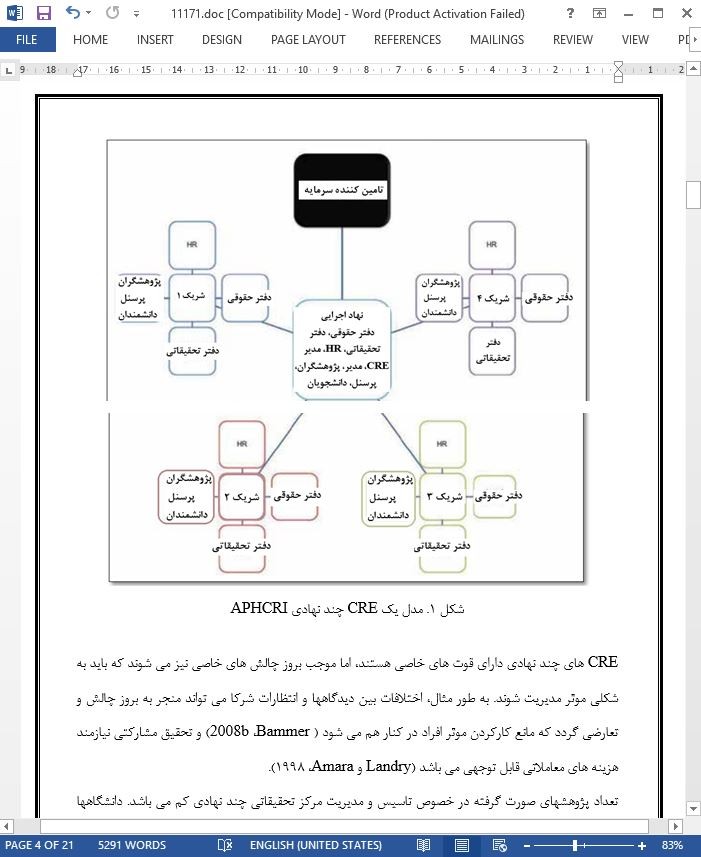
Many of the challenges stemmed from the requirement to accommodate the needs of multiple investigators, in multiple institutions that were spread across multiple sites, and to build relationships and a ‘sense of team’ within a complex organizational structure. Early planning, appropriate communication methods, and effective management of resources are necessary for the successful operation of CREs in terms of efficiency, building commitment to the CRE, and getting true value from the investigators and institutions involved.
Further research could explore investigators perceptions and expectations of their role, approaches to increase investigator engagement in the CRE, and ways to structure investigator responsibilities that complement their career priorities.