.svg)
.svg)

.svg)


ترجمه مقاله تشخیص استرس ذهنی با استفاده از حسگرهای فیزیولوژیک پوشیدنی - نشریه IEEE

عنوان فارسی
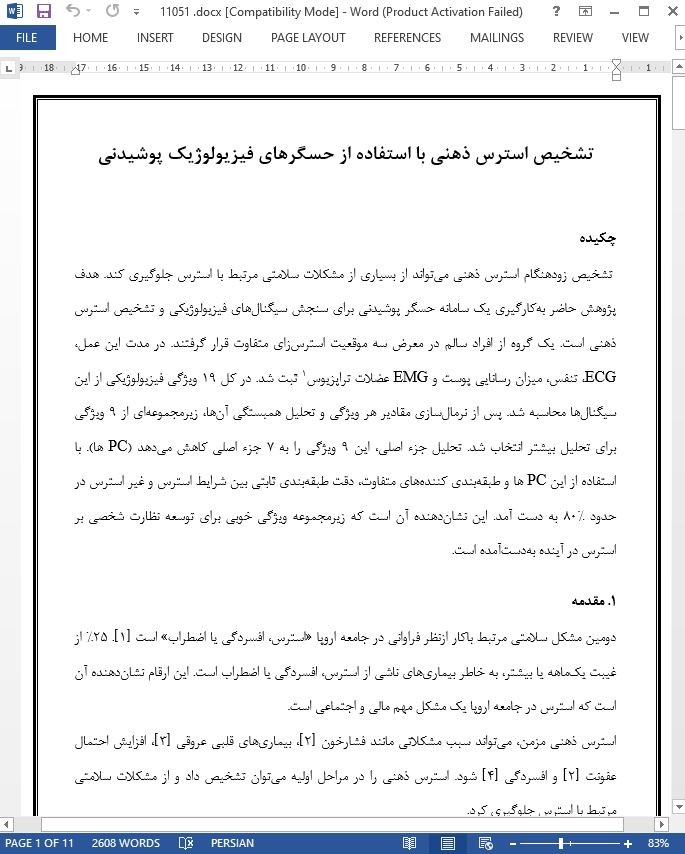
تشخیص استرس ذهنی با استفاده از حسگرهای فیزیولوژیک پوشیدنی
عنوان انگلیسی
Towards Mental Stress Detection Using Wearable Physiological Sensors
صفحات مقاله فارسی
11
صفحات مقاله انگلیسی
4
سال انتشار
2011
رفرنس
دارای رفرنس در داخل متن و انتهای مقاله
نشریه
آی تریپل ای - IEEE
فرمت مقاله انگلیسی
pdf و ورد تایپ شده با قابلیت ویرایش
فرمت ترجمه مقاله
pdf و ورد تایپ شده با قابلیت ویرایش
فونت ترجمه مقاله
بی نازنین
سایز ترجمه مقاله
14
نوع مقاله
ISI
نوع ارائه مقاله
کنفرانس
شناسه ISSN مجله
1094-687X
کد محصول
11051
وضعیت ترجمه عناوین تصاویر و جداول
ترجمه شده است ✓
وضعیت ترجمه متون داخل تصاویر و جداول
ترجمه شده است ✓
وضعیت ترجمه منابع داخل متن
به صورت عدد درج شده است ✓
ضمیمه
ندارد ☓
بیس
نیست ☓
مدل مفهومی
ندارد ☓
پرسشنامه
ندارد ☓
متغیر
دارد ✓
رفرنس در ترجمه
در انتهای مقاله درج شده است
رشته و گرایش های مرتبط با این مقاله
مهندسی پزشکی، فناوری اطلاعات و فناوری اطلاعات و ارتباطات، بیومکانیک، سیستم چندرسانه ای، کاربردهای ICT
کنفرانس
کنفرانس بین المللی سالانه مهندسی IEEE در پزشکی و جامعه زیست شناسی - Annual International Conference of the IEEE Engineering in Medicine and Biology Society
دانشگاه
دانشکده مهندسی برق، ریاضیات و علوم کامپیوتر، دانشگاه Twente، هلند
doi یا شناسه دیجیتال
https://doi.org/10.1016/j.procs.2017.08.328
۰.۰
(هنوز امتیازی ثبت نشده است)