.svg)
.svg)

.svg)


ترجمه مقاله جذب سرمایه حوزه آبزی پروری و نمونه های هدف آبزی پروری دریایی - نشریه الزویر

عنوان فارسی
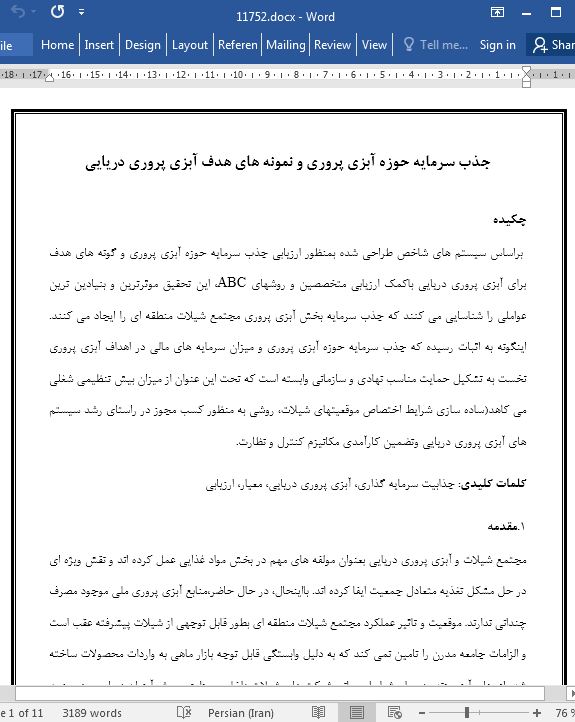
جذب سرمایه حوزه آبزی پروری و نمونه های هدف آبزی پروری دریایی
عنوان انگلیسی
Investment Attractiveness of the Area for Marine Farming and Marine Aquaculture Target Species
صفحات مقاله فارسی
11
صفحات مقاله انگلیسی
8
سال انتشار
2021
رفرنس
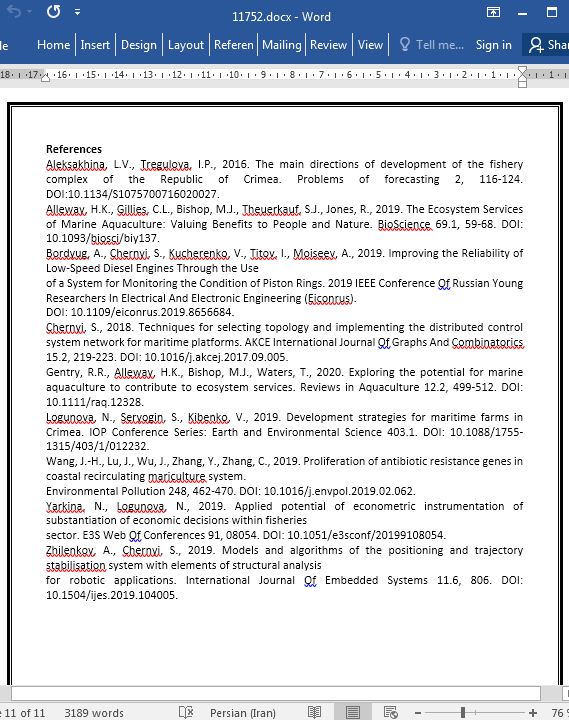
دارای رفرنس در داخل متن و انتهای مقاله
نشریه
الزویر - Elsevier
فرمت مقاله انگلیسی
pdf و ورد تایپ شده با قابلیت ویرایش
فرمت ترجمه مقاله
pdf و ورد تایپ شده با قابلیت ویرایش
فونت ترجمه مقاله
بی نازنین
سایز ترجمه مقاله
14
نوع مقاله
ISI
نوع نگارش
مقالات پژوهشی (تحقیقاتی)
نوع ارائه مقاله
ژورنال
ایمپکت فاکتور(IF) مجله
1.285 در سال 2020
شاخص H_index مجله
25 در سال 2021
شاخص SJR مجله
0.476 در سال 2020
شناسه ISSN مجله
2352-1465
کد محصول
11752
وضعیت ترجمه عناوین تصاویر و جداول
ترجمه شده است ✓
وضعیت ترجمه متون داخل تصاویر و جداول
ترجمه شده است ✓
وضعیت ترجمه منابع داخل متن
به صورت عدد درج شده است ✓
ضمیمه
ندارد ☓
بیس
نیست ☓
مدل مفهومی
ندارد ☓
پرسشنامه
ندارد ☓
متغیر
ندارد ☓
رفرنس در ترجمه
در انتهای مقاله درج شده است
رشته و گرایش های مرتبط با این مقاله
کشاورزی، منابع طبیعی، اقتصاد منابع طبیعی و محیط زیست، آبزی پروری، شیلات
مجله
پروسدیا پژوهش حمل و نقل - Transportation Research Procedia
دانشگاه
دانشگاه فناوری دریایی دولتی کرچ ، روسیه
کلمات کلیدی
جذابیت سرمایه گذاری، آبزی پروری دریایی، معیار، ارزیابی
کلمات کلیدی انگلیسی
Investment Attractiveness - Marine Aquaculture - Criteria - Assessment
doi یا شناسه دیجیتال
https://doi.org/10.1016/j.trpro.2021.02.051
۰.۰
(هنوز امتیازی ثبت نشده است)