.svg)
.svg)

.svg)


ترجمه مقاله دیدگاه های جدید در مورد شیگلا - نشریه LWW

عنوان فارسی
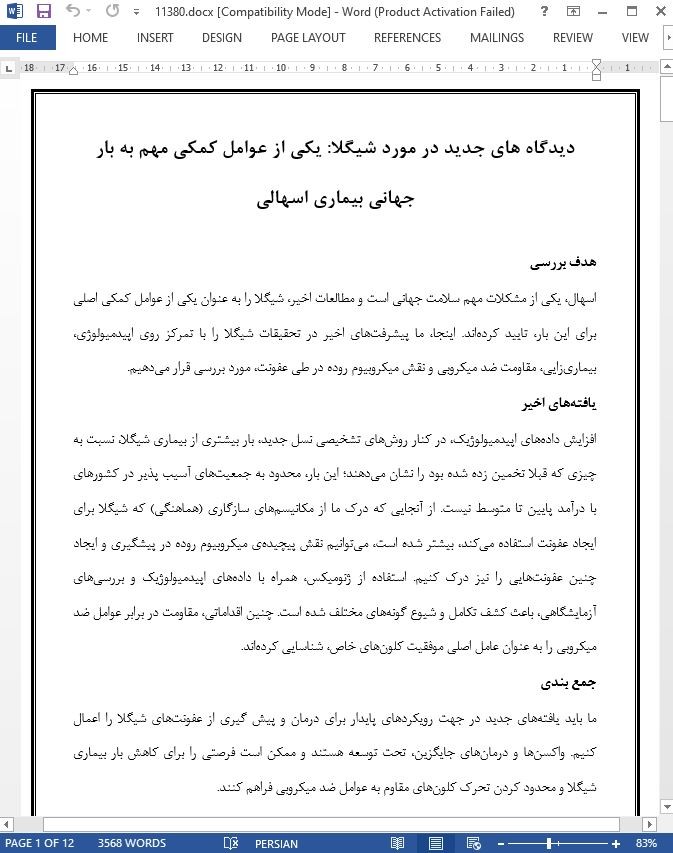
دیدگاه های جدید در مورد شیگلا: یکی از عوامل کمکی مهم به بار جهانی بیماری اسهالی
عنوان انگلیسی
Recent insights into Shigella: a major contributor to the global diarrhoeal disease burden
صفحات مقاله فارسی
12
صفحات مقاله انگلیسی
6
سال انتشار
2018
رفرنس
دارای رفرنس در داخل متن و انتهای مقاله
نشریه
LWW - wolter skluwer
فرمت مقاله انگلیسی
pdf و ورد تایپ شده با قابلیت ویرایش
فرمت ترجمه مقاله
pdf و ورد تایپ شده با قابلیت ویرایش
فونت ترجمه مقاله
بی نازنین
سایز ترجمه مقاله
14
نوع مقاله
ISI
نوع نگارش
مقاله مروری (Review Article)
پایگاه
اسکوپوس
ایمپکت فاکتور(IF) مجله
4.733 در سال 2019
شاخص H_index مجله
99 در سال 2020
شاخص SJR مجله
1.759 در سال 2019
شناسه ISSN مجله
0951-7375
شاخص Q یا Quartile (چارک)
Q1 در سال 2019
کد محصول
11380
وضعیت ترجمه منابع داخل متن
به صورت عدد درج شده است ✓
ضمیمه
ندارد ☓
بیس
یست ☓
مدل مفهومی
ندارد ☓
پرسشنامه
ندارد ☓
متغیر
ندارد ☓
رفرنس در ترجمه
در انتهای مقاله درج شده است
رشته و گرایش های مرتبط با این مقاله
پزشکی، بیماری های عفونی و گرمسیری، پزشکی داخلی
مجله
نظریه فعلی در بیماریهای عفونی - Current Opinion in Infectious Diseases
دانشگاه
بیمارستان بیماری های گرمسیری، واحد تحقیقات بالینی دانشگاه آکسفورد، ویتنام
کلمات کلیدی
بیماری اسهالی، اپیدمیولوژی، بیماری زایی ژنومیکس، شیگلا
کلمات کلیدی انگلیسی
diarrhoeal disease - epidemiology - genomics pathogenesis - Shigella
doi یا شناسه دیجیتال
https://doi.org/10.1097/qco.0000000000000475
۰.۰
(هنوز امتیازی ثبت نشده است)