objective: To compare the effects of green foam with black foam and gauze during negative pressure wound therapy (npWT), with regard to wound bed appearance and granulation tissue formation, and monitoring of wound exudate.
Method: Wounds on the backs of eight pigs underwent 72 hours of npWT plus either green polyurethane foam with an open pore structure, black polyurethane foam with an open pore structure or saline-moistened amd gauze. sections of biopsies from the wound bed, including the overlying dressing, were examined histologically with regard to microdeformation of the wound bed and granulation tissue formation. The force required to remove the wound fillers was measured.
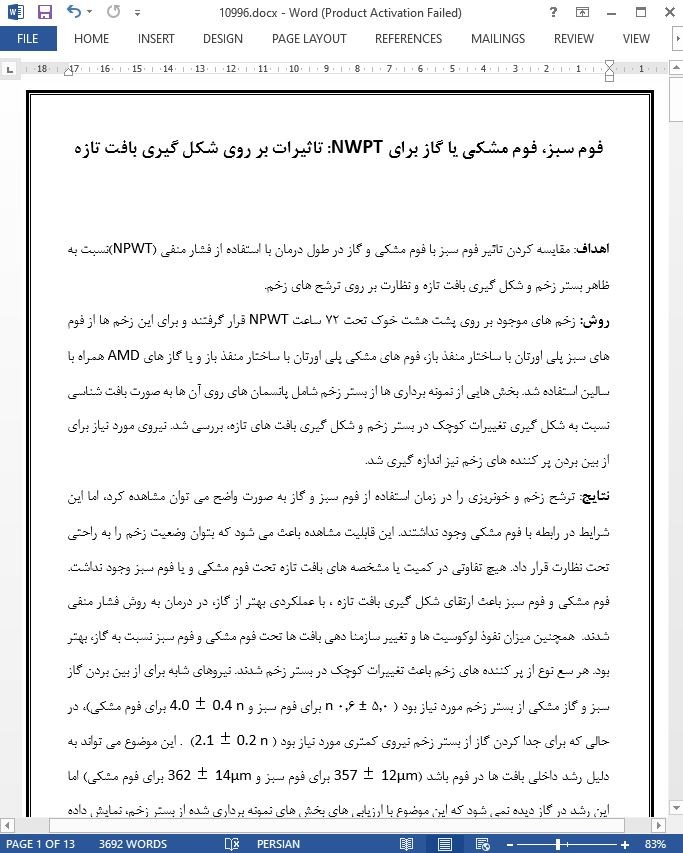
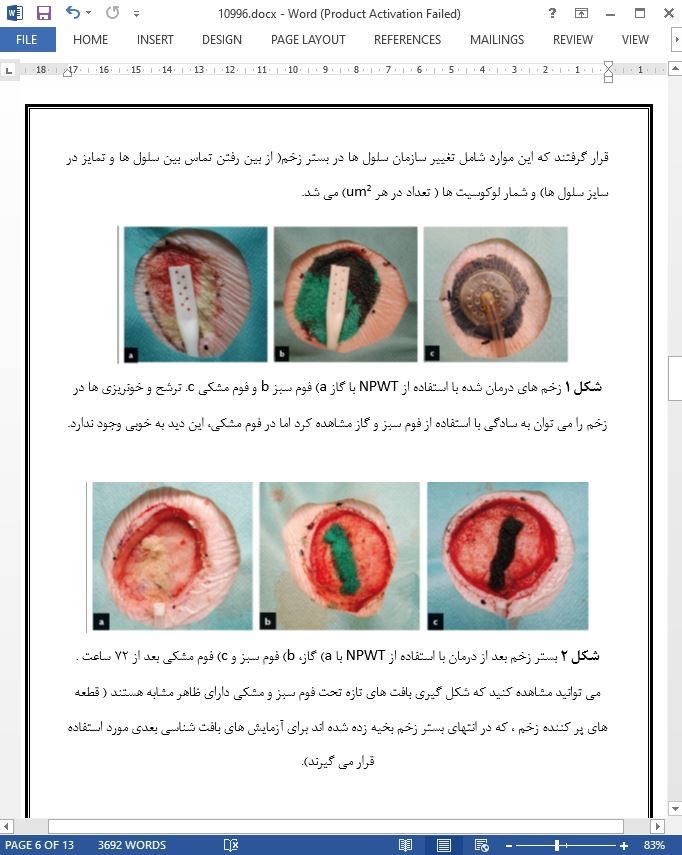
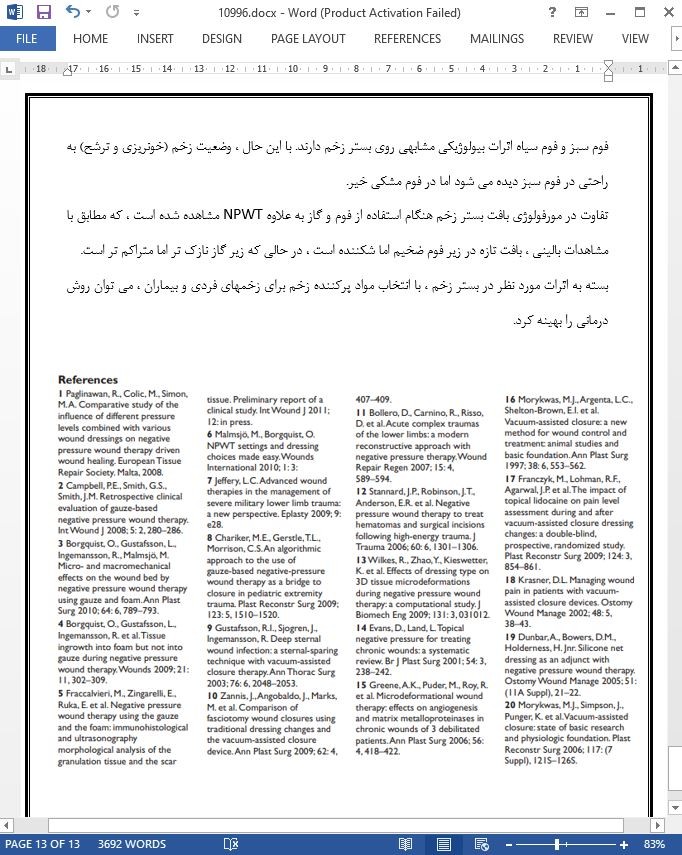
results: Wound exudate and bleeding could be easily seen when using gauze and green foam, but were not visible under the black foam. such visibility facilitates monitoring of the wound status. no difference was found in the quantity or characteristics of the granulation tissue formed under the green foam or black foam. Both green foam and black foam resulted in more pronounced granulation tissue formation than gauze under negative pressure. There was also more leucocyte infiltration and tissue disorganisation under green foam and black foam than under gauze. all three wound fillers created microdeformation within the wound bed surface. similar forces were required to remove green foam and black foam (5.0 ± 0.6 n for green foam and 4.0 ± 0.4 n for black foam), while less force was needed for gauze (2.1 ± 0.2 n). This may be a result of tissue ingrowth into the foam (357 ± 12µm for green foam and 362 ± 14µm for black foam), but not into gauze (0µm), as shown by examination of biopsy sections from the wound bed.
conclusion: Green foam and black foam have similar biological effects on the wound bed. Bleeding and exudate can be more easily monitored when using green foam or gauze. differences in the wound bed tissue morphology when using foam or gauze plus npWT support clinical observations that granulation tissue under foam is thick but fragile, whereas that under foam is thinner but denser.
The purpose of the wound filler in negative pressure wound therapy (NPWT) is to transfer and distribute pressure over the wound bed. The most frequently used wound fillers are black polyurethane foam and gauze. Paglinawan et al. demonstrated that both gauze and foam increased granulation tissue formation,1 while Campbell et al. found they have similar healing rates.2 However, studies are now emerging which indicate that the amount and character of granulation tissue formed may differ between the two dressing fillers: foam produces thick granulation tissue,3-5 whereas gauze produces thinner but denser granulation tissue.3,4 This means that the choice of wound filler may be tailored to the individual wound for optimal effects.6
Conclusion
Green foam and black foam have similar biological effects on the wound bed. However, the wound status (bleeding and exudate) can easily be monitored with green foam, but not with black foam.
Differences were observed in the morphology of the wound bed tissue when using foam and gauze plus NPWT, which is in accordance with clinical observations that granulation tissue under foam is thick but fragile, whereas that under gauze is thinner but denser.
Treatment of the patient can be optimised by choosing the appropriate wound filler material for individual wounds and patients, depending on the desired effects in the wound bed.