.svg)
.svg)

.svg)


ترجمه مقاله آیا تجزیه و تحلیل صورت های مالی می تواند پیشنهادهای توافقی تحلیل گران را کاهش دهد؟ - نشریه اشپرینگر

عنوان فارسی
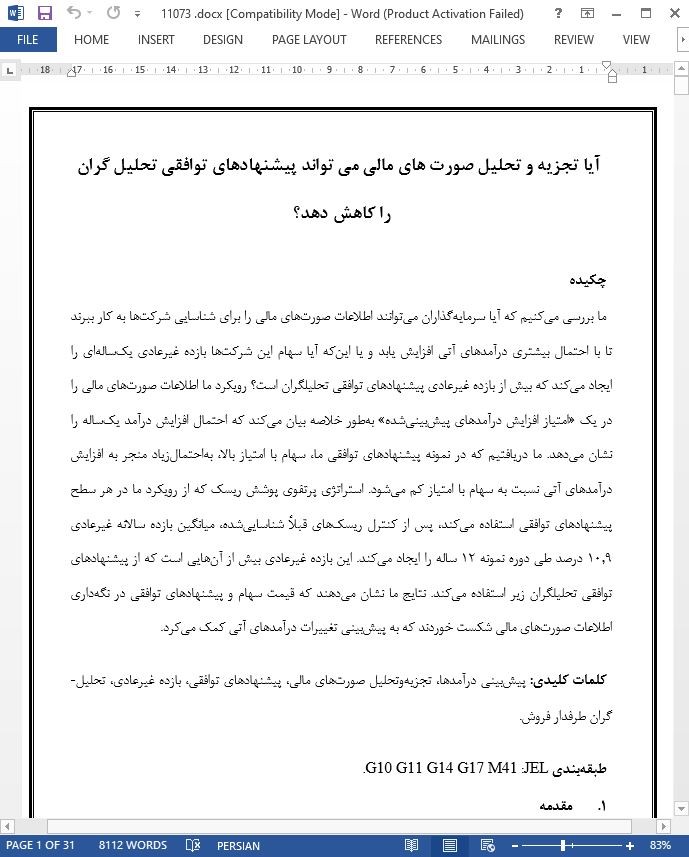
آیا تجزیه و تحلیل صورت های مالی می تواند پیشنهادهای توافقی تحلیل گران را کاهش دهد؟
عنوان انگلیسی
Can financial statement analysis beat consensus analysts’ recommendations?
صفحات مقاله فارسی
31
صفحات مقاله انگلیسی
27
سال انتشار
2010
رفرنس
دارای رفرنس در داخل متن و انتهای مقاله
نشریه
اشپرینگر - Springer
فرمت مقاله انگلیسی
pdf و ورد تایپ شده با قابلیت ویرایش
فرمت ترجمه مقاله
pdf و ورد تایپ شده با قابلیت ویرایش
فونت ترجمه مقاله
بی نازنین
سایز ترجمه مقاله
14
نوع مقاله
ISI
نوع ارائه مقاله
ژورنال
پایگاه
اسکوپوس
ایمپکت فاکتور(IF) مجله
3.232 در سال 2019
شاخص H_index مجله
67 در سال 2020
شاخص SJR مجله
3.473 در سال 2019
شناسه ISSN مجله
1380-6653
شاخص Q یا Quartile (چارک)
Q1 در سال 2019
کد محصول
11073
وضعیت ترجمه منابع داخل متن
ترجمه شده است ✓
ضمیمه
ندارد ☓
بیس
نیست ☓
مدل مفهومی
ندارد ☓
پرسشنامه
ندارد ☓
متغیر
دارد ✓
رفرنس در ترجمه
در انتهای مقاله درج شده است
رشته های مرتبط با این مقاله
حسابداری
گرایش های مرتبط با این مقاله
حسابرسی، حسابداری مالی
مجله
بررسی مطالعات حسابداری - Review of Accounting Studies
دانشگاه
دانشکده بازرگانی کلی، دانشگاه ایندیانا، ایالات متحده آمریکا
کلمات کلیدی
پیش بینی درآمدها، تجزیه و تحلیل صورتهای مالی، پیشنهادهای توافقی، بازده غیرعادی، تحلیل گران طرفدار فروش
کلمات کلیدی انگلیسی
Earnings predictions - Financial statement analysis - Consensus recommendations - Abnormal returns - Sell side analysts
doi یا شناسه دیجیتال
https://doi.org/10.1007/s11142-010-9124-5
۰.۰
(هنوز امتیازی ثبت نشده است)