.svg)
.svg)

.svg)


ترجمه مقاله عوامل گرایش پرستاران نسبت به استفاده از سیستم های کامپیوتری اطلاعات سلامت - نشریه وایلی

عنوان فارسی
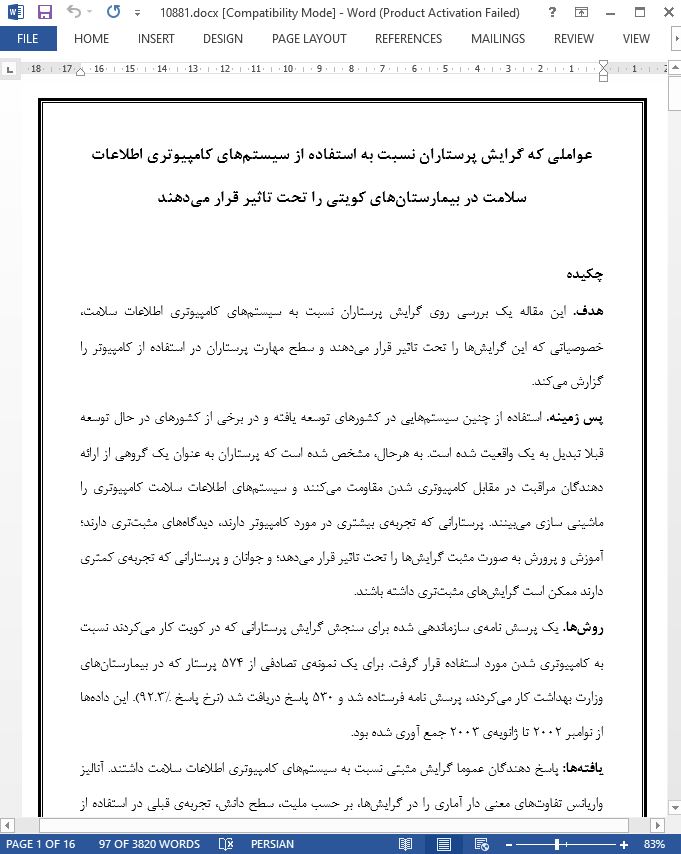
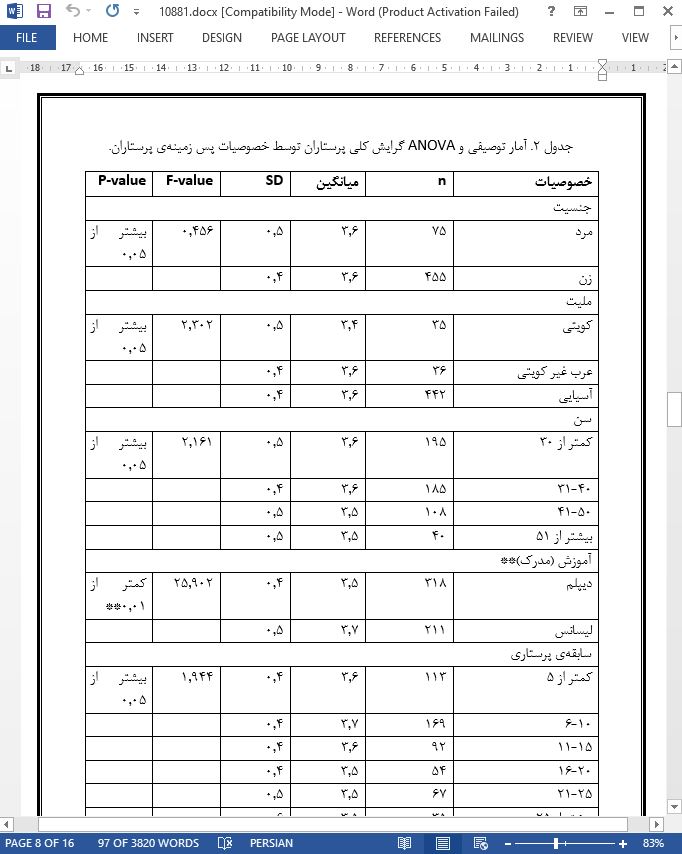
عواملی که گرایش پرستاران نسبت به استفاده از سیستم های کامپیوتری اطلاعات سلامت در بیمارستان های کویتی را تحت تاثیر قرار می دهند
عنوان انگلیسی
Factors influencing nurses’ attitudes towards the use of computerized health information systems in Kuwaiti hospitals
صفحات مقاله فارسی
16
صفحات مقاله انگلیسی
7
سال انتشار
2007
رفرنس
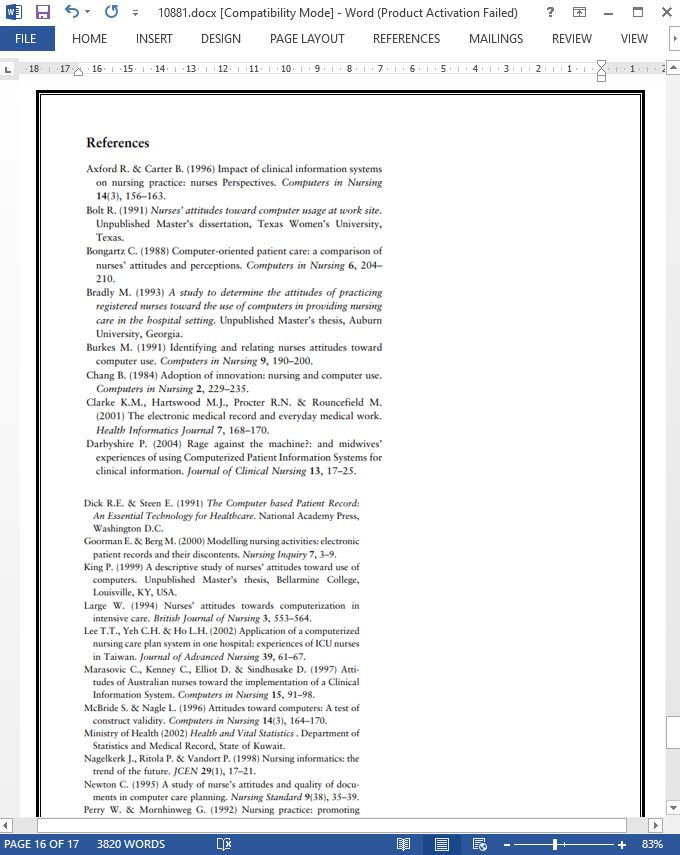
دارای رفرنس در داخل متن و انتهای مقاله
نشریه
وایلی - Wiley
فرمت مقاله انگلیسی
pdf و ورد تایپ شده با قابلیت ویرایش
فرمت ترجمه مقاله
pdf و ورد تایپ شده با قابلیت ویرایش
فونت ترجمه مقاله
بی نازنین
سایز ترجمه مقاله
14
نوع مقاله
ISI
نوع نگارش
مقالات پژوهشی (تحقیقاتی)
نوع ارائه مقاله
ژورنال
پایگاه
اسکوپوس
ایمپکت فاکتور(IF) مجله
2.906 در سال 2019
شاخص H_index مجله
145 در سال 2020
شاخص SJR مجله
1.027 در سال 2019
شناسه ISSN مجله
1365-2648
شاخص Q یا Quartile (چارک)
q1 در سال 2019
کد محصول
10881
وضعیت ترجمه منابع داخل متن
ترجمه شده است ✓
ضمیمه
ندارد ☓
بیس
نیست ☓
مدل مفهومی
ندارد ☓
پرسشنامه
ندارد ☓
متغیر
ندارد ☓
رفرنس در ترجمه
در داخل متن و انتهای مقاله درج شده است
رشته و گرایش های مرتبط با این مقاله
مدیریت، سیستم های اطلاعاتی پیشرفته، مدیریت فناوری اطلاعات
مجله
مجله پرستاری پیشرفته - Journal Of Advanced Nursing
دانشگاه
گروه مدیریت اطلاعات سلامت، دانشکده علوم بهداشت متفقین، دانشگاه کویت
کلمات کلیدی
پرستاران، کامپیوترها، گرایش ها، مهارت ها، چندفرهنگی، کویت، مطالعه پرسش نامه
کلمات کلیدی انگلیسی
nurses - computers - attitudes - skills - multi-cultural - Kuwait - questionnaire survey
doi یا شناسه دیجیتال
https://doi.org/10.1111/j.1365-2648.2007.04113.x
۰.۰
(هنوز امتیازی ثبت نشده است)