.svg)
.svg)

.svg)


ترجمه مقاله تاثیر نوآوری در سه سطح شرکت، صنعت و کشور روی عملکرد شرکت - نشریه اشپرینگر

عنوان فارسی
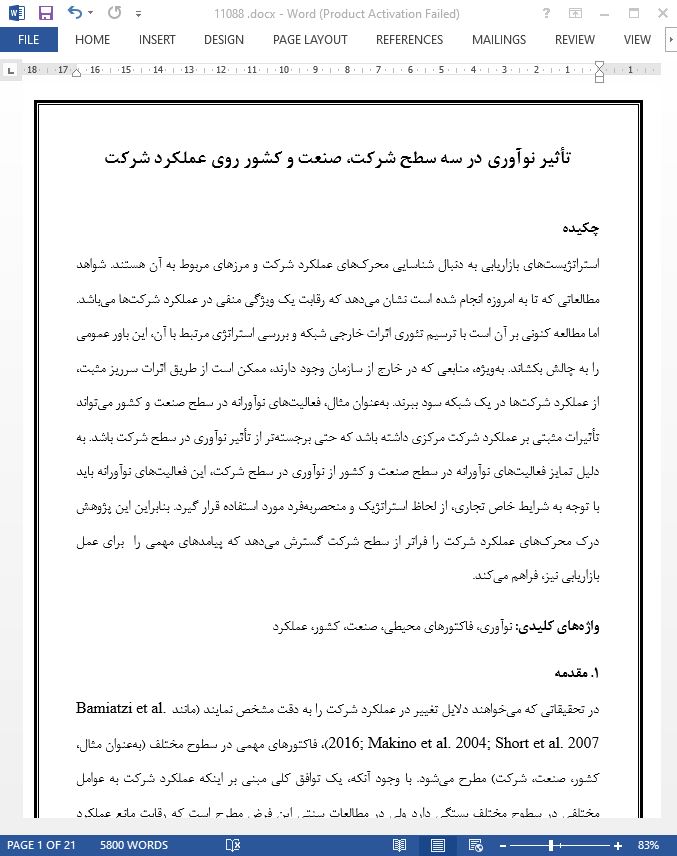
تاثیر نوآوری در سه سطح شرکت، صنعت و کشور روی عملکرد شرکت
عنوان انگلیسی
Effects of firm-, industry-, and country-level innovation on firm performance
صفحات مقاله فارسی
21
صفحات مقاله انگلیسی
15
سال انتشار
2020
رفرنس
دارای رفرنس در داخل متن و انتهای مقاله
نشریه
اشپرینگر - Springer
فرمت مقاله انگلیسی
pdf و ورد تایپ شده با قابلیت ویرایش
فرمت ترجمه مقاله
pdf و ورد تایپ شده با قابلیت ویرایش
فونت ترجمه مقاله
بی نازنین
سایز ترجمه مقاله
14
نوع مقاله
ISI
نوع ارائه مقاله
ژورنال
پایگاه
اسکوپوس
ایمپکت فاکتور(IF) مجله
1.975 در سال 2019
شاخص H_index مجله
65 در سال 2020
شاخص SJR مجله
1.406 در سال 2019
شناسه ISSN مجله
0923-0645
شاخص Q یا Quartile (چارک)
Q1 در سال 2019
کد محصول
11088
وضعیت ترجمه منابع داخل متن
به صورت انگلیسی درج شده است ✓
ضمیمه
ندارد ☓
بیس
است ✓
مدل مفهومی
دارد ✓
پرسشنامه
ندارد ☓
متغیر
دارد ✓
رفرنس در ترجمه
در داخل متن و انتهای مقاله درج شده است
رشته های مرتبط با این مقاله
مدیریت
گرایش های مرتبط با این مقاله
مدیریت کسب و کار، مدیریت عملکرد، نوآوری تکنولوژی
مجله
اسناد بازاریابی - Marketing Letters
دانشگاه
کالج تجاری کلات، دانشگاه آلاباما در بیرمنگام، ایالات متحده آمریکا
کلمات کلیدی
نوآوری، فاکتورهای محیطی، صنعت، کشور، عملکرد
کلمات کلیدی انگلیسی
Innovation - Environmental factors - Industry - Country - Performance
doi یا شناسه دیجیتال
https://doi.org/10.1007/s11002-020-09530-y
۰.۰
(هنوز امتیازی ثبت نشده است)