.svg)
.svg)

.svg)


ترجمه مقاله تعریف رویکردهای زیست فرهنگی برای حفاظت - نشریه الزویر

عنوان فارسی
تعریف رویکردهای زیست فرهنگی برای حفاظت
عنوان انگلیسی
Defining biocultural approaches to conservation
صفحات مقاله فارسی
14
صفحات مقاله انگلیسی
6
سال انتشار
2015
رفرنس
دارای رفرنس در داخل متن و انتهای مقاله
نشریه
الزویر - Elsevier
فرمت مقاله انگلیسی
pdf و ورد تایپ شده با قابلیت ویرایش
فرمت ترجمه مقاله
pdf و ورد تایپ شده با قابلیت ویرایش
فونت ترجمه مقاله
بی نازنین
سایز ترجمه مقاله
14
نوع مقاله
ISI
نوع نگارش
مقاله مروری (Review Article)
نوع ارائه مقاله
ژورنال
پایگاه
اسکوپوس
ایمپکت فاکتور(IF) مجله
12.982 در سال 2019
شاخص H_index مجله
329 در سال 2020
شاخص SJR مجله
6.860 در سال 2019
شناسه ISSN مجله
0169-5347
شاخص Q یا Quartile (چارک)
Q1 در سال 2019
کد محصول
10942
وضعیت ترجمه عناوین تصاویر
ترجمه شده است ✓
وضعیت ترجمه متون داخل تصاویر
ترجمه نشده است ☓
وضعیت ترجمه منابع داخل متن
به صورت عدد درج شده است ✓
ضمیمه
ندارد ☓
بیس
است ✓
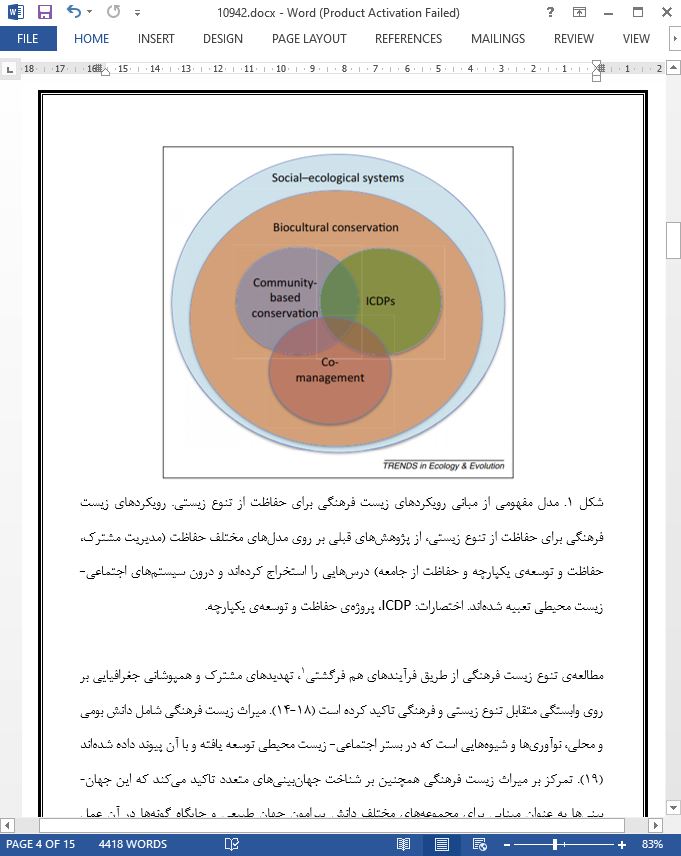
مدل مفهومی
دارد ✓
پرسشنامه
ندارد ☓
متغیر
ندارد ☓
رفرنس در ترجمه
در داخل متن و انتهای مقاله درج شده است
رشته و گرایش های مرتبط با این مقاله
محیط زیست، زیستگاه ها و تنوع زیستی
مجله
روندهای اکولوژی و تکامل - Trends in Ecology and Evolution
دانشگاه
دانشکده جغرافیا، محیط زیست و علوم زمین، دانشگاه ویکتوریا ولینگتون، نیوزیلند
کلمات کلیدی
حفاظت زیست فرهنگی، تنوع زیستی، فرهنگ، سیستم های اجتماعی- زیست محیطی
کلمات کلیدی انگلیسی
biocultural conservation - biodiversity - culture - social–ecological systems
doi یا شناسه دیجیتال
https://doi.org/10.1016/j.tree.2014.12.005
۰.۰
(هنوز امتیازی ثبت نشده است)