Abstract
Purpose This narrative systematic review in line with PRISMA guidelines aims to investigate the implementation quality of previously published group comparison clinical trials of stuttering interventions for children and adolescents (under age 18 years).
Methods We searched for publications in the databases Eric, PsychInfo, PubMed and Web of Science using the search terms ‘stutt*’ or ‘stamm*’and ‘intervention’, ‘trial’ or ‘treatment’. We reviewed the implementation elements reported in studies and how these elements were used to report intervention outcomes.
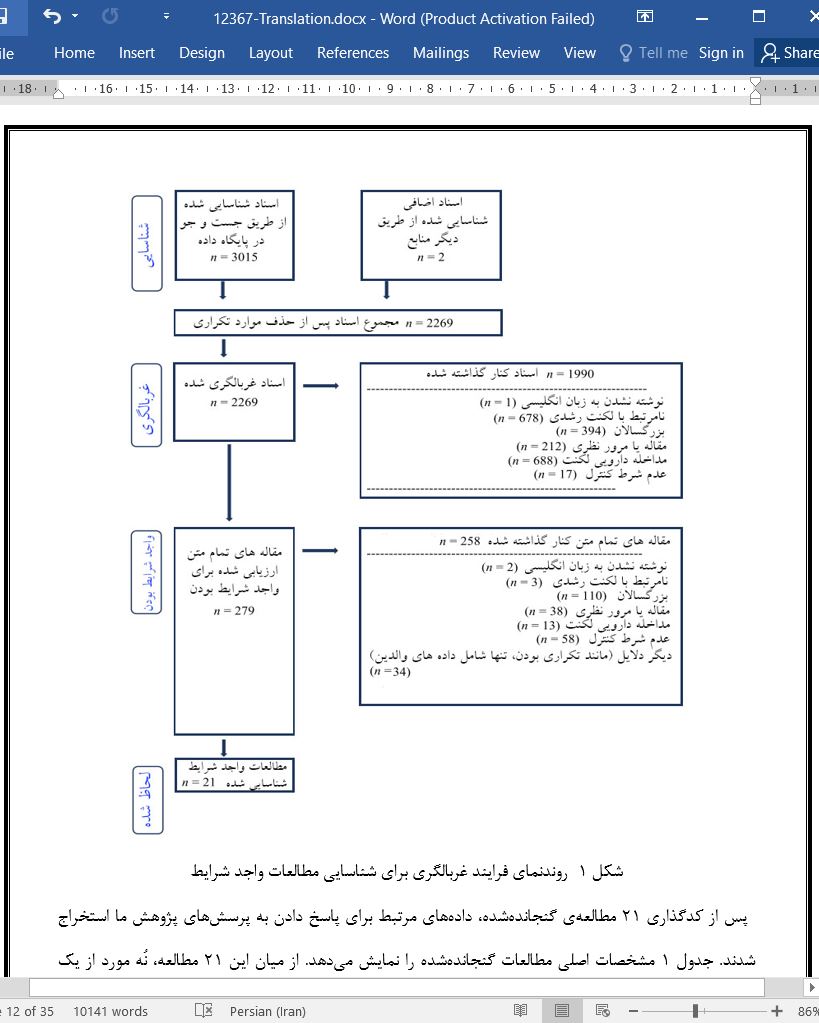
Results 3,017 references published between 1974–2019 were identified. All references were screened for eligibility using predefined selection criteria resulting in 21 included studies. The implementation quality details reported varied between studies. Existing studies most commonly lacked details about the support system provided to SLPs administering the interventions and monitoring of treatment fidelity both in the clinical setting and in the home environment. Support systems for participant’s parents and treatment dosage were generally well reported. Dosage was the most common implementation quality element considered in analyses of treatment effect and within discussions of findings.
Conclusion Findings highlight the need for future clinical trials of stuttering interventions to closely adhere to systematic guidelines for reporting implementation quality to ensure reliability of trial outcomes. A checklist for reporting clinical trials of non-pharmacological stuttering interventions is proposed.
1. Introduction
Developmental stuttering, also known as childhood-onset fluency (DSM 5; American Psychiatric Association, 2013), is classified as a ‘neurodevelopmental disorder’ according to the International statistical classification of diseases and related health problems (11th ed.) (World Health Organization, 2018). Stuttering is described as “persistent and frequent or pervasive disruption of the rhythmic flow of speech that arises during the developmental period and is outside the limits of normal variation expected for age and level of intellectual functioning and results in reduced intelligibility and significantly affects communication” (World Health Organization, 2018, 6A01.01). Individuals who persist with stuttering may have a heightened risk of developing comorbidities such as social anxiety, depression and negative attitudes to communication (Iverach et al., 2009). It seems therefore important that children and adolescents who stutter have access to effective interventions to reduce stuttering and to minimize the potential adverse impacts of stuttering. There are currently many stuttering interventions for children and adolescents, but further clinical trials for these age groups are needed to determine what treatment is effective for whom and to address unresolved issues identified in previous trials such as large attrition rates (i.e. Trajkovski et al., 2019) and relapse from treatment (c.f. Jones et al., 2010).
5.5. Conclusions
The findings of this review revealed that there is a lack of detail about implementation quality elements reported in published clinical trials of stuttering interventions for children and adolescents. The treatment programs in this review were delivered for 4–62 weeks, indicating that a large amount of time and effort was dedicated to intervention by children who stutter, parents and SLPs. While all included studies reported on at least one element of implementation quality, none of the studies reported on all elements of implementation quality to enable more accurate evaluation of reported treatment outcomes. We therefore posit that there is a need for clear guidelines specifically developed for stuttering intervention trials to ensure systematic and thorough collection and reporting of implementation quality elements. This study investigated implementation quality of published papers with RCT and QED designs. There is therefore an outstanding need for the implementation quality of clinical trials of stuttering interventions for children that have adopted other designs (e.g., single subject studies) to be investigated.