Abstract
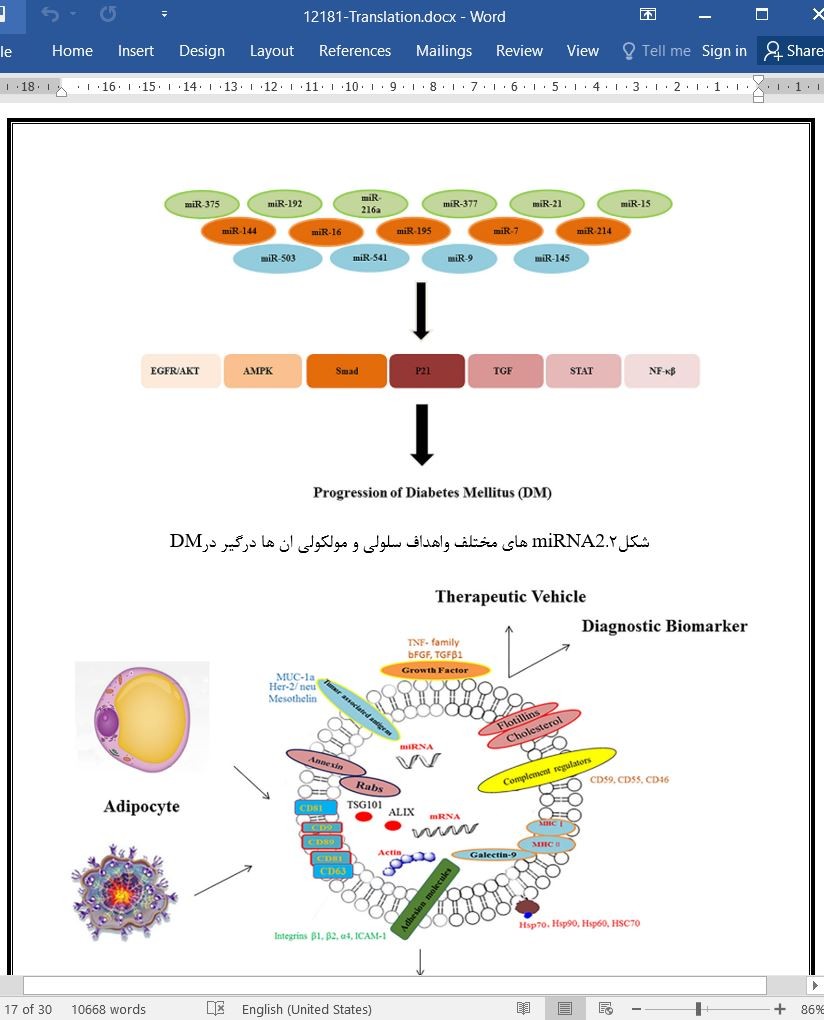
Diabetes mellitus (DM) is known as one of important common endocrine disorders which could due to deregulation of a variety of cellular and molecular pathways. A large numbers studies indicated that various pathogenesis events including mutation, serin phosphorylation, and increasing/decreasing expression of many genes could contribute to initiation and progression of DM. Insulin resistance is one of important factors which could play critical roles in DM pathogenesis. It has been showed that insulin resistance via targeting a sequence of cellular and molecular pathways (eg, PI3 kinases, PPARγ co-activator-1, microRNAs, serine/threonine kinase Akt, and serin phosphorylation) could induce DM. Among of various factors involved in DM pathogenesis, microRNAs, and exosomes have been emerged as effective factors in initiation and progression of DM. A variety of studies indicated that deregulation of these molecules could change behavior of various types of cells and contribute to progression of DM. Resistin is other main factor which is known as signal molecule involved in insulin resistance. Multiple lines evidence indicated that resistin exerts its effects via affecting on glucose metabolism, inhibition of fatty acid uptake and metabolism with affecting on a variety of targets such as CD36, fatty acid transport protein 1, Acetyl-CoA carboxylase, and AMP-activated protein kinase. Here, we summarized various molecular aspects are associated with DM particularly the molecular pathways involved in insulin resistance and resistin in DM. Moreover, we highlighted exosomes and microRNAs as effective players in initiation and progression of DM.
1. INTRODUCTION
Diabetes mellitus (DM) is one of the common metabolic disorders which could due to insufficiency in insulin secretion or action or both of them. It has been showed that DM is associated with a variety of symptoms such as hyperglycemia, glycosuria, polydipsia, and polyuria. There are two main types of DM. Type 1 diabetes (T1D; insulin-dependent diabetes mellitus) characterized by destruction of pancreatic beta cell and type 2 (T2D; non-insulin dependent diabetes mellitus) characterized by insulin resistance (IR) and insulin deficiency.1–4 Due to growth in aging population, low physical activity, obesity, and urbanization in developed countries, the prevalence of T2D has been increasing for the last years and will continue to increase.5,6
10 CONCLUSION
DM is known as one of major metabolic disorders which are associated with a variety of Envirmental and gentical factors. Identification of cellular and molecular pathways involved in DM pathogenesis, could contribute to better understanding of disease condition and could provide new therapeutic approaches. Resistin is a hormone which plays critical roles in DM pathogenesis. Unlike the proven role of resistin in rodents, the main function of this hormone in relation to energy balance and IR in DM2 is not consistent in humans. Some surveys have reported enhancedRETNexpression levels in T2D, IR, obesity, inflammation, and metabolic syndrome, while some studies failed to identify any alteration in circulating resistin levels in aforementioned conditions. Further clinical studies are necessary to clarify the correlation between resistin levels and T2D. MicroRNAs and exosomes are other important molecules involved in DM pathogenesis. These molecules could exert their effects via targeting a sequence of cellular and molecular pathways involved in different stages of DM pathogenesis. Hence, identification of these molecules cold lead to better drawing of cellular and molecular targets involved in DM. Moreover, numerous studies indicated that miRNAs and exosomes could be used as powerful diagnostic andtherapeutic biomarkers in DM therapy.