.svg)
.svg)

.svg)


ترجمه مقاله انتخاب نرم افزار مدیریت ارتباط با مشتری - نشریه وایلی

عنوان فارسی
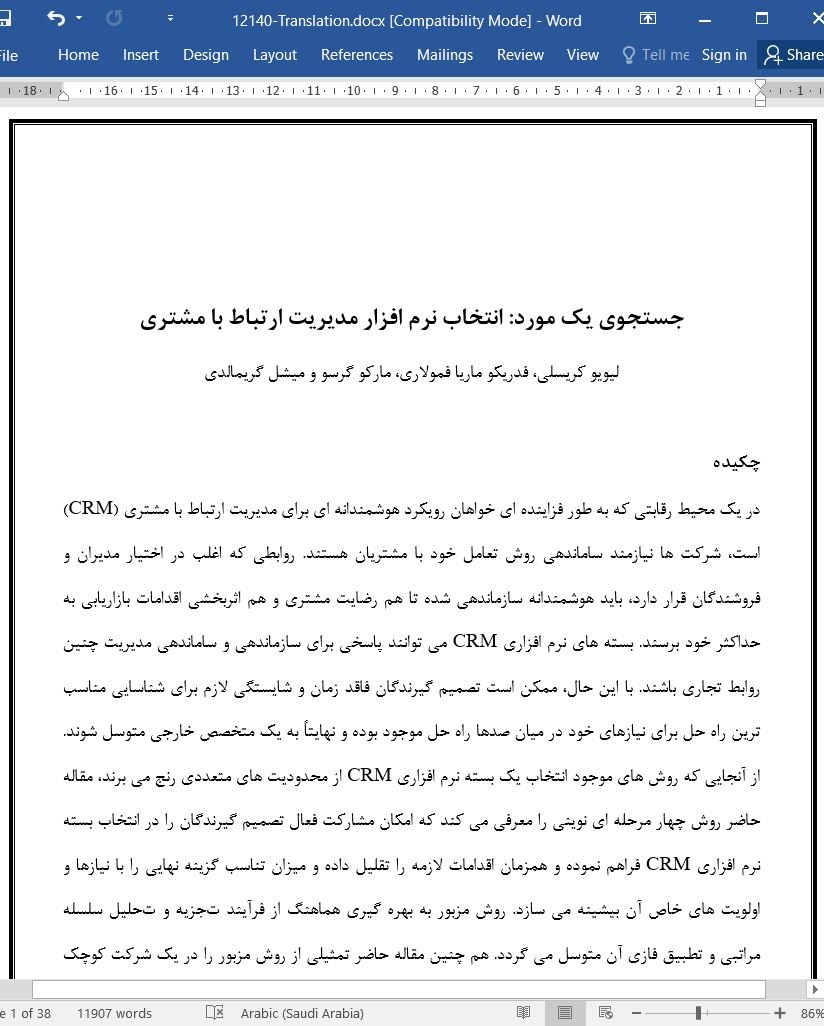
جستجوی یک مورد: انتخاب نرم افزار مدیریت ارتباط با مشتری
عنوان انگلیسی
Searching for the one: Customer relationship management software selection
صفحات مقاله فارسی
38
صفحات مقاله انگلیسی
16
سال انتشار
2019
رفرنس
دارای رفرنس در داخل متن و انتهای مقاله
نشریه
وایلی - Wiley
فرمت مقاله انگلیسی
pdf و ورد تایپ شده با قابلیت ویرایش
فرمت ترجمه مقاله
pdf و ورد تایپ شده با قابلیت ویرایش
فونت ترجمه مقاله
بی نازنین
سایز ترجمه مقاله
14
نوع مقاله
ISI
نوع نگارش
مقالات پژوهشی (تحقیقاتی)
نوع ارائه مقاله
ژورنال
پایگاه
اسکوپوس
ایمپکت فاکتور(IF) مجله
1.684 در سال 2020
شاخص H_index مجله
47 در سال 2021
شاخص SJR مجله
0.462 در سال 2020
شناسه ISSN مجله
1099-1360
شاخص Q یا Quartile (چارک)
Q2 در سال 2020
کد محصول
12140
وضعیت ترجمه عناوین تصاویر و جداول
ترجمه شده است ✓
وضعیت ترجمه متون داخل تصاویر و جداول
ترجمه شده است ✓
وضعیت ترجمه منابع داخل متن
ترجمه شده است ✓
وضعیت فرمولها و محاسبات در فایل ترجمه
ندارد ☓
ضمیمه
ندارد ☓
بیس
نیست ☓
مدل مفهومی
ندارد ☓
پرسشنامه
ندارد ☓
متغیر
ندارد ☓
فرضیه
ندارد ☓
رفرنس در ترجمه
در داخل متن و انتهای مقاله درج شده است
رشته و گرایش های مرتبط با این مقاله
مهندسی صنایع، مدیریت، برنامه ریزی و تحلیل سیستم ها، بهینه سازی سیستم ها، مدیریت استراتژیک و مدیریت فناوری اطلاعات
مجله
مجله تحلیل تصمیم چندمعیاره - Journal of Multi-Criteria Decision Analysis
دانشگاه
گروه مهندسی صنایع، دانشگاه ناپل "فدریکو دوم"، ناپل، ایتالیا
کلمات کلیدی
فرآیند تجزیه و تحلیل سلسله مراتبی، مدیریت ارتباط با مشتری، سیستم پشتیبانی از تصمیم، فرآیند تجزیه و تحلیل سلسله مراتبی فازی، تصمیم گیری چندمعیاره.
کلمات کلیدی انگلیسی
analytic hierarchy process - customer relationship management - decision support system - fuzzy analytic hierarchy process - multicriteria decision making
doi یا شناسه دیجیتال
https://doi.org/10.1002/mcda.1687
۰.۰
(هنوز امتیازی ثبت نشده است)