.svg)
.svg)

.svg)


ترجمه مقاله تغذیه بالینی و حقوق بشر: گزارش وضعیت بین المللی - نشریه الزویر

عنوان فارسی
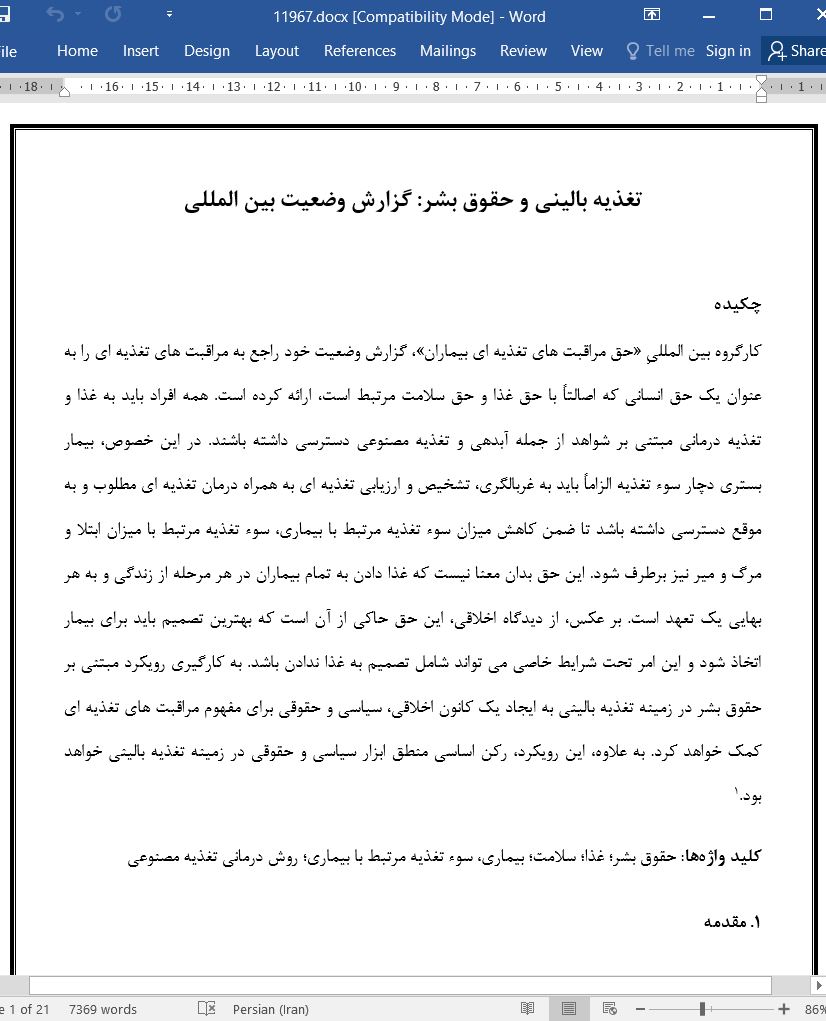
تغذیه بالینی و حقوق بشر: گزارش وضعیت بین المللی
عنوان انگلیسی
Clinical nutrition and human rights. An international position paper
صفحات مقاله فارسی
21
صفحات مقاله انگلیسی
8
سال انتشار
2021
رفرنس
دارای رفرنس در داخل متن و انتهای مقاله
نشریه
الزویر - Elsevier
فرمت مقاله انگلیسی
pdf و ورد تایپ شده با قابلیت ویرایش
فرمت ترجمه مقاله
pdf و ورد تایپ شده با قابلیت ویرایش
فونت ترجمه مقاله
بی نازنین
سایز ترجمه مقاله
14
نوع مقاله
ISI
نوع نگارش
مقالات پژوهشی (تحقیقاتی)
نوع ارائه مقاله
ژورنال
پایگاه
اسکوپوس
ایمپکت فاکتور(IF) مجله
5.738 در سال 2020
شاخص H_index مجله
140 در سال 2021
شاخص SJR مجله
1.915 در سال 2020
شناسه ISSN مجله
0261-5614
شاخص Q یا Quartile (چارک)
Q1 در سال 2020
کد محصول
11967
وضعیت ترجمه عناوین تصاویر و جداول
ترجمه شده است ✓
وضعیت ترجمه متون داخل تصاویر و جداول
ترجمه شده است ✓
وضعیت ترجمه منابع داخل متن
ترجمه شده است ✓
وضعیت فرمولها و محاسبات در فایل ترجمه
ندارد ☓
ضمیمه
ندارد ☓
بیس
نیست ☓
مدل مفهومی
ندارد ☓
پرسشنامه
ندارد ☓
متغیر
ندارد ☓
فرضیه
ندارد ☓
رفرنس در ترجمه
در انتهای مقاله درج شده است
رشته و گرایش های مرتبط با این مقاله
پزشکی، علوم تغذیه
مجله
مراقبت تغذیه ای - Clinical Nutrition
دانشگاه
دانشکده پزشکی، پژوهشکده تغذیه، ژنتیک و متابولیسم، دانشگاه البوسکه، بوگوتا، کلمبیا
کلمات کلیدی
حقوق بشر، غذا، سلامت، بیماری، سوء تغذیه مرتبط با بیماری، روش درمانی تغذیه مصنوعی
کلمات کلیدی انگلیسی
Human rights - Food - Health - Disease - Disease-related malnutrition - Artificial nutrition therapy
doi یا شناسه دیجیتال
https://doi.org/10.1016/j.clnu.2021.02.039
۰.۰
(هنوز امتیازی ثبت نشده است)