.svg)
.svg)

.svg)


ترجمه مقاله غلظت های سرمی فوق العاده زودهنگام نشانگرهای زیستی عصبی و آستروگلیا - نشریه الزویر

عنوان فارسی
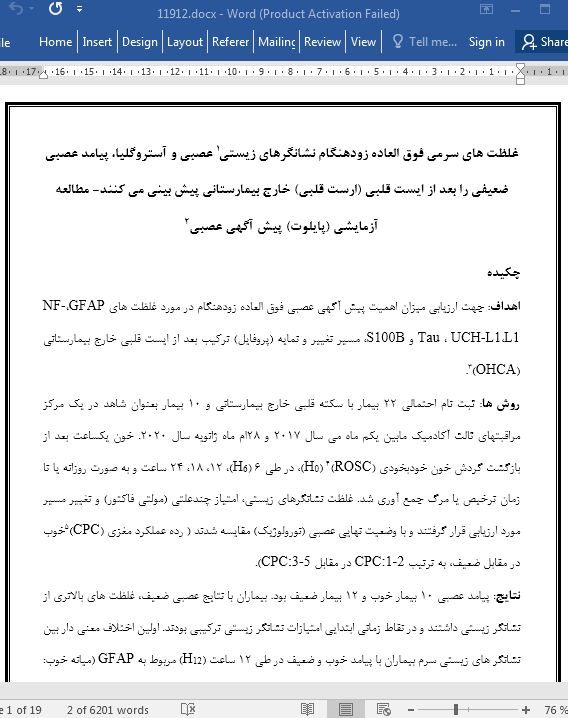
غلظت های سرمی فوق العاده زودهنگام نشانگرهای زیستی عصبی و آستروگلیا، پیامد عصبی ضعیفی را بعد از ایست قلبی (ارست قلبی) خارج بیمارستانی پیش بینی می کنند- مطالعه آزمایشی (پایلوت) پیش آگهی عصبی
عنوان انگلیسی
Ultra-early serum concentrations of neuronal and astroglial biomarkers predict poor neurological outcome after out-of-hospital cardiac arrest—a pilot neuroprognostic study
صفحات مقاله فارسی
19
صفحات مقاله انگلیسی
9
سال انتشار
2021
رفرنس
دارای رفرنس در داخل متن و انتهای مقاله
نشریه
الزویر - Elsevier
فرمت مقاله انگلیسی
pdf و ورد تایپ شده با قابلیت ویرایش
فرمت ترجمه مقاله
pdf و ورد تایپ شده با قابلیت ویرایش
فونت ترجمه مقاله
بی نازنین
سایز ترجمه مقاله
14
نوع مقاله
ISI
نوع نگارش
مقالات پژوهشی (تحقیقاتی)
نوع ارائه مقاله
ژورنال
شناسه ISSN مجله
2666-5204
کد محصول
11912
وضعیت ترجمه عناوین تصاویر و جداول
ترجمه شده است ✓
وضعیت ترجمه متون داخل تصاویر و جداول
ترجمه شده است ✓
وضعیت ترجمه منابع داخل متن
به صورت عدد درج شده است ✓
ضمیمه
ندارد ☓
بیس
نیست ☓
مدل مفهومی
ندارد ☓
پرسشنامه
ندارد ☓
متغیر
دارد ✓
رفرنس در ترجمه
در انتهای مقاله درج شده است
رشته و گرایش های مرتبط با این مقاله
پزشکی، قلب و عروق، مغز و اعصاب
مجله
احیا پلاس - Resuscitation Plus
دانشگاه
گروه فوریتهای پزشکی، دانشگاه فلوریدا، گینسویل، ایالات متحده
کلمات کلیدی
سکته قلبی خارج بیمارستانی، نشانگر زیستی، پیامد عصبی، رده عملکرد مغزی، پیش آگهی عصبی، آسیب هیپوکسیک ایسکمیک
کلمات کلیدی انگلیسی
Out-of-hospital cardiac arrest - Biomarker - Neurological outcome - Cerebral performance category - Neuroprognostication - Hypoxicischemic injury
doi یا شناسه دیجیتال
https://doi.org/10.1016/j.resplu.2021.100133
۰.۰
(هنوز امتیازی ثبت نشده است)