.svg)
.svg)

.svg)


ترجمه مقاله یک الگوریتم رمزنگاری جدید از طریق یک نگاشت آشوب دو بعدی - نشریه الزویر

عنوان فارسی
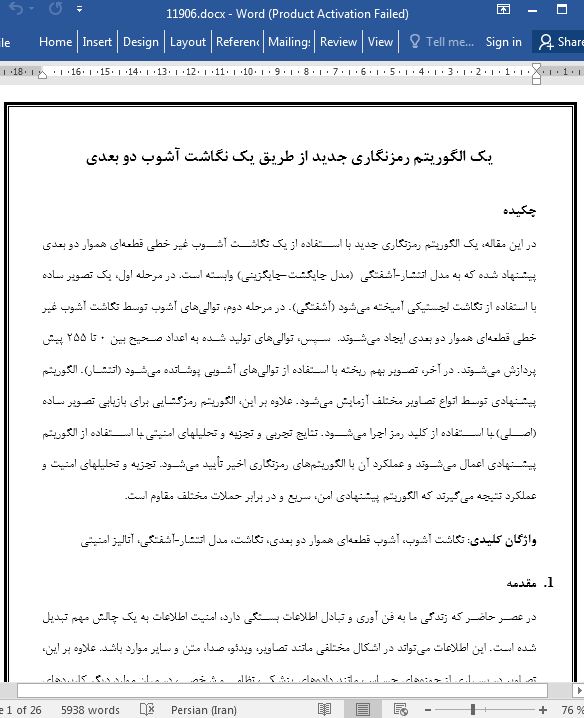
یک الگوریتم رمزنگاری جدید از طریق یک نگاشت آشوب دو بعدی
عنوان انگلیسی
A new cryptographic algorithm via a two-dimensional chaotic map
صفحات مقاله فارسی
26
صفحات مقاله انگلیسی
11
سال انتشار
2021
رفرنس
دارای رفرنس در داخل متن و انتهای مقاله
نشریه
الزویر - Elsevier
فرمت مقاله انگلیسی
PDF
فرمت ترجمه مقاله
pdf و ورد تایپ شده با قابلیت ویرایش
فونت ترجمه مقاله
بی نازنین
سایز ترجمه مقاله
14
نوع مقاله
ISI
نوع نگارش
مقالات پژوهشی (تحقیقاتی)
نوع ارائه مقاله
ژورنال
پایگاه
اسکوپوس
ایمپکت فاکتور(IF) مجله
3.763 در سال 2020
شاخص H_index مجله
46 در سال 2021
شاخص SJR مجله
0.505 در سال 2020
شناسه ISSN مجله
2090-4479
شاخص Q یا Quartile (چارک)
Q2 در سال 2020
کد محصول
11906
وضعیت ترجمه عناوین تصاویر و جداول
ترجمه شده است ✓
وضعیت ترجمه متون داخل تصاویر و جداول
ترجمه شده است ✓
وضعیت ترجمه منابع داخل متن
به صورت عدد درج شده است ✓
ضمیمه
ندارد ☓
بیس
نیست ☓
مدل مفهومی
ندارد ☓
پرسشنامه
ندارد ☓
متغیر
ندارد ☓
رفرنس در ترجمه
در انتهای مقاله درج شده است
رشته و گرایش های مرتبط با این مقاله
مهندسی کامپیوتر، امنیت اطلاعات، مهندسی نرم افزار
مجله
مجله مهندسی عین شمس - Ain Shams Engineering Journal
دانشگاه
گروه ریاضیات، دانشکده علوم دانشگاه منصوره، مصر
کلمات کلیدی
نگاشت آشوب، آشوب قطعهای هموار دو بعدی، نگاشت، مدل انتشار-آشفتگی، آنالیز امنیتی
کلمات کلیدی انگلیسی
Chaotic map - Two-dimensional piecewise smooth chaotic map - Confusion-diffusion model - Security analysis
doi یا شناسه دیجیتال
https://doi.org/10.1016/j.asej.2021.05.004
۰.۰
(هنوز امتیازی ثبت نشده است)