.svg)
.svg)

.svg)


ترجمه مقاله هوش مصنوعی انسان محور در آموزش - نشریه الزویر

عنوان فارسی
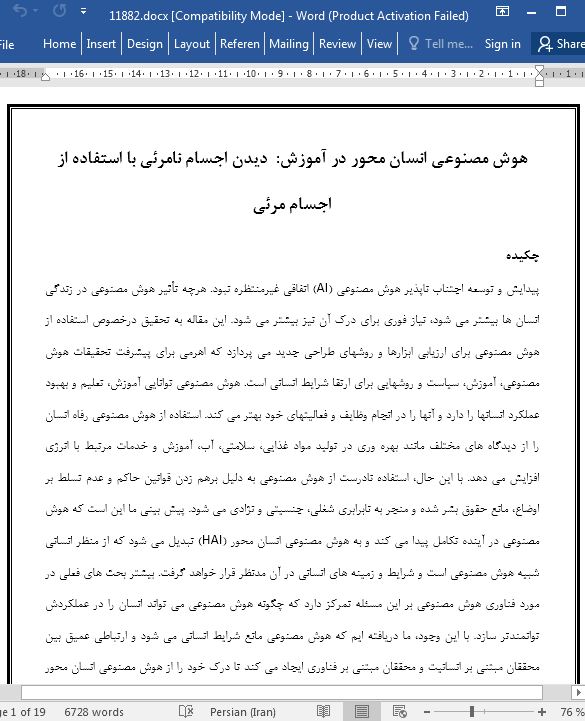
هوش مصنوعی انسان محور در آموزش: دیدن اجسام نامرئی با استفاده از اجسام مرئی
عنوان انگلیسی
Human-centered artificial intelligence in education: Seeing the invisible through the visible
صفحات مقاله فارسی
19
صفحات مقاله انگلیسی
5
سال انتشار
2021
رفرنس
دارای رفرنس در داخل متن و انتهای مقاله
نشریه
الزویر - Elsevier
فرمت مقاله انگلیسی
pdf و ورد تایپ شده با قابلیت ویرایش
فرمت ترجمه مقاله
pdf و ورد تایپ شده با قابلیت ویرایش
فونت ترجمه مقاله
بی نازنین
سایز ترجمه مقاله
14
نوع مقاله
ISI
نوع نگارش
مقالات پژوهشی (تحقیقاتی)
نوع ارائه مقاله
ژورنال
شناسه ISSN مجله
2666-920X
کد محصول
11882
وضعیت ترجمه منابع داخل متن
ترجمه شده است ✓
ضمیمه
ندارد ☓
بیس
نیست ☓
مدل مفهومی
ندارد ☓
پرسشنامه
ندارد ☓
متغیر
ندارد ☓
رفرنس در ترجمه
در انتهای مقاله درج شده است
رشته و گرایش های مرتبط با این مقاله
مهندسی کامپیوتر، هوش مصنوعی
مجله
کامپیوترها و آموزش: هوش مصنوعی - Computers and Education: Artificial Intelligence
دانشگاه
گروه علوم کامپیوتر و مهندسی اطلاعات، دانشگاه ملی مرکزی، تایوان
کلمات کلیدی
هوش مصنوعی انسان محور، هوش مصنوعی پایدار، هوش مصنوعی توضیح پذیر، یادگیری ماشینی قابل تفسیر، یادگیری هوشمند
کلمات کلیدی انگلیسی
Human-centered AI - Sustainable AI - Explainable AI - Interpretable ML - Smart learning
doi یا شناسه دیجیتال
https://doi.org/10.1016/j.caeai.2021.100008
۰.۰
(هنوز امتیازی ثبت نشده است)