.svg)
.svg)

.svg)


ترجمه مقاله عملکرد خمشی تیرهای بتن آرمه ساخته شده با سنگدانه درشت بتن بازیافتی - نشریه الزویر

عنوان فارسی
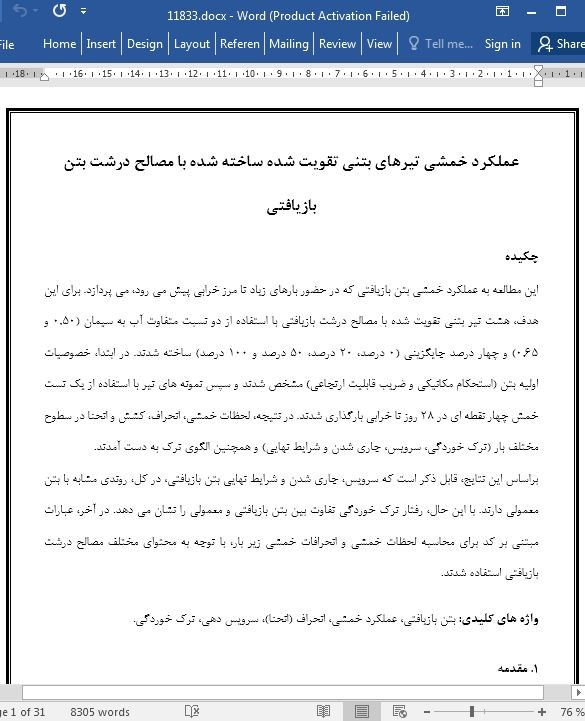
عملکرد خمشی تیرهای بتن آرمه ساخته شده با سنگدانه درشت بتن بازیافتی
عنوان انگلیسی
Flexural performance of reinforced concrete beams made with recycled concrete coarse aggregate
صفحات مقاله فارسی
31
صفحات مقاله انگلیسی
14
سال انتشار
2018
رفرنس
دارای رفرنس در داخل متن و انتهای مقاله
نشریه
الزویر - Elsevier
فرمت مقاله انگلیسی
pdf و ورد تایپ شده با قابلیت ویرایش
فرمت ترجمه مقاله
pdf و ورد تایپ شده با قابلیت ویرایش
فونت ترجمه مقاله
بی نازنین
سایز ترجمه مقاله
14
نوع مقاله
ISI
نوع نگارش
مقالات پژوهشی (تحقیقاتی)
نوع ارائه مقاله
ژورنال
پایگاه
اسکوپوس
ایمپکت فاکتور(IF) مجله
4.773 در سال 2020
شاخص H_index مجله
141 در سال 2021
شاخص SJR مجله
1.567 در سال 2020
شناسه ISSN مجله
0141-0296
شاخص Q یا Quartile (چارک)
Q1 در سال 2020
کد محصول
11833
وضعیت ترجمه عناوین تصاویر و جداول
ترجمه نشده است ☓
وضعیت ترجمه متون داخل تصاویر و جداول
ترجمه نشده است ☓
وضعیت ترجمه منابع داخل متن
به صورت عدد درج شده است ✓
وضعیت فرمولها و محاسبات در فایل ترجمه
به صورت عکس، درج شده است ✓
ضمیمه
ندارد ☓
بیس
نیست ☓
مدل مفهومی
ندارد ☓
پرسشنامه
ندارد ☓
متغیر
ندارد ☓
فرضیه
ندارد ☓
رفرنس در ترجمه
در انتهای مقاله درج شده است
رشته و گرایش های مرتبط با این مقاله
مهندسی عمران و سازه، مدیریت ساخت
مجله
سازه های مهندسی - Engineering Structures
دانشگاه
گروه تکنولوژی ساخت و ساز، دانشگاه لاکرونیا، اسپانیا
کلمات کلیدی
بتن بازیافتی، عملکرد خمشی، انحراف (انحنا)، سرویس دهی، ترک خوردگی
کلمات کلیدی انگلیسی
Recycled concrete - Flexural performance - Deflection - Serviceability - Cracking
doi یا شناسه دیجیتال
https://doi.org/10.1016/j.engstruct.2017.11.015
۰.۰
(هنوز امتیازی ثبت نشده است)