.svg)
.svg)

.svg)


ترجمه مقاله پروتکل های آموزشی ترکیبی پلایومتریک-دو سرعت و پلایومتریک-دو استقامت

عنوان فارسی
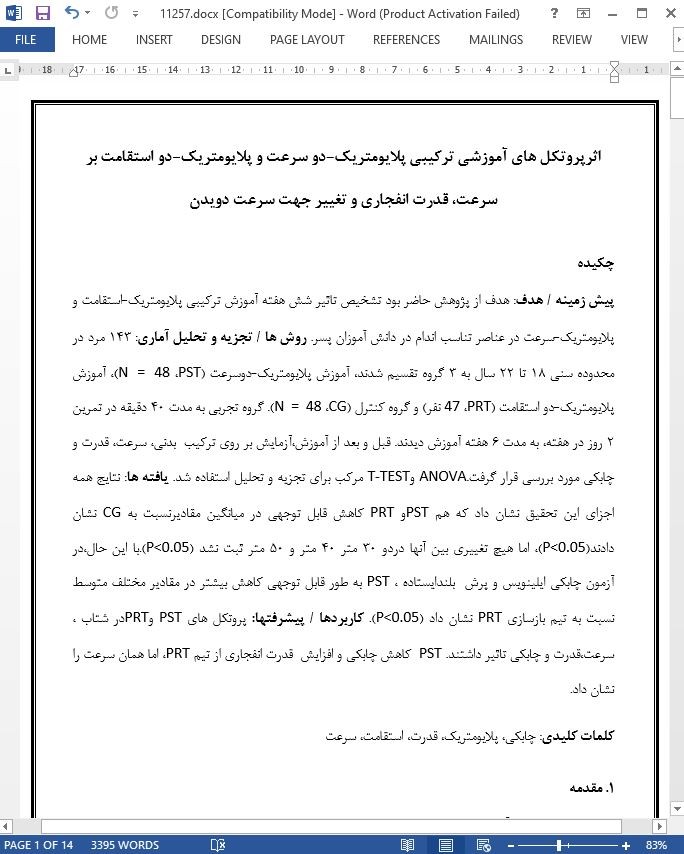
اثر پروتکل های آموزشی ترکیبی پلایومتریک-دو سرعت و پلایومتریک-دو استقامت بر سرعت، قدرت انفجاری و تغییر جهت سرعت دویدن
عنوان انگلیسی
Effect of Combined Plyometric-Sprint and Combined Plyometric-Resistance Training Protocols on Speed, Explosive Power and Change of Direction
صفحات مقاله فارسی
14
صفحات مقاله انگلیسی
8
سال انتشار
2016
رفرنس
دارای رفرنس در داخل متن و انتهای مقاله
فرمت مقاله انگلیسی
pdf و ورد تایپ شده با قابلیت ویرایش
فرمت ترجمه مقاله
pdf و ورد تایپ شده با قابلیت ویرایش
فونت ترجمه مقاله
بی نازنین
سایز ترجمه مقاله
14
نوع مقاله
ISI
نوع نگارش
مقالات پژوهشی (تحقیقاتی)
نوع ارائه مقاله
ژورنال
شاخص H_index مجله
41 در سال 2020
شاخص SJR مجله
0.113 در سال 2019
شناسه ISSN مجله
0974-6846
شاخص Q یا Quartile (چارک)
Q4 در سال 2019
کد محصول
11257
وضعیت ترجمه منابع داخل متن
درج نشده است ☓
ضمیمه
ندارد ☓
بیس
نیست ☓
مدل مفهومی
ندارد ☓
پرسشنامه
ندارد ☓
متغیر
ندارد ☓
رفرنس در ترجمه
در انتهای مقاله درج شده است
رشته و گرایش های مرتبط با این مقاله
تربیت بدنی، فیزیولوژی ورزشی، فیزیولوژی ورزشی کاربردی
مجله
مجله هندی علوم و فناوری - Indian Journal of Science and Technology
دانشگاه
ظهران ، عربستان سعودی
کلمات کلیدی
چابکی، پلایومتریک، قدرت، استقامت، سرعت
کلمات کلیدی انگلیسی
Agility - Plyometric - Power - Resistance - Speed
doi یا شناسه دیجیتال
https://doi.org/10.17485/ijst/2016/v9i32/90040
۰.۰
(هنوز امتیازی ثبت نشده است)