ABSTRACT
The liquefaction-susceptible soils that underlie the Christchurch CBD have been evaluated within a comprehensive field (CPT, borehole, shear-wave velocity) and laboratory-testing programme. Sampling sites exhibited extensive ground damage following the earthquakes, requiring demolition of multi-storey commercial buildings. Liquefaction resistance was evaluated by direct measurement using cyclic triaxial testing on undisturbed specimens obtained from 2 to 14 m depth of CBD deposits, using novel Gel Push (GP) sampling. Tested samples cover a broad range of soils from clean sands (SP) to silty sands (SM), sandy silts (ML), with fines contents (typically non-plastic) ranging from 1 – 98 %. Cyclic strength testing allows comparison to the empirical correlations based on case-history data, which now include case histories from the recent events in Christchurch, New Zealand. While generally good agreement is obtained for clean sands, comparison of sands with high non-plastic fines indicate more research is warranted to clarify the cyclic strength of these deposits, given their prevalence in Christchurch.
Introduction
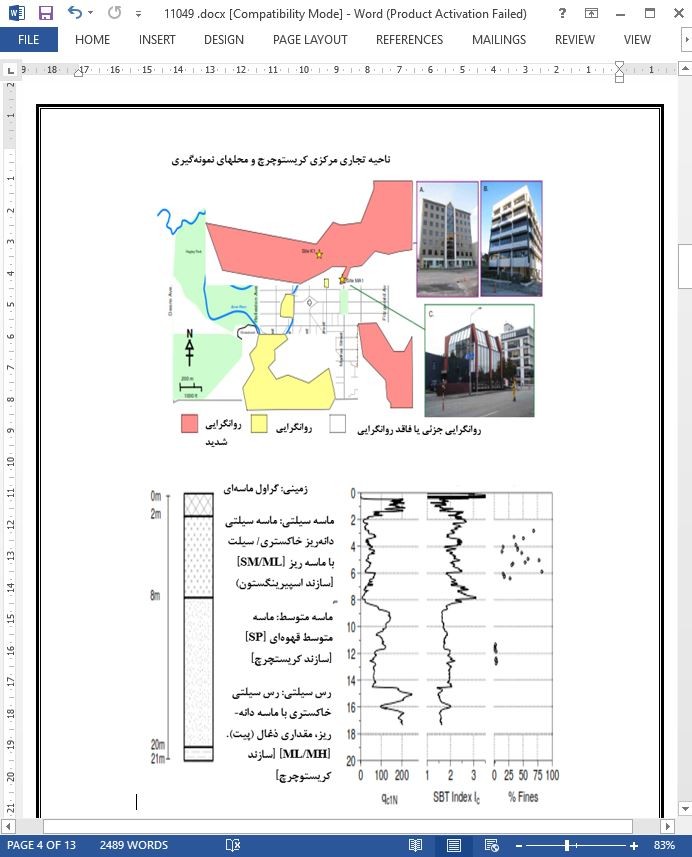
Following the 2010-2011 Canterbury Earthquake Sequence (CES) a research investigation was conducted to better characterise the deposits most at risk of soil liquefaction. Two sites in the Christchurch Central Business District (CBD) that exhibited extensive liquefaction adversely impacting building foundation performance were targeted for detailed investigations: CPT testing; borehole drilling; shear wave velocity (Vs) testing; and Gel Push (GP) sampling (Bray et al. 2014, Taylor et al. 2012). GP is a new method for obtaining undisturbed specimens of sandy soils from below the water table, and trialled in Christchurch following promising work by Kiso Jiban Consultants (Japan), and Huang et al. 2008 (Taiwan).
Summary and Conclusions
An investigation of the cyclic resistance of sands from Christchurch CBD has been conducted using state-of-the-art methods, including field profiling (CPT, borehole, Vs), and high quality undisturbed clean sand curve (PL 15%) FC = 35% FC = 15% PL 15% PL 50% PL 85% PI: 8 PI: