.svg)
.svg)

.svg)


ترجمه مقاله واکنش سرمایهگذار نسبت به استاندارد IFRS اسناد مالی در اروپا - نشریه الزویر

عنوان فارسی
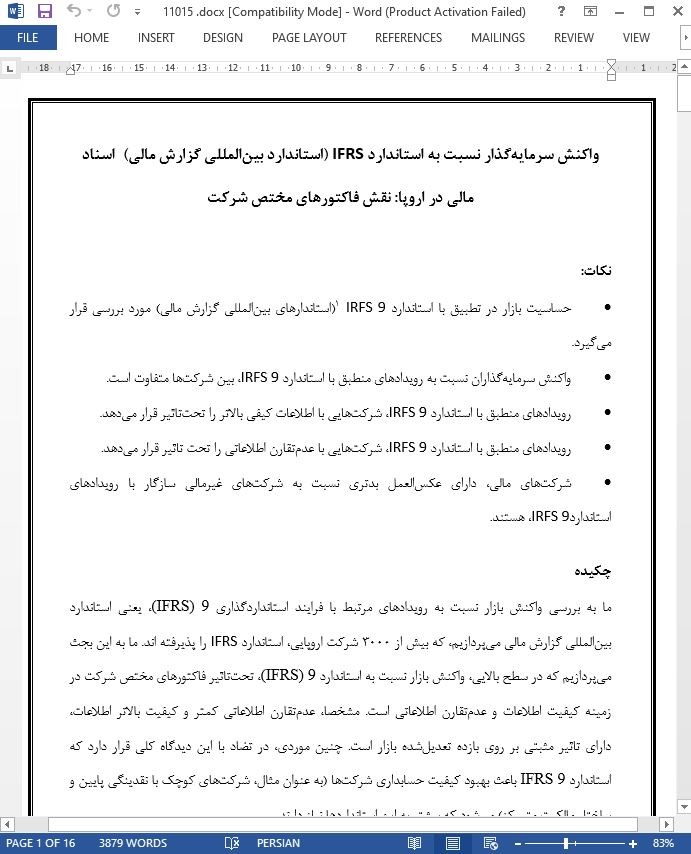
واکنش سرمایهگذار نسبت به استاندارد IFRS (استاندارد بینالمللی گزارش مالی) اسناد مالی در اروپا: نقش فاکتورهای مختص شرکت
عنوان انگلیسی
Investor Reaction to IFRS for Financial Instruments in Europe: The Role of Firm-Specific Factors
صفحات مقاله فارسی
16
صفحات مقاله انگلیسی
17
سال انتشار
2017
رفرنس
دارای رفرنس در داخل متن و انتهای مقاله
نشریه
الزویر - Elsevier
فرمت مقاله انگلیسی
pdf و ورد تایپ شده با قابلیت ویرایش
فرمت ترجمه مقاله
pdf و ورد تایپ شده با قابلیت ویرایش
فونت ترجمه مقاله
بی نازنین
سایز ترجمه مقاله
14
نوع مقاله
ISI
نوع نگارش
مقالات پژوهشی (تحقیقاتی)
نوع ارائه مقاله
ژورنال
پایگاه
اسکوپوس
ایمپکت فاکتور(IF) مجله
3.791 در سال 2019
شاخص H_index مجله
31 در سال 2020
شاخص SJR مجله
0.999 در سال 2019
شناسه ISSN مجله
1544-6123
شاخص Q یا Quartile (چارک)
Q1 در سال 2019
کد محصول
11015
وضعیت ترجمه منابع داخل متن
ترجمه شده است ✓
وضعیت فرمولها و محاسبات در فایل ترجمه
به صورت عکس، درج شده است ✓
ضمیمه
ندارد ☓
بیس
است ✓
مدل مفهومی
ندارد ☓
پرسشنامه
ندارد ☓
متغیر
دارد ✓
رفرنس در ترجمه
در انتهای مقاله درج شده است
رشته و گرایش های مرتبط با این مقاله
حسابداری، حسابداری مالی و حسابرسی
مجله
اسناد پژوهش های مالی - Finance Research Letters
دانشگاه
گروه اقتصاد، مدیریت، دانشگاه ناپل
کلمات کلیدی
واکنش بازار، بررسی رویداد، IRFS 9، عدمتقارن اطلاعاتی، کیفیت اطلاعات
کلمات کلیدی انگلیسی
market reaction - event study - IFRS 9 - information asymmetry - information quality
doi یا شناسه دیجیتال
https://doi.org/10.1016/j.frl.2017.01.002
۰.۰
(هنوز امتیازی ثبت نشده است)