ABSTRACT
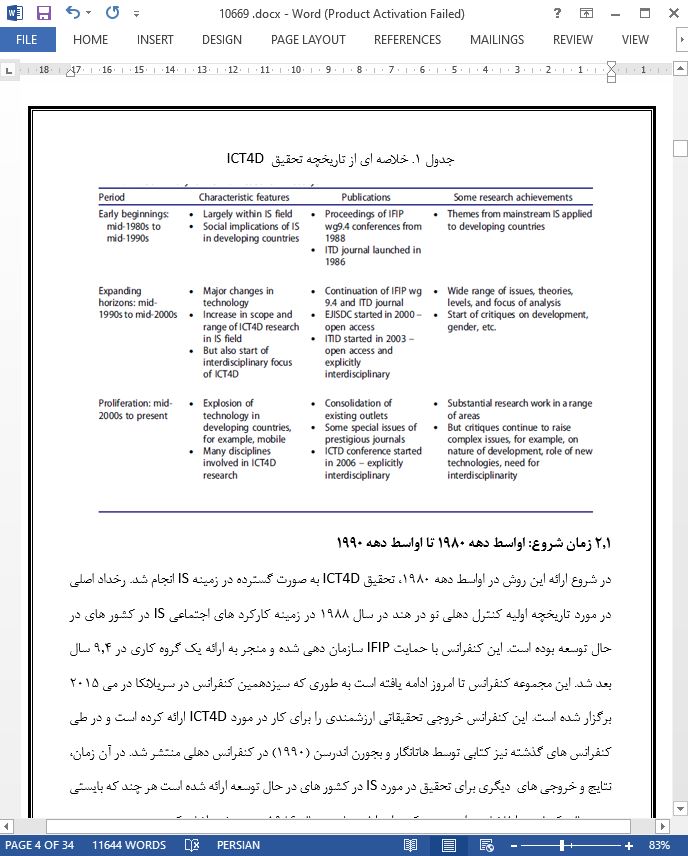
Research on the use of ICTs for international development, or information and communication technology for development (ICT4D) research, has a history going back some 30 years. The purpose of this paper is to take stock of the ICT4D research field at this important juncture in time, when ICTs are increasingly pervasive and when many different disciplines are involved in researching the area. The paper first provides some reflections on the history of the field broken down into three phases from the mid-1980s to the present day. This is followed by a detailed discussion of future research agenda, including topic selection, the role of theory, methodological issues and multidisciplinarity, and research impact. ICT4D research started largely in the academic field of information systems but it is concluded that the future lies in a multidisciplinary interaction between researchers, practitioners, and policy-makers.
1. Introduction
Information and communication technology for development (ICT4D) is a relatively new label for the academic field concerned with the use of ICTs for international development. Other acronyms are sometimes used such as ICTD and ITD. The main focus of both research and practice in the field is the so-called developing countries and, in particular, emphasis is often placed on the less materially advantaged members of those societies. Thus ICT4D can be seen as a part of a wider concern for global development. Terms such as development are multifaceted and often contentious (Heeks, 2010a; Qureshi, 2013), and we will explore some of the nuances of this plurality, and its impacts on the field of ICT4D, later in the paper.
ICT4D and its related research activities can be considered to be of great significance at this point in time. We are all aware of the ubiquity, availability, and widespread use of ICTs. ICTs have penetrated all corners of the globe, not least through the unprecedented spread of mobile phones. However, despite the importance of the field, there are still many questions to which we do not have clear answers. For example, to what extent are ICTs contributing to development, particularly that of the relatively poor members of society? How can we extend the benefits of ICTs more widely in society and mitigate the negative effects of rich/poor divides, for example? How can we as researchers theorize what is happening in a compelling way?
7. Conclusions
The purpose of this paper as set out in the Introduction section was to “take stock” of ICT4D research at this important juncture, where ICTs are pervasive and many disciplines are involved in researching the role of ICTs for development. Some achievements of the ICT4D field were identified through the brief history presented earlier, and future prospects and challenges have been discussed, including topic selection, the role of theory, methodology and multidisciplinarity, and research impact. It is hoped that the paper will provide a useful reference point for both established ICT4D researchers and those relatively new to the area. I will end the paper by a few personal remarks about the ICT4D research field and its importance, and a brief comment to IS researchers in particular.