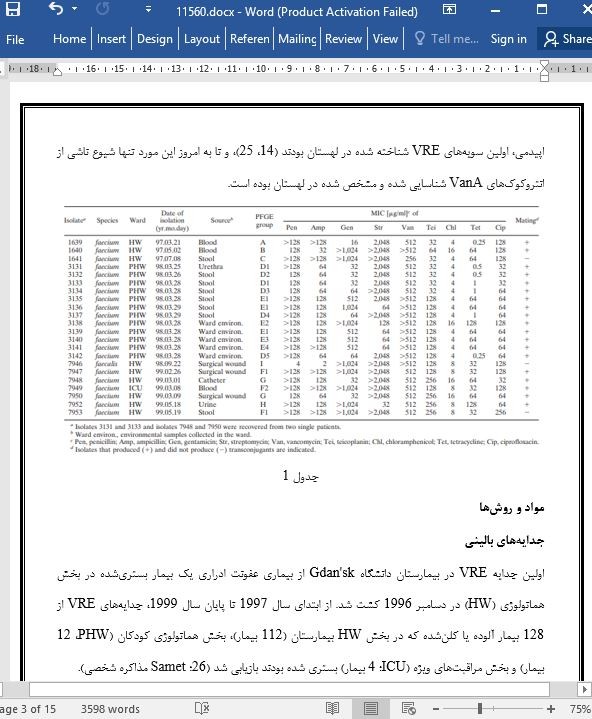
Twenty-two vancomycin-resistant enterococcal (VRE) isolates of the VanA phenotype (21 Enterococcus faecium isolates and 1 E. faecalis isolate), representative of a large outbreak that occurred in a hospital in Gdan´sk, Poland, were studied. All of the isolates demonstrated resistance to a wide variety of other antimicrobial agents in addition to glycopeptides. Several lines of evidence suggested that the outbreak most probably consisted of two epidemics that followed the independent introduction of VanA determinants into two separate hematological wards of the hospital. This hypothesis is supported by the fact that isolates recovered in these wards possessed two different polymorphs of the highly conserved DNA region encompassing the vanRSHAX genes and two distinct polymorph types of Tn1546-like transposons, which contain these genes. According to pulsedfield gel electrophoresis data, the outbreak in the adult hematology ward (HW) was highly polyclonal, which suggested a major role for the horizontal transmission of Tn1546-like elements among nonrelated strains of E. faecium and E. faecalis in this environment. On the other hand, the outbreak in the pediatric hematology ward (PHW) was most probably due to the clonal spread of two epidemic E. faecium strains, which had exchanged a plasmid carrying the Tn1546-like transposon. Restriction fragment length polymorphism studies of transposons and their insertion loci in plasmid DNA have suggested that numerous isolates from both HW and PHW contained two or more copies of Tn1546-like elements that underwent diversification due to various genetic modifications. The reported data demonstrated a very complex epidemiology of the first, and up to now the only, VanA VRE outbreak characterized in Poland.
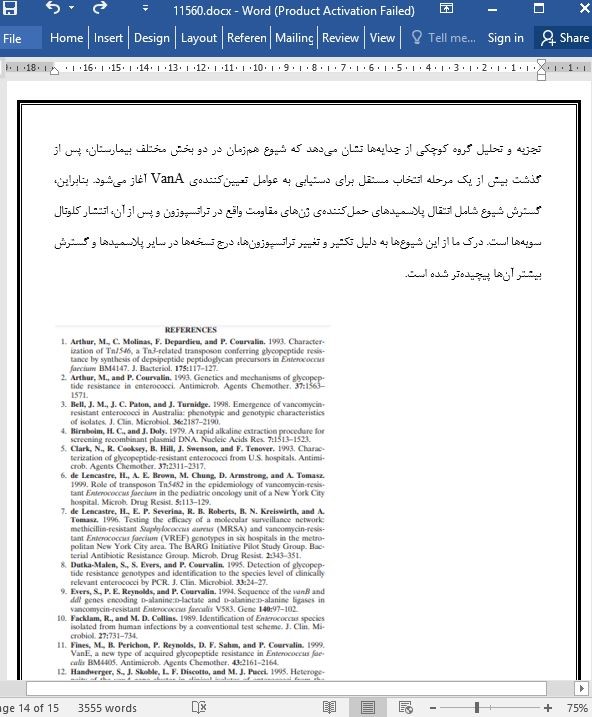
Numerous previous reports have documented the majority of the epidemiological phenomena demonstrated by the present study. Multiple selection events (33), transposition to different replicons (1, 2, 6), plasmid-mediated horizontal transfer (34), and clonal dissemination of epidemic strains (20, 29) were revealed as major factors of vancomycin resistance spread in enterococcal populations. However, in most cases the parallel occurrence of all of these mechanisms was reported either in multicenter studies (12, 23, 29) or studies in which isolates of both human and nonhuman sources were compared (31, 32). Data presented here demonstrate the complexity of the epidemiological situation concerning VRE that may occur in a single medical center. Analysis of a small group of representative isolates has shown that concurrent outbreaks in two different wards of the hospital commenced following more than one independent selection event for acquisition of the VanA determinants. Thus, the developing outbreaks consisted of transmission of plasmids carrying the transposon-located resistance genes, followed by clonal dissemination of the strains. Our understanding of these outbreaks has been subsequently getting more complicated due to transposon multiplication and modification, insertion of copies to other plasmids, and their consequent further spread.