.svg)
.svg)

.svg)


ترجمه مقاله ارتعاشات آزاد غیر خطی نانوتیوب های کربنی منحنی شکل دو جداره - نشریه الزویر

عنوان فارسی
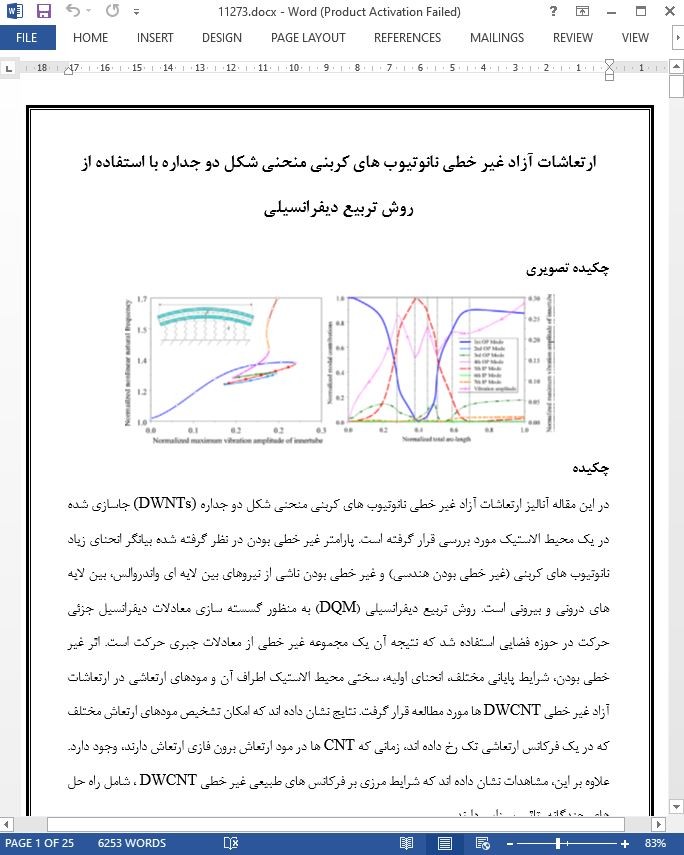
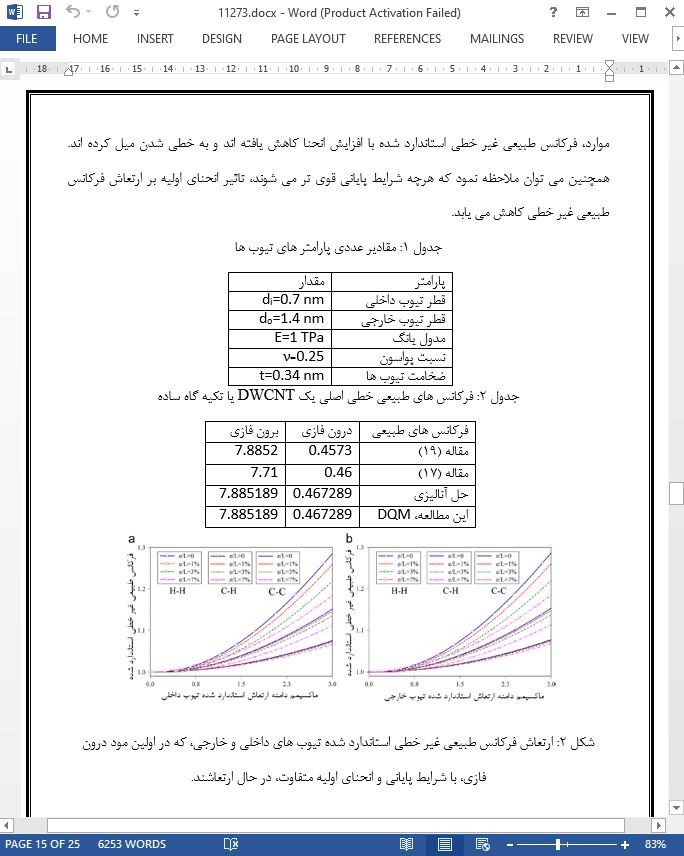
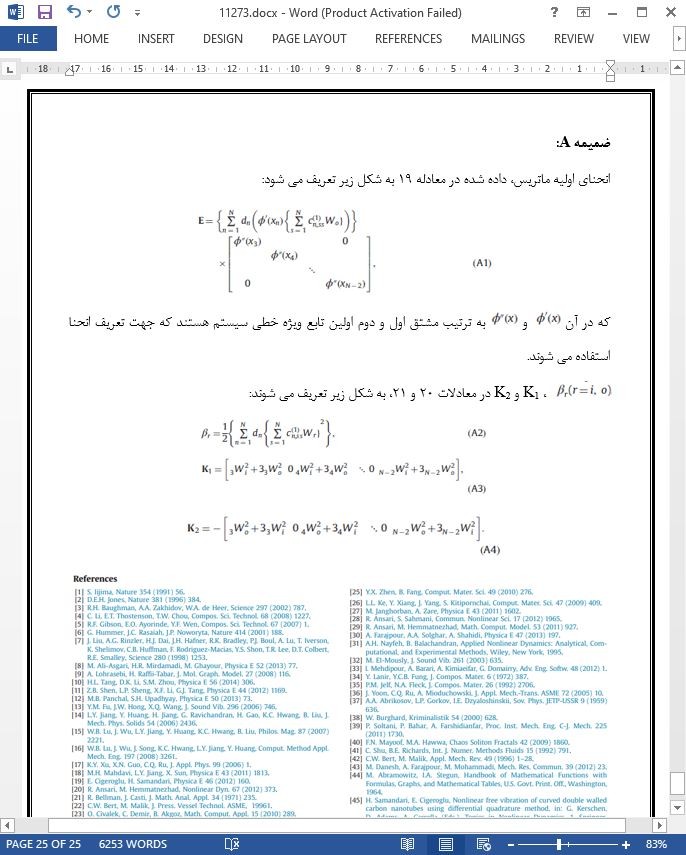
ارتعاشات آزاد غیر خطی نانوتیوب های کربنی منحنی شکل دو جداره با استفاده از روش تربیع دیفرانسیلی
عنوان انگلیسی
Nonlinear free vibrations of curved double walled carbon nanotubes using differential quadrature method
صفحات مقاله فارسی
25
صفحات مقاله انگلیسی
11
سال انتشار
2014
نشریه
الزویر - Elsevier
فرمت مقاله انگلیسی
PDF
فرمت ترجمه مقاله
pdf و ورد تایپ شده با قابلیت ویرایش
فونت ترجمه مقاله
بی نازنین
سایز ترجمه مقاله
14
نوع مقاله
ISI
نوع نگارش
مقالات پژوهشی (تحقیقاتی)
نوع ارائه مقاله
ژورنال
رفرنس
دارای رفرنس در داخل متن و انتهای مقاله
ایمپکت فاکتور(IF) مجله
3.795 در سال 2019
پایگاه
اسکوپوس
شاخص H_index مجله
88 در سال 2020
شاخص Q یا Quartile (چارک)
Q2 در سال 2019
شاخص SJR مجله
0.566 در سال 2019
شناسه ISSN مجله
1386-9477
کد محصول
11273
وضعیت ترجمه عناوین تصاویر و جداول
ترجمه شده است ✓
وضعیت ترجمه متون داخل تصاویر و جداول
ترجمه شده است ✓
وضعیت ترجمه منابع داخل متن
به صورت عدد درج شده است ✓
وضعیت فرمولها و محاسبات در فایل ترجمه
به صورت عکس، درج شده است ✓
ضمیمه
دارد و ترجمه شده است ✓
بیس
نیست ☓
مدل مفهومی
ندارد ☓
پرسشنامه
ندارد ☓
متغیر
ندارد ☓
رفرنس در ترجمه
در انتهای مقاله درج شده است
doi یا شناسه دیجیتال
https://doi.org/10.1016/j.physe.2014.07.010
دانشگاه
دانشگاه فنی خاورمیانه، گروه مهندسی مکانیک، ترکیه
رشته و گرایش های مرتبط با این مقاله
مهندسی مواد، مکانیک، نانومواد، مکانیک سیالات
کلمات کلیدی
نانوتیوب های کربنی منحنی شکل، غیرخطی بودن هندسی، غیرخطی ناشی از واندروالس، روش تربیع دیفرانسیلی، نظریه اویلر-برنولی
کلمات کلیدی انگلیسی
Curved carbon nanotubes - Geometric nonlinearity - Van der Waals nonlinearity - Differential quadrature method - Euler–Bernoulli theory
مجله
فیزیک E: سیستم های کم ابعاد و ساختارهای نانو - Physica E: Low-dimensional Systems and Nanostructures
۰.۰
(هنوز امتیازی ثبت نشده است)