.svg)
.svg)

.svg)


ترجمه مقاله انتخاب مواد دکوراسیون سبز تحت ویژگیهای محیط داخلی - نشریه الزویر

عنوان فارسی
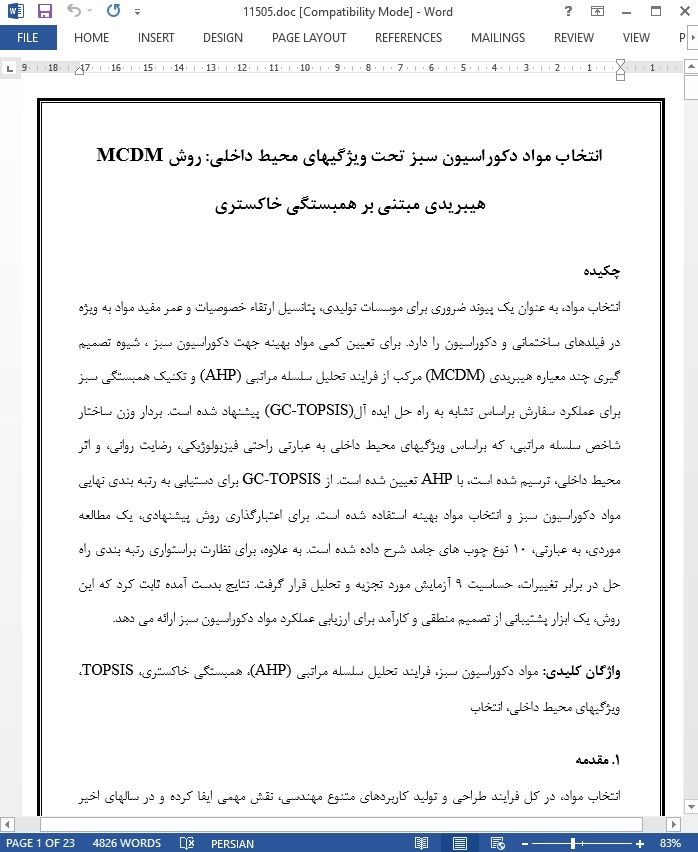
انتخاب مواد دکوراسیون سبز تحت ویژگیهای محیط داخلی: روش MCDM هیبریدی مبتنی بر همبستگی خاکستری
عنوان انگلیسی
Green decoration materials selection under interior environment characteristics: A grey-correlation based hybrid MCDM method
صفحات مقاله فارسی
23
صفحات مقاله انگلیسی
11
سال انتشار
2018
رفرنس
دارای رفرنس در داخل متن و انتهای مقاله
نشریه
الزویر - Elsevier
فرمت مقاله انگلیسی
pdf و ورد تایپ شده با قابلیت ویرایش
فرمت ترجمه مقاله
pdf و ورد تایپ شده با قابلیت ویرایش
فونت ترجمه مقاله
بی نازنین
سایز ترجمه مقاله
14
نوع مقاله
ISI
نوع نگارش
مقالات مروری
نوع ارائه مقاله
ژورنال
پایگاه
اسکوپوس
ایمپکت فاکتور(IF) مجله
14.574 در سال 2020
شاخص H_index مجله
258 در سال 2021
شاخص SJR مجله
3.632 در سال 2020
شناسه ISSN مجله
1364-0321
شاخص Q یا Quartile (چارک)
Q1 در سال 2020
کد محصول
11505
وضعیت ترجمه عناوین تصاویر و جداول
ترجمه شده است ✓
وضعیت ترجمه متون داخل تصاویر و جداول
ترجمه شده است ✓
وضعیت ترجمه منابع داخل متن
به صورت عدد درج شده است ✓
وضعیت فرمولها و محاسبات در فایل ترجمه
به صورت عکس، درج شده است ✓
ضمیمه
ندارد ☓
بیس
نیست ☓
مدل مفهومی
ندارد ☓
پرسشنامه
ندارد ☓
متغیر
ندارد ☓
رفرنس در ترجمه
در انتهای مقاله درج شده است
رشته و گرایش های مرتبط با این مقاله
مهندسی صنایع، برنامه ریزی و تحلیل سیستم ها، بهینه سازی سیستم ها، تولید صنعتی
مجله
بررسی های انرژی تجدید پذیر و پایدار - Renewable and Sustainable Energy Reviews
دانشگاه
دانشکده حمل و نقل، دانشگاه جیلین، چانگچون، چین
کلمات کلیدی
مواد دکوراسیون سبز، فرایند تحلیل سلسله مراتبی (AHP)، همبستگی خاکستری، TOPSIS، ویژگیهای محیط داخلی، انتخاب
کلمات کلیدی انگلیسی
Green decoration materials - Analytical hierarchy process (AHP) - Grey correlation - TOPSIS - Interior environment characteristics - Selection
doi یا شناسه دیجیتال
https://doi.org/10.1016/j.rser.2017.08.050
۰.۰
(هنوز امتیازی ثبت نشده است)