

ترجمه مقاله نقش ضروری ارتباطات 6G با چشم انداز صنعت 4.0
- مبلغ: ۸۶,۰۰۰ تومان
ترجمه مقاله پایداری توسعه شهری، تعدیل ساختار صنعتی و کارایی کاربری زمین
- مبلغ: ۹۱,۰۰۰ تومان

1. Introduction
The development and role of brand identity in new venture start-ups is not well explored. This is despite extensive knowledge of the challenges for new venture start-ups in engendering trust (Ali & Birley, 1998), reputational capital (Petkova, Rindova, & Gupta, 2008) and building networks (Shane & Cable, 2002) for companies that do not have a performance track record. For a new venture the acquisition of legitimacy: reputation legitimacy (Abimbola & Kocak, 2007; Deephouse & Suchman, 2008) and network legitimacy (Low & Johnston, 2008), is key to acquiring financial backing (Shane & Cable, 2002), network acceptance and enabling access to essential resources (Zimmerman & Zeitz, 2002). In this article, we focus on the brand identity as form of reputational legitimacy, built not only upon the reputational capital of past behaviours of the founder but of the brand itself as it explores and interacts within its brand eco-system (Gyrd-Jones & Kornum, 2013).
7. Limitations and future research
As with all research the findings of this study are subject to some limitations. Process research always contends with a trade-off between accuracy and generalizability (Pentland, 1999). Owing to its multidimensional nature, the phenomenon of corporate brand identity development, as with most real processes, is virtually impossible to capture absolutely (ibid., p. 720). However, the purpose of this study is to understand how and why corporate brand identity develops in the context of new B2B venture development rather than to provide a universal explanation of the phenomenon. Applying this research approach to studies across a number of firms would further our understanding of the dynamic nature of the brand identity development process.
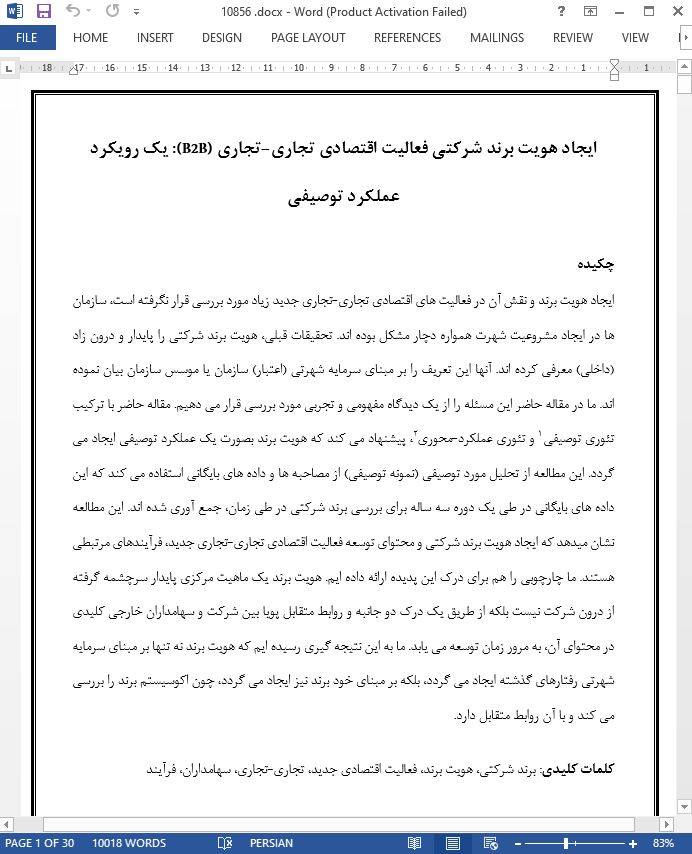
1- مقدمه
ایجاد هویت برند و نقش آن در مراحل آغازین فعالیت های اقتصادی جدید بطور کامل مورد بررسی قرار نگرفته است، اگرچه اطلاعات زیادی وجود دارد که نشان میدهد فعالیت های اقتصادی جدید در مراحل آغازین خود برای ایجاد اعتماد (علی و برلی 1998)، سرمایه شهرتی (پتکووا، ریندوا، و گوپتا 2008)، و ایجاد شبکه هایی برای شرکت (شِین و کِیبل 2002) دچار مشکل هستند. مواردی که ذکر کردیم برای شرکت هایی مورد نیاز هستند که تجربه و سابقه موفقیت زیادی ندارند. کسب مشروعیت شهرت (آبیم بولا و کوکاک 2007؛ دیپ هاوس و ساچمن 2008)، و مشروعیت شبکه (لُو و جانستون 2008) برای یک فعالیت اقتصادی جدید خیلی مهم است، و کلید کسب پشتیبانی مالی (شین و کیبل 2002)، پذیرش شبکه و ممکن ساختن دسترسی به منابع ضروری (زیمرمن و زیز 2002) می باشد. ما در این مقاله بر هویت برند (بعنوان شکلی از مشروعیت شهرت) تمرکز می کنیم که این هویت نه تنها بر پایه سرمایه شهرتی رفتارهای گذشته موسس شرکت ایجاد می شود، بلکه بر پایه خود برند نیز ایجاد می شود چون روابط مقابل درون اکوسیستم برند را بررسی می کند و با آن تعامل دارد (گیرد-جونز و کورنام 2013).
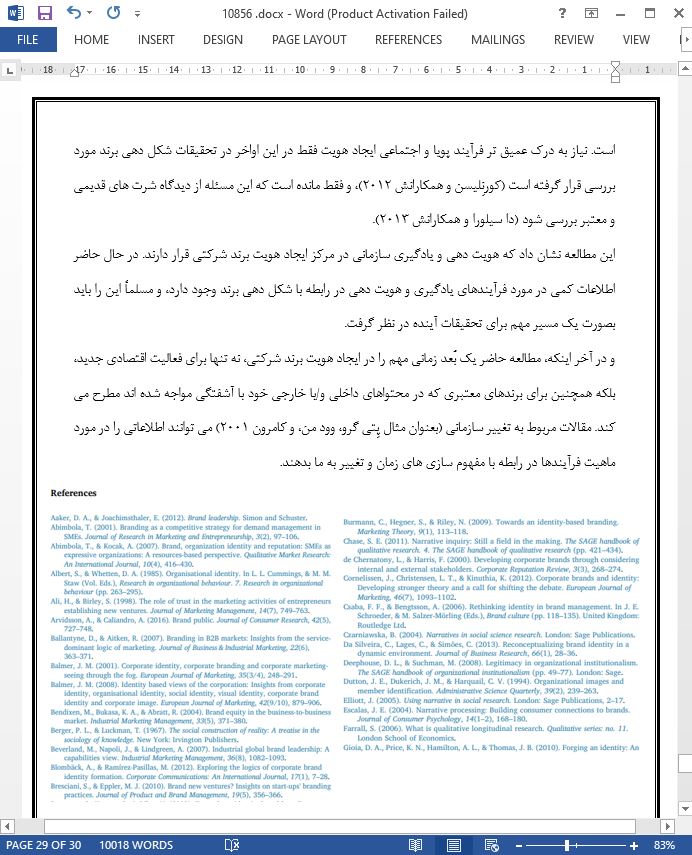
7- محدودیت های مطالعه حاضر و پیشنهاداتی برای مطالعات آینده
مانند همه تحقیقات دیگر، یافته های مطالعه ما هم محدودیت هایی دارد. تحقیقات فرآیند همیشه با ایجاد تعادل بین دقت و تعمیم پذیری، دست و پنجه نرم می کند (پِنت لند 1999). درک مطلق پدیده ایجاد هویت برند شرکتی بخاطر ماهیت چند بعدی خود (مانند اغلب فرآیند های واقعی دیگر)، در واقعیت کار غیرممکنی است (همان منبع، ص 720). البته هدف این مطالعه اینست که درک کند که هویت برند شرکتی چطور و چرا در محتوای توسعه فعالیت اقتصادی تجاری-تجاری جدید توسعه می یابد، بجای اینکه توضیح فراگیری را در مورد این پدیده فراهم سازد. استفاده از این رویکرد تحقیقاتی در مطالعه بر روی تعدادی از شرکت ها سبب افزایش درک ما از ماهیت پویای فرآیند ایجاد هویت برند می شود.

