.svg)
.svg)

.svg)


ترجمه مقاله رفتار تناوبی تسلیم برشی و خمشی میراگر فلزی - نشریه الزویر

عنوان فارسی
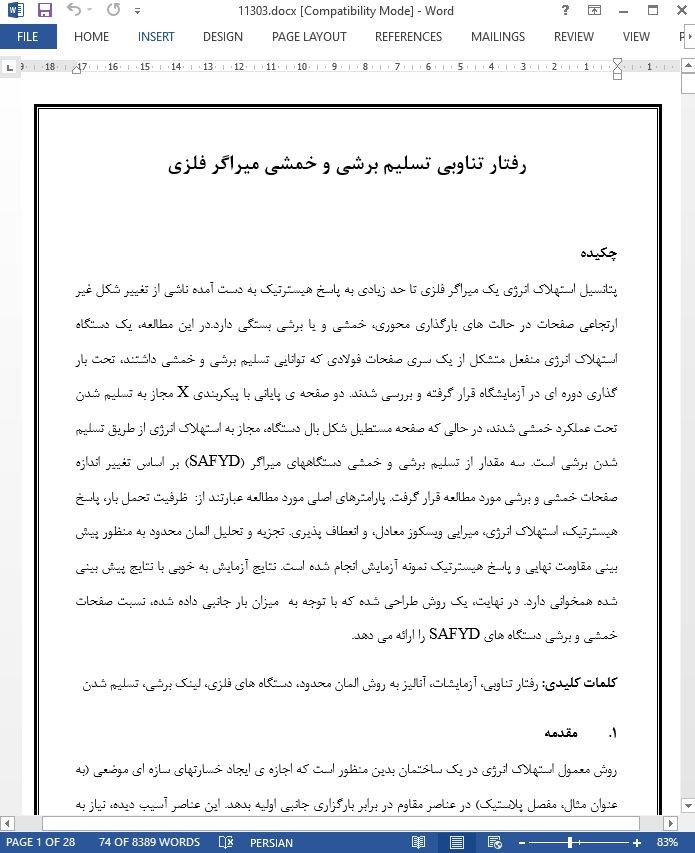
رفتار تناوبی تسلیم برشی و خمشی میراگر فلزی
عنوان انگلیسی
Cyclic behavior of shear-and-flexural yielding metallic dampers
صفحات مقاله فارسی
28
صفحات مقاله انگلیسی
11
سال انتشار
2015
رفرنس
دارای رفرنس در داخل متن و انتهای مقاله
نشریه
الزویر - Elsevier
فرمت مقاله انگلیسی
PDF
فرمت ترجمه مقاله
pdf و ورد تایپ شده با قابلیت ویرایش
فونت ترجمه مقاله
بی نازنین
سایز ترجمه مقاله
14
نوع مقاله
ISI
نوع نگارش
مقالات پژوهشی (تحقیقاتی)
نوع ارائه مقاله
ژورنال
پایگاه
اسکوپوس
ایمپکت فاکتور(IF) مجله
3.564 در سال 2020
شاخص H_index مجله
90 در سال 2021
شاخص SJR مجله
1.516 در سال 2020
شناسه ISSN مجله
0143-974X
شاخص Q یا Quartile (چارک)
Q1 در سال 2020
کد محصول
11303
وضعیت ترجمه عناوین تصاویر و جداول
ترجمه شده است ✓
وضعیت ترجمه متون داخل تصاویر و جداول
ترجمه شده است ✓
وضعیت ترجمه منابع داخل متن
به صورت عدد درج شده است ✓
وضعیت فرمولها و محاسبات در فایل ترجمه
به صورت عکس، درج شده است ✓
ضمیمه
ندارد ☓
بیس
نیست ☓
مدل مفهومی
ندارد ☓
پرسشنامه
ندارد ☓
متغیر
ندارد ☓
رفرنس در ترجمه
در انتهای مقاله درج شده است
رشته و گرایش های مرتبط با این مقاله
مهندسی عمران، سازه، زلزله
مجله
مجله تحقیقات فولاد ساختمانی - Journal of Constructional Steel Research
دانشگاه
گروه مهندسی عمران، انستیتوی فناوری هندی، دهلی نو، هند
کلمات کلیدی
رفتار تناوبی، آزمایشات، آنالیز به روش المان محدود، دستگاه های فلزی، لینک برشی، تسلیم شدن
کلمات کلیدی انگلیسی
Cyclic behavior - Experiments - Finite element analysis - Metallic devices - Shear links - Yielding
doi یا شناسه دیجیتال
https://doi.org/10.1016/j.jcsr.2015.08.006
۰.۰
(هنوز امتیازی ثبت نشده است)