.svg)
.svg)

.svg)


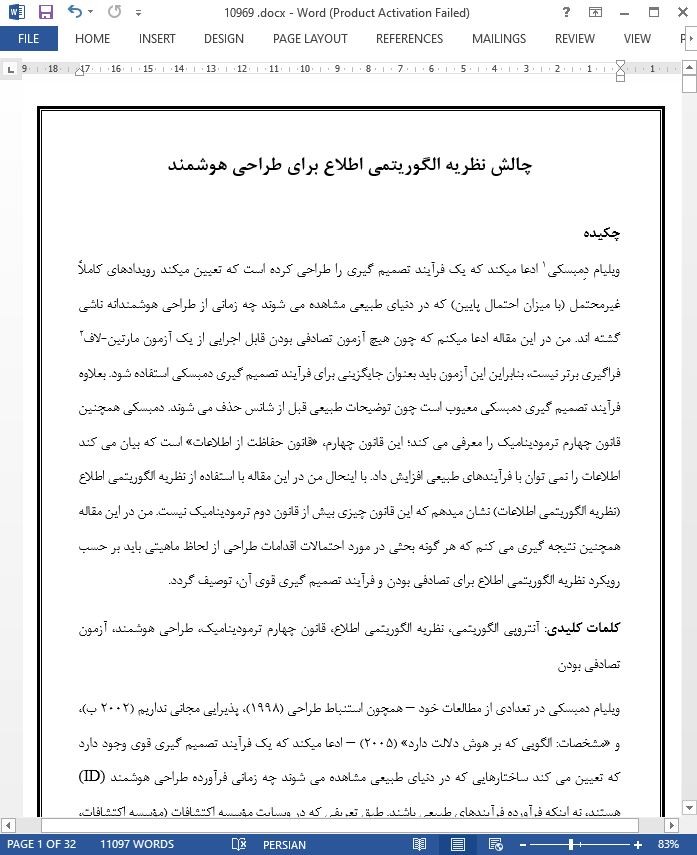
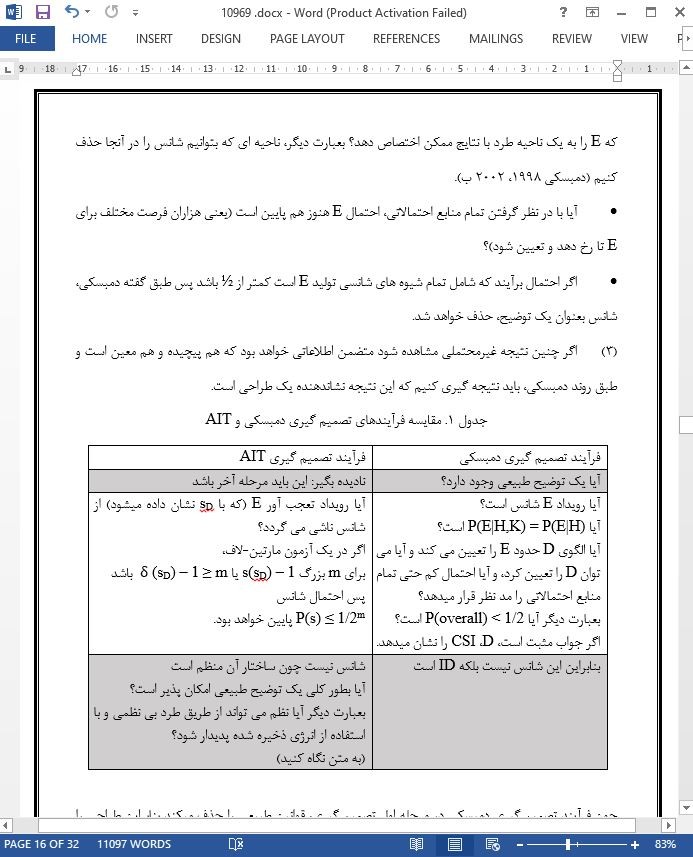
ترجمه مقاله چالش نظریه الگوریتمی اطلاع برای طراحی هوشمند - نشریه وایلی

عنوان فارسی
چالش نظریه الگوریتمی اطلاع برای طراحی هوشمند
عنوان انگلیسی
An Algorithmic Information Theory Challenge To Intelligent Design
صفحات مقاله فارسی
32
صفحات مقاله انگلیسی
24
سال انتشار
2014
رفرنس
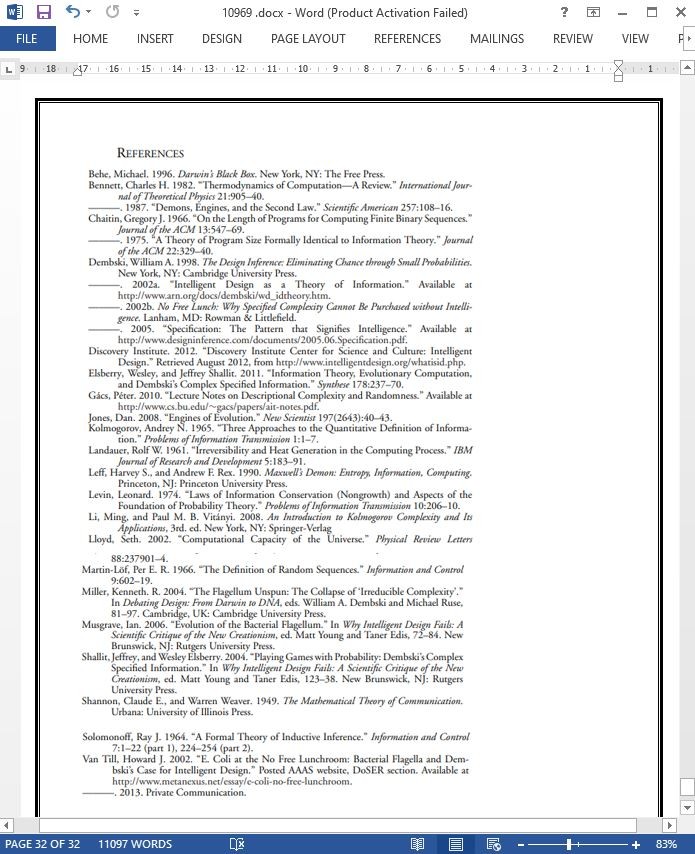
دارای رفرنس در داخل متن و انتهای مقاله
نشریه
وایلی - Wiley
فرمت مقاله انگلیسی
pdf و ورد تایپ شده با قابلیت ویرایش
فرمت ترجمه مقاله
pdf و ورد تایپ شده با قابلیت ویرایش
فونت ترجمه مقاله
بی نازنین
سایز ترجمه مقاله
14
نوع مقاله
ISI
نوع ارائه مقاله
ژورنال
پایگاه
اسکوپوس
ایمپکت فاکتور(IF) مجله
0.545 در سال 2019
شاخص H_index مجله
22 در سال 2020
شاخص SJR مجله
0.278 در سال 2019
شناسه ISSN مجله
1467-9744
شاخص Q یا Quartile (چارک)
Q1 در سال 2019
کد محصول
10969
وضعیت ترجمه عناوین تصاویر و جداول
ترجمه شده است ✓
وضعیت ترجمه متون داخل تصاویر و جداول
ترجمه شده است ✓
وضعیت ترجمه منابع داخل متن
ترجمه شده است ✓
وضعیت فرمولها و محاسبات در فایل ترجمه
به صورت عکس، درج شده است ✓
ضمیمه
ندارد ☓
بیس
نیست ☓
مدل مفهومی
ندارد ☓
پرسشنامه
ندارد ☓
متغیر
ندارد ☓
رفرنس در ترجمه
در داخل متن و انتهای مقاله درج شده است
رشته و گرایش های مرتبط با این مقاله
فلسفه و کامپیوتر، هوش مصنوعی
مجله
مجله مذهب و علوم - Journal of religion & Science
دانشگاه
دانشکده مدیریت، دانشگاه ویکتوریا ولینگتون، نیوزیلند
کلمات کلیدی
آنتروپی الگوریتمی، نظریه الگوریتمی اطلاع، قانون چهارم ترمودینامیک، طراحی هوشمند، آزمون تصادفی بودن
کلمات کلیدی انگلیسی
algorithmic entropy - algorithmic information theory - fourth law of thermodynamics - Intelligent Design - randomness test
doi یا شناسه دیجیتال
https://doi.org/10.1111/zygo.12059
۰.۰
(هنوز امتیازی ثبت نشده است)