.svg)
.svg)

.svg)


ترجمه مقاله یک مدل شبکه DEA جدید برای ارزیابی عملکرد صندوق سرمایه گذاری مشترک - نشریه الزویر

عنوان فارسی
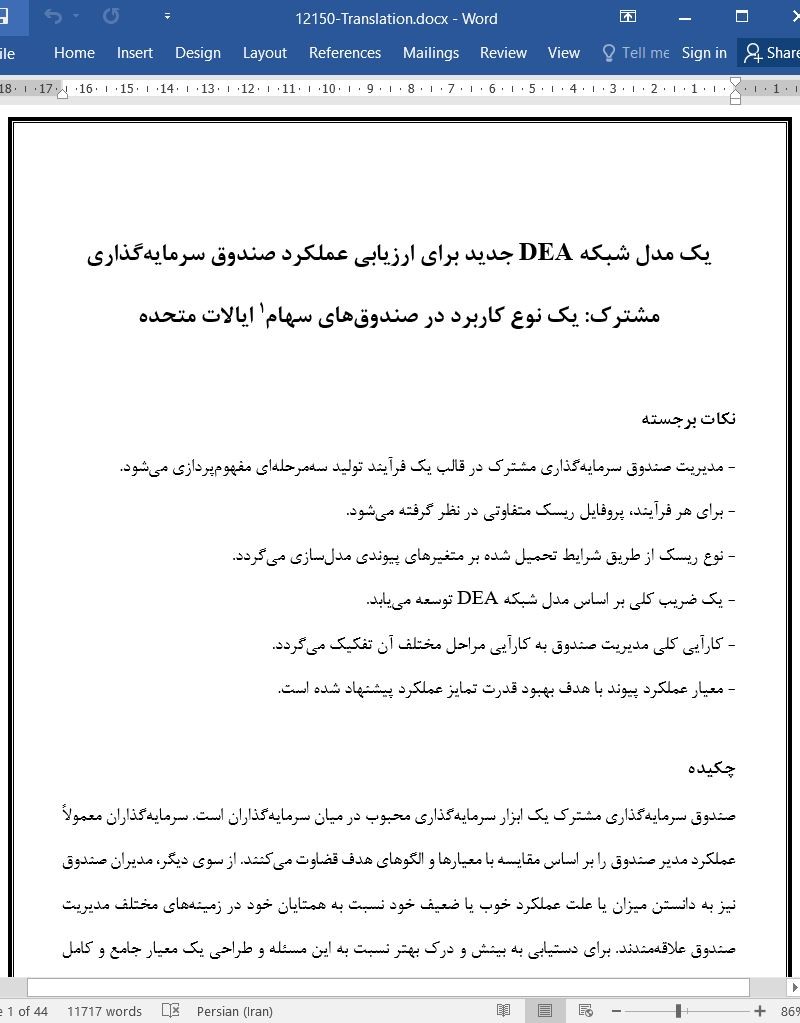
یک مدل شبکه DEA جدید برای ارزیابی عملکرد صندوق سرمایه گذاری مشترک: یک نوع کاربرد در صندوق های سهام ایالات متحده
عنوان انگلیسی
A new network DEA model for mutual fund performance appraisal: An application to U.S. equity mutual funds
صفحات مقاله فارسی
44
صفحات مقاله انگلیسی
38
سال انتشار
2018
رفرنس
دارای رفرنس در داخل متن و انتهای مقاله
نشریه
الزویر - Elsevier
فرمت مقاله انگلیسی
PDF
فرمت ترجمه مقاله
pdf و ورد تایپ شده با قابلیت ویرایش
فونت ترجمه مقاله
بی نازنین
سایز ترجمه مقاله
14
نوع مقاله
ISI
نوع نگارش
مقالات پژوهشی (تحقیقاتی)
نوع ارائه مقاله
ژورنال
پایگاه
اسکوپوس
ایمپکت فاکتور(IF) مجله
7.555 در سال 2020
شاخص H_index مجله
142 در سال 2021
شاخص SJR مجله
2.500 در سال 2020
شناسه ISSN مجله
0305-0483
شاخص Q یا Quartile (چارک)
Q1 در سال 2020
کد محصول
12150
وضعیت ترجمه عناوین تصاویر و جداول
ترجمه شده است ✓
وضعیت ترجمه متون داخل تصاویر و جداول
ترجمه شده است ✓
وضعیت ترجمه منابع داخل متن
ترجمه شده است ✓
وضعیت فرمولها و محاسبات در فایل ترجمه
به صورت عکس، درج شده است ✓
ضمیمه
دارد و ترجمه شده است ✓
بیس
نیست ☓
مدل مفهومی
ندارد ☓
پرسشنامه
ندارد ☓
متغیر
ندارد ☓
فرضیه
ندارد ☓
رفرنس در ترجمه
در انتهای مقاله درج شده است
رشته و گرایش های مرتبط با این مقاله
اقتصاد، برنامه ریزی سیستم های اقتصادی، اقتصاد مالی و اقتصاد پولی
مجله
امگا - Omega
دانشگاه
گروه اقتصاد سنجی و آمار کسب و کار، دانشکده بازرگانی موناش، دانشگاه موناش، استرالیا
کلمات کلیدی
مدیریت صندوق سرمایه گذاری مشترک، تحلیل پوششی داده های شبکه، ارزیابی عملکرد، تفکیک کارآیی
کلمات کلیدی انگلیسی
Mutual fund management - Network data envelopment analysis - Performance appraisal - Efficiency decomposition
doi یا شناسه دیجیتال
https://doi.org/10.1016/j.omega.2017.06.006
۰.۰
(هنوز امتیازی ثبت نشده است)