Abstract
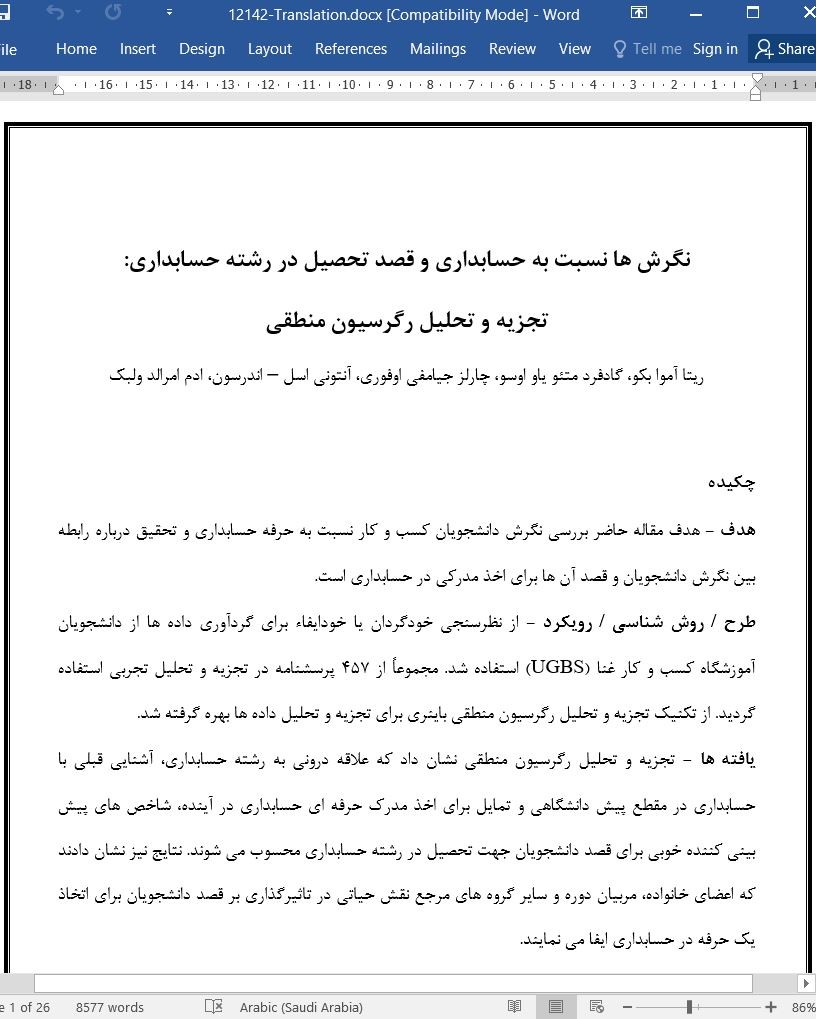
Purpose – The purpose of this paper is to examine the attitude of business students towards the accounting profession and investigate the relationship between students’ attitude and their intention to pursue a degree in accounting.
Design/methodology/approach – A self-administered survey was used to collect data from students from the University of Ghana Business School (UGBS). A total of 457 questionnaires were used in the empirical analysis. A binary logistic regression analysis technique was employed to analyse the data.
Findings – The logistic regression analysis demonstrates that intrinsic interest in the accounting discipline, prior exposure to accounting at the senior high level and the desire to pursue professional accounting qualification in future are good predictors of students’ intention to major in accounting. The results also indicate family members, course instructors and other referent group play a crucial role in influencing students’ intention to pursue a career in accounting.
Practical implications – The findings of this study have important implications for the professional accountancy body and business educators interested in addressing the skill shortage in the accounting profession.
Originality/value – This study does not only examine students’ attitude towards the accounting discipline but also investigates how such attitudes influence intentions to major in accounting.
Introduction
One topical issue that has received considerable interest in accounting research, particularly in the field of accounting education is the shortages in the supply of professional accountants to meet the ever-growing demand. Prior studies have shown that the demand for professional accountants in many parts of the world, have over the years, exceeded the supply (Chen, 2012; Nor et al., 2013; Van Zyl and de Villiers, 2011). Interestingly, while countries are still struggling to deal with the shortages in the supply of professional accountants, it is expected that the demand for accountants globally will increase in the future due to the rapid growth in business activities (Coe, 2016). By implication, the challenge of meeting the demand of accountants globally could worsen if urgent steps are not taken to address the deficit in the supply of accountants. While the reasons for the global shortage in the supply of accountants remain an open question, a common theme emerging from prior empirical works attribute the unfortunate trend to the continuous decline in the number of university students who pursue accounting as a course major and the unwillingness of some accounting graduates to pursue accounting as a career ( Jackling and Calero, 2006; Cappelletto, 2010).
Conclusions
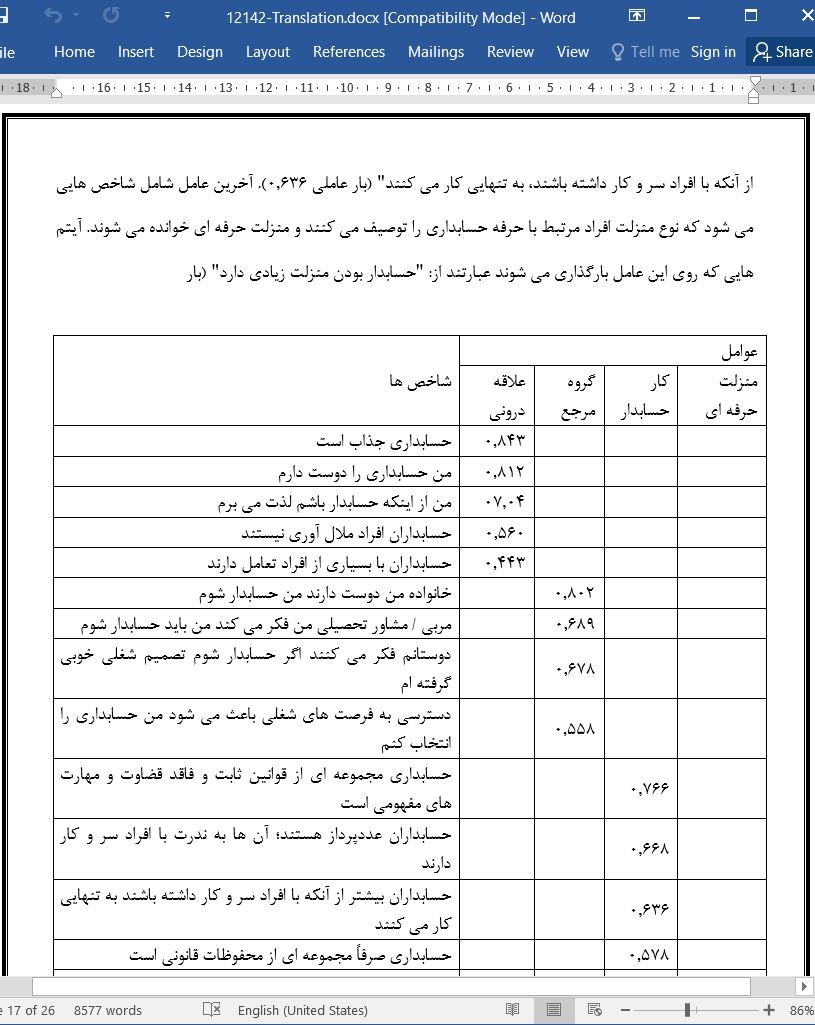
This paper examined the attitude of students towards the accounting profession and the intention of students to pursue a career in accounting. Results of this study reveal that students with prior exposure to accounting in the senior high school and those with the desire to pursue professional accounting qualification in future usually have a positive perception about accounting than their peers. The results further suggest that the personal interest of students and the influence of other referent group are key predictors of students’ intention to pursue a career in accounting. Thus, unlike what pertains in other jurisdictions (Ng et al., 2017), within the Ghanaian context, third parties play a crucial role in influencing students’ intention to pursue a career in accounting. Also, students with prior exposure to accounting course have greater motivation to pursue a degree in accounting than their peers with no such background. Further, students with the desire of pursuing professional accounting qualification in future are more likely to major in accounting at the university level than their counterparts with no intention of earning a professional accounting qualification.