.svg)
.svg)

.svg)


ترجمه مقاله حسابداری و پیامدهای اقتصادی کاهش دستمزد مدیران عامل - نشریه الزویر

عنوان فارسی
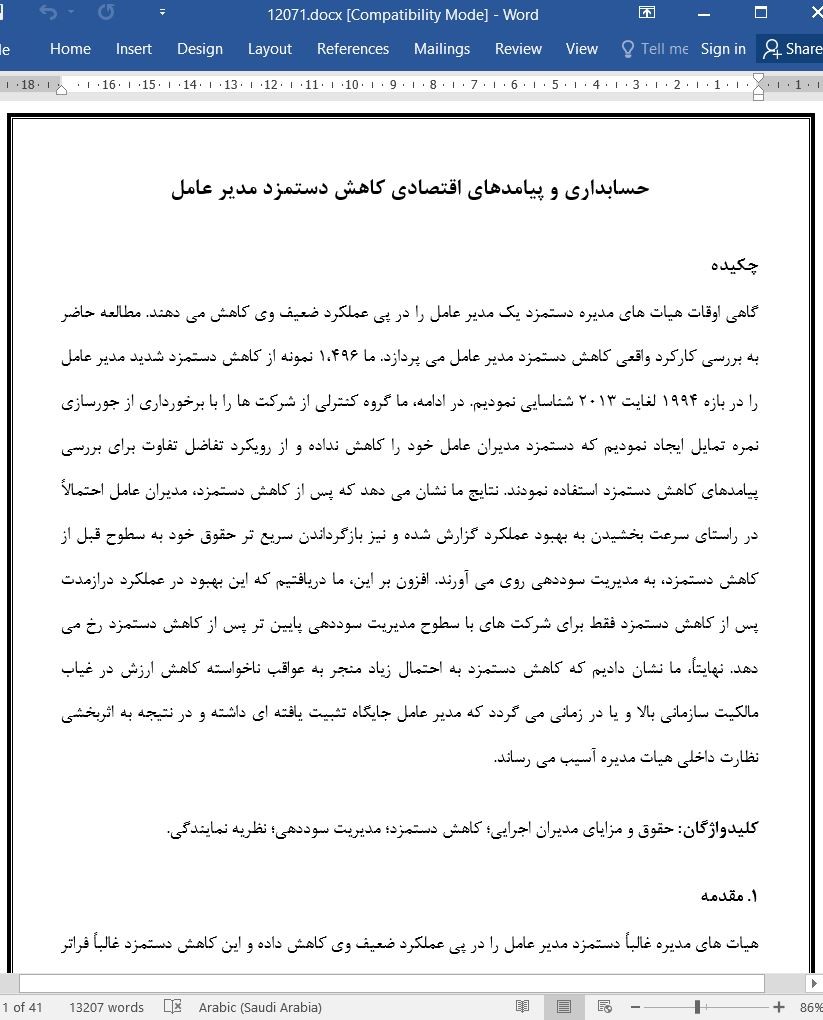
حسابداری و پیامدهای اقتصادی کاهش دستمزد مدیران عامل
عنوان انگلیسی
Accounting and economic consequences of CEO paycuts
صفحات مقاله فارسی
41
صفحات مقاله انگلیسی
20
سال انتشار
2018
رفرنس
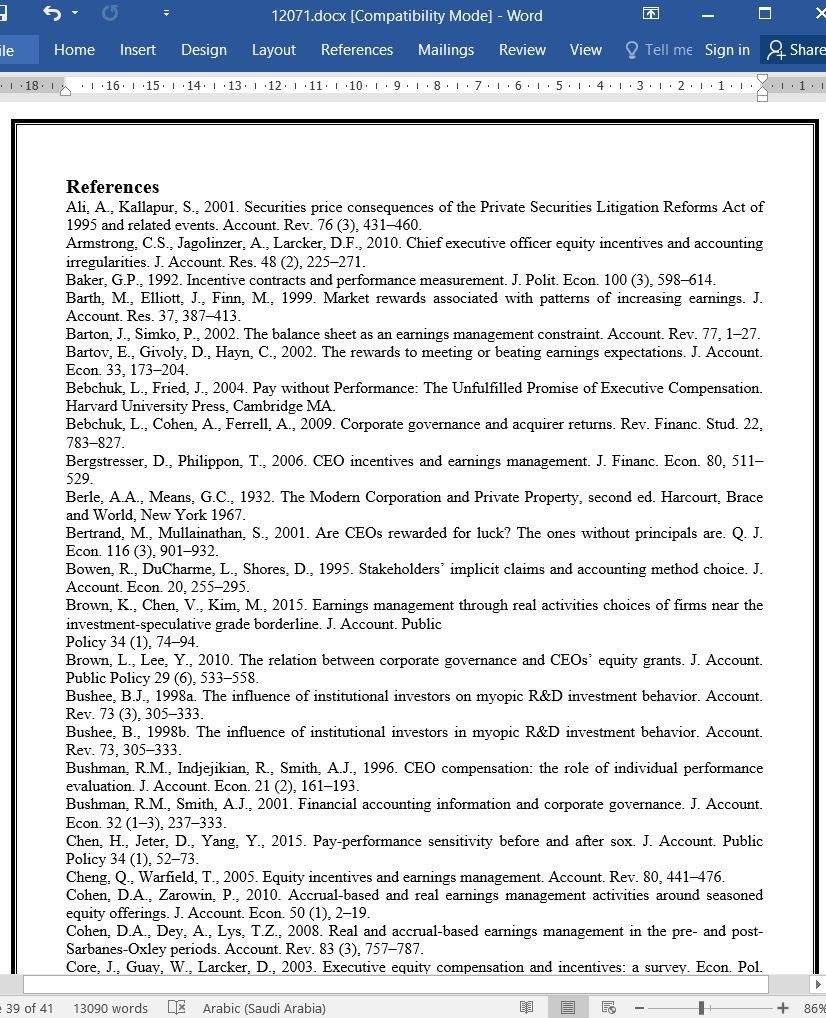
دارای رفرنس در داخل متن و انتهای مقاله
نشریه
الزویر - Elsevier
فرمت مقاله انگلیسی
pdf و ورد تایپ شده با قابلیت ویرایش
فرمت ترجمه مقاله
pdf و ورد تایپ شده با قابلیت ویرایش
فونت ترجمه مقاله
بی نازنین
سایز ترجمه مقاله
14
نوع مقاله
ISI
نوع نگارش
مقالات پژوهشی (تحقیقاتی)
نوع ارائه مقاله
ژورنال
پایگاه
اسکوپوس
ایمپکت فاکتور(IF) مجله
2.643 در سال 2020
شاخص H_index مجله
75 در سال 2021
شاخص SJR مجله
1.264 در سال 2020
شناسه ISSN مجله
0278-4254
شاخص Q یا Quartile (چارک)
Q1 در سال 2020
کد محصول
12071
وضعیت ترجمه منابع داخل متن
ترجمه شده است ✓
وضعیت فرمولها و محاسبات در فایل ترجمه
به صورت عکس، درج شده است ✓
ضمیمه
دارد اما ترجمه نشده است ☓
بیس
است ✓
مدل مفهومی
ندارد ☓
پرسشنامه
ندارد ☓
متغیر
دارد ✓
فرضیه
دارد ✓
رفرنس در ترجمه
در انتهای مقاله درج شده است
رشته و گرایش های مرتبط با این مقاله
حسابداری ، مدیریت، حسابداری مدیریت و مدیریت اجرایی
مجله
مجله حسابداری و سیاست عمومی - Journal of Accounting and Public Policy
دانشگاه
دانشگاه هیوستون، ایالات متحده
کلمات کلیدی
حقوق و مزایای مدیران اجرایی، کاهش دستمزد، مدیریت سوددهی، نظریه نمایندگی
کلمات کلیدی انگلیسی
Executive compensation - Pay cut - Earnings management - Agency theory
doi یا شناسه دیجیتال
https://doi.org/10.1016/j.jaccpubpol.2018.01.002
۰.۰
(هنوز امتیازی ثبت نشده است)