.svg)
.svg)

.svg)


ترجمه مقاله پیش بینی صریح زمانی زلزله با استفاده از شبکه عصبی عمیق - نشریه الزویر

عنوان فارسی
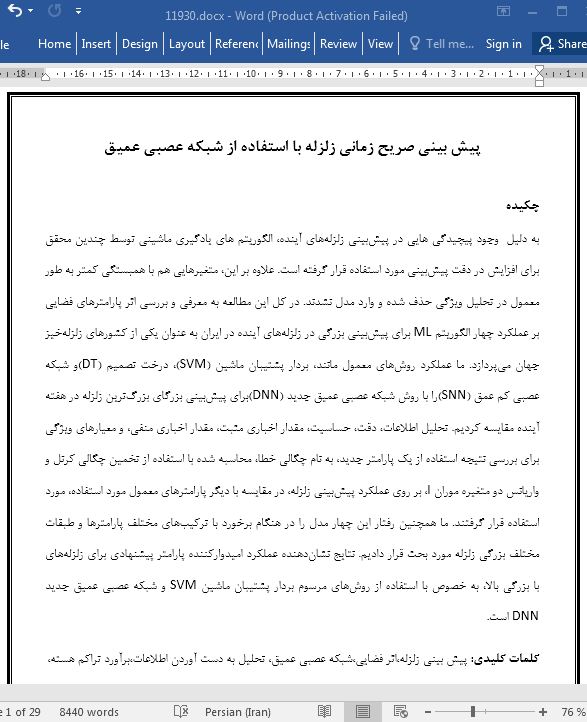
پیش بینی صریح زمانی زلزله با استفاده از شبکه عصبی عمیق
عنوان انگلیسی
Spatiotemporally explicit earthquake prediction using deep neural network
صفحات مقاله فارسی
29
صفحات مقاله انگلیسی
11
سال انتشار
2021
رفرنس
دارای رفرنس در داخل متن و انتهای مقاله
نشریه
الزویر - Elsevier
فرمت مقاله انگلیسی
PDF
فرمت ترجمه مقاله
pdf و ورد تایپ شده با قابلیت ویرایش
فونت ترجمه مقاله
بی نازنین
سایز ترجمه مقاله
14
نوع مقاله
ISI
نوع نگارش
مقالات پژوهشی (تحقیقاتی)
نوع ارائه مقاله
ژورنال
پایگاه
اسکوپوس
ایمپکت فاکتور(IF) مجله
3.830 در سال 2020
شاخص H_index مجله
97 در سال 2021
شاخص SJR مجله
1.444 در سال 2020
شناسه ISSN مجله
0267-7261
شاخص Q یا Quartile (چارک)
Q1 در سال 2020
کد محصول
11930
وضعیت ترجمه عناوین تصاویر و جداول
ترجمه شده است ✓
وضعیت ترجمه متون داخل تصاویر و جداول
ترجمه شده است ✓
وضعیت ترجمه منابع داخل متن
ترجمه شده است ✓
وضعیت فرمولها و محاسبات در فایل ترجمه
تایپ شده است ✓
ضمیمه
ندارد ☓
بیس
نیست ☓
مدل مفهومی
ندارد ☓
پرسشنامه
ندارد ☓
متغیر
دارد ✓
فرضیه
ندارد ☓
رفرنس در ترجمه
در انتهای مقاله درج شده است
رشته و گرایش های مرتبط با این مقاله
مهندسی عمران، سازه، زلزله، مدیریت ساخت
مجله
دینامیک خاک و مهندسی زلزله - Soil Dynamics and Earthquake Engineering
دانشگاه
دانشکده مهندسی زمین شناسی و ژئوماتیک، دانشگاه صنعتی K.N.Tosi ، تهران، ایران
کلمات کلیدی
پیش بینی زلزله،اثر فضایی،شبکه عصبی عمیق، تحلیل به دست آوردن اطلاعات،برآورد تراکم هسته، Bivariate Moran’s I
کلمات کلیدی انگلیسی
Earthquake prediction - Spatial effect - Deep neural network - Information gain analysis - Kernel density estimation - Bivariate Moran’s I
doi یا شناسه دیجیتال
https://doi.org/10.1016/j.soildyn.2021.106663
۰.۰
(هنوز امتیازی ثبت نشده است)