Abstract
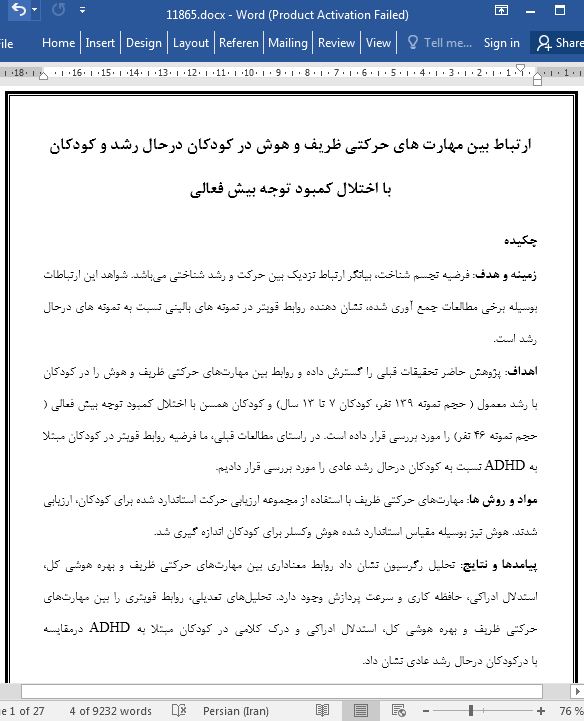
Background The embodied cognition hypothesis implies a close connection between motor and cognitive development. Evidence for these associations is accumulating, with some studies indicating stronger relations in clinical than typically developing samples.
Aims The present study extends previous research and investigates relations between fine motor skills and intelligence in typically developing children (n = 139, 7–13 years) and same-aged children with attention deficit hyperactivity disorder (ADHD, n = 46). In line with previous findings, we hypothesized stronger relations in children with ADHD than in typically developing children.
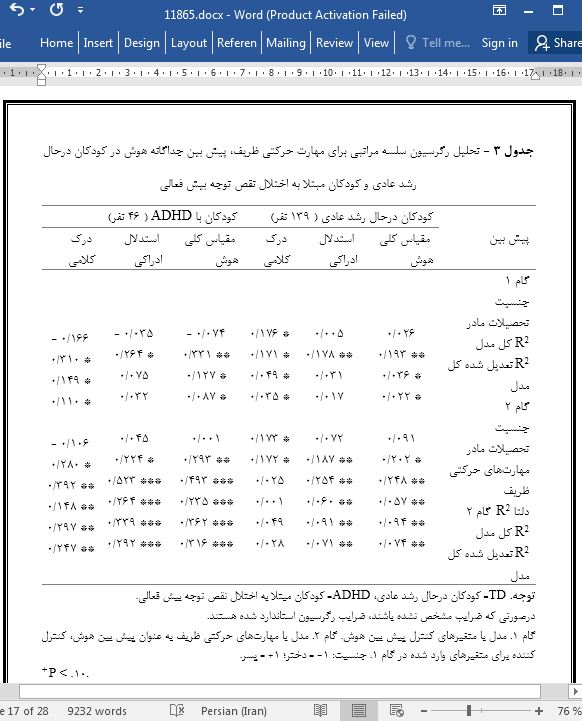
Methods and procedure Fine motor skills were assessed using the standardized Movement Assessment Battery for Children. Intelligence was measured with the standardized Wechsler Intelligence Scale for Children. Outcomes and results Regression analyses indicated significant relations between fine motor skills and full-scale IQ, perceptual reasoning, working memory, and processing speed. Moderation analyses identified stronger relations between fine motor skills and full-scale IQ, perceptual reasoning, and verbal comprehension in children with ADHD compared to typically developing children.
Conclusions and implications Results suggest a close relation between fine motor skills and intelligence in children with and without ADHD, with children diagnosed with ADHD showing stronger relations. Findings support combined motor-cognitive interventions in treating children with ADHD.
What this paper adds
The current study investigated relations between fine motor skills and intelligence in typically developing children and children with attention deficit hyperactivity disorder (ADHD). Previous research has examined small and heterogenous clinical samples, including children with multiple developmental disabilities. By contrast, the present study used a large homogeneous sample of children with ADHD which allows specific implications. Furthermore, recent studies have mainly investigated samples of typically developing children at the age of kindergarten and their transition to school. The present sample extends these studies by examining the association between fine motor skills and intelligence across childhood to early adolescence. Analyses of intelligence considered the full-scale IQ as well as the four subcomponents (perceptual reasoning, verbal comprehension, working memory, and processing speed) for detailed insight and specific conclusions. Results have high theoretical and practical value for creating effective motorcognitive interventions in treating children with ADHD.
5. Conclusion
The current study investigated relations between fine motor skills and several aspects of intelligence in typically developing children and children with ADHD aged 7–13 years. Results suggest a close relation between fine motor skills and intelligence in children with and without ADHD. These results add to previous findings suggesting such relations in typically developing children at the age of kindergarten (e.g., Cameron et al., 2012) and proposes that fine motor skills continue to be an indicator for cognitive skills across childhood until early adolescence. Furthermore, the current study highlights stronger associations between fine motor abilities and intelligence in children with ADHD – a developmental disorder characterized by attention deficits and being less perceived for motor difficulties – as compared to typically developing children. The present results lend support for implementing motor-cognitive interventions in treating children with ADHD. Overall, the present findings are in line with an embodied cognition perspective, demonstrating close connections between motor and cognitive skills in typical and ADHD samples.