.svg)
.svg)

.svg)


ترجمه مقاله مدل تصمیم گیری کمی برای تحلیل رفتار مصرف کننده بعد از بلایا - نشریه الزویر

عنوان فارسی
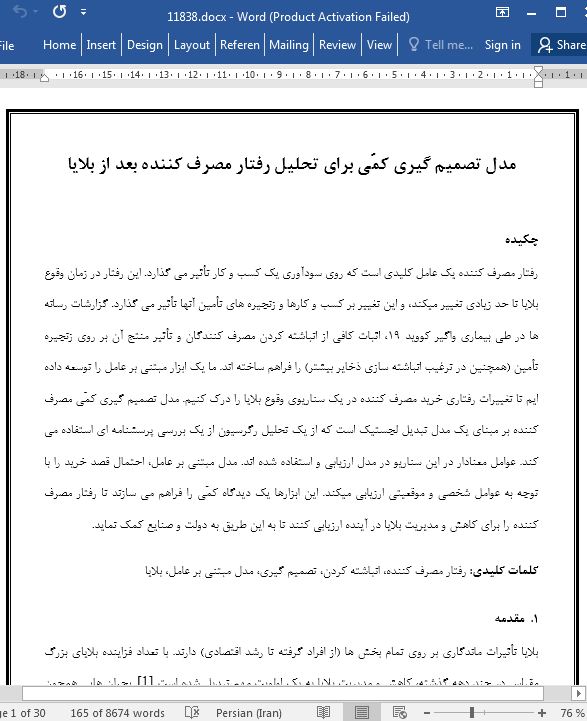
مدل تصمیم گیری کمی برای تحلیل رفتار مصرف کننده بعد از بلایا
عنوان انگلیسی
Quantitative decision-making model to analyze the post-disaster consumer behavior
صفحات مقاله فارسی
30
صفحات مقاله انگلیسی
10
سال انتشار
2021
رفرنس
دارای رفرنس در داخل متن و انتهای مقاله
نشریه
الزویر - Elsevier
فرمت مقاله انگلیسی
PDF
فرمت ترجمه مقاله
pdf و ورد تایپ شده با قابلیت ویرایش
فونت ترجمه مقاله
بی نازنین
سایز ترجمه مقاله
14
نوع مقاله
ISI
نوع نگارش
مقالات پژوهشی (تحقیقاتی)
نوع ارائه مقاله
ژورنال
پایگاه
اسکوپوس
ایمپکت فاکتور(IF) مجله
4.776 در سال 2020
شاخص H_index مجله
45 در سال 2021
شاخص SJR مجله
1.161 در سال 2020
شناسه ISSN مجله
2212-4209
شاخص Q یا Quartile (چارک)
Q1 در سال 2020
کد محصول
11838
وضعیت ترجمه عناوین تصاویر و جداول
ترجمه شده است ✓
وضعیت ترجمه متون داخل تصاویر و جداول
ترجمه شده است ✓
وضعیت ترجمه منابع داخل متن
به صورت عدد درج شده است ✓
وضعیت فرمولها و محاسبات در فایل ترجمه
تایپ شده است ✓
ضمیمه
ندارد ☓
بیس
نیست ☓
مدل مفهومی
ندارد ☓
پرسشنامه
ندارد ☓
متغیر
ندارد ☓
رفرنس در ترجمه
در انتهای مقاله درج شده است
رشته و گرایش های مرتبط با این مقاله
مدیریت، مدیریت بحران، مدیریت کسب و کار
مجله
مجله بین المللی کاهش خطر بلایا - International Journal of Disaster Risk Reduction
دانشگاه
مدیریت فناوری برای نوآوری، دانشگاه توکیو، ژاپن
کلمات کلیدی
رفتار مصرف کننده، انباشته کردن، تصمیم گیری، مدل مبتنی بر عامل، بلایا
کلمات کلیدی انگلیسی
Consumer behavior - Stockpiling - Decision-making - Agent-based model - Disaster
doi یا شناسه دیجیتال
https://doi.org/10.1016/j.ijdrr.2021.102329
۰.۰
(هنوز امتیازی ثبت نشده است)