.svg)
.svg)

.svg)


ترجمه مقاله یک شبه آزمایش طبیعی ارزیابی موفقیت یک کمپین بازاریابی ملی - نشریه الزویر

عنوان فارسی
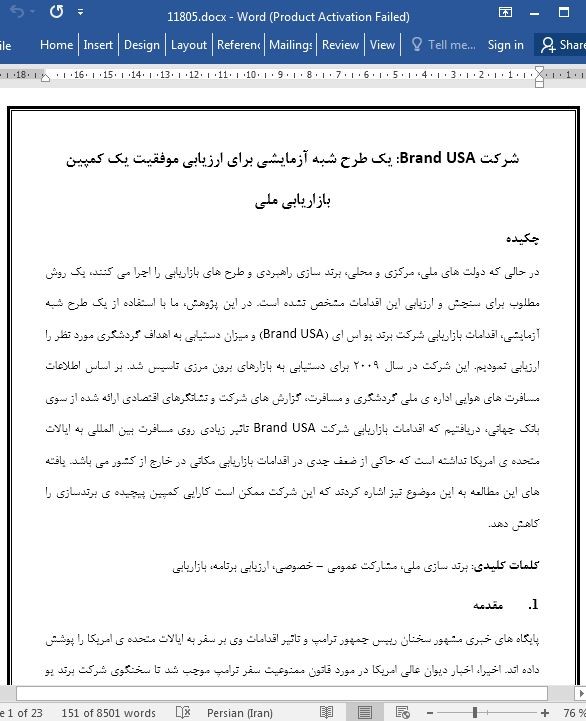
شرکت Brand USA: یک شبه آزمایش طبیعی ارزیابی موفقیت یک کمپین بازاریابی ملی
عنوان انگلیسی
Brand USA: A natural quasi-experiment evaluating the success of a national marketing campaign
صفحات مقاله فارسی
23
صفحات مقاله انگلیسی
7
سال انتشار
2019
رفرنس
دارای رفرنس در داخل متن و انتهای مقاله
نشریه
الزویر - Elsevier
فرمت مقاله انگلیسی
pdf و ورد تایپ شده با قابلیت ویرایش
فرمت ترجمه مقاله
pdf و ورد تایپ شده با قابلیت ویرایش
فونت ترجمه مقاله
بی نازنین
سایز ترجمه مقاله
14
نوع مقاله
ISI
نوع نگارش
مقالات پژوهشی (تحقیقاتی)
نوع ارائه مقاله
ژورنال
پایگاه
اسکوپوس
ایمپکت فاکتور(IF) مجله
11.056 در سال 2020
شاخص H_index مجله
199 در سال 2021
شاخص SJR مجله
3.328 در سال 2020
شناسه ISSN مجله
0261-5177
شاخص Q یا Quartile (چارک)
Q1 در سال 2020
کد محصول
11805
وضعیت ترجمه منابع داخل متن
ترجمه شده است ✓
وضعیت فرمولها و محاسبات در فایل ترجمه
ندارد ☓
ضمیمه
ندارد ☓
بیس
نیست ☓
مدل مفهومی
ندارد ☓
پرسشنامه
ندارد ☓
متغیر
ندارد ☓
فرضیه
ندارد ☓
رفرنس در ترجمه
در انتهای مقاله درج شده است
رشته و گرایش های مرتبط با این مقاله
مدیریت و مدیریت دولتی، بازاریابی، مدیریت استراتژیک
مجله
مدیریت گردشگری - Tourism Management
دانشگاه
دانشگاه فلوریدا مرکزی، ایالات متحده آمریکا
کلمات کلیدی
برند سازی ملی، مشارکت عمومی – خصوصی، ارزیابی برنامه، بازاریابی
کلمات کلیدی انگلیسی
Nation branding - Public private partnership - Program evaluation - Marketing
doi یا شناسه دیجیتال
https://doi.org/10.1016/j.tourman.2018.07.013
۰.۰
(هنوز امتیازی ثبت نشده است)