.svg)
.svg)

.svg)


ترجمه مقاله توسعه و اعتبار سنجی معیارهای استاندارد مسئولیت اجتماعی شرکتی - نشریه الزویر

عنوان فارسی
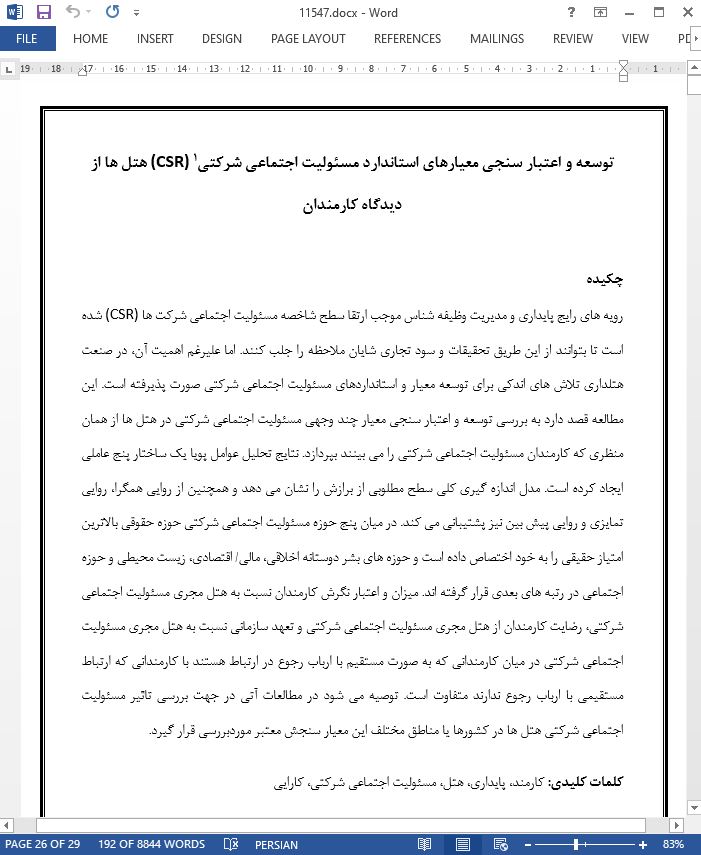
توسعه و اعتبار سنجی معیارهای استاندارد مسئولیت اجتماعی شرکتی (CSR) هتل ها از دیدگاه کارمندان
عنوان انگلیسی
Development and validation of standard hotel corporate social responsibility (CSR) scale from the employee perspective
صفحات مقاله فارسی
29
صفحات مقاله انگلیسی
9
سال انتشار
2020
رفرنس
دارای رفرنس در داخل متن و انتهای مقاله
نشریه
الزویر - Elsevier
فرمت مقاله انگلیسی
pdf و ورد تایپ شده با قابلیت ویرایش
فرمت ترجمه مقاله
pdf و ورد تایپ شده با قابلیت ویرایش
فونت ترجمه مقاله
بی نازنین
سایز ترجمه مقاله
14
نوع مقاله
ISI
نوع نگارش
مقالات پژوهشی (تحقیقاتی)
نوع ارائه مقاله
ژورنال
پایگاه
اسکوپوس
ایمپکت فاکتور(IF) مجله
8.432 در سال 2019
شاخص H_index مجله
106 در سال 2020
شاخص SJR مجله
2.217 در سال 2019
شناسه ISSN مجله
0278-4319
شاخص Q یا Quartile (چارک)
Q1 در سال 2019
کد محصول
11547
وضعیت ترجمه عناوین تصاویر و جداول
ترجمه شده است ✓
وضعیت ترجمه متون داخل تصاویر و جداول
ترجمه شده است ✓
وضعیت ترجمه منابع داخل متن
ترجمه شده است ✓
ضمیمه
ندارد
بیس
است ✓
مدل مفهومی
ندارد ☓
پرسشنامه
ندارد ☓
متغیر
دارد ✓
رفرنس در ترجمه
در انتهای مقاله درج شده است
رشته و گرایش های مرتبط با این مقاله
مدیریت، مدیریت کسب و کار، مدیریت استراتژیک
مجله
مجله بین المللی مدیریت مهمان نوازی - International Journal of Hospitality Management
دانشگاه
دانشکده مدیریت هتل و گردشگری، دانشگاه پلی تکنیک هنگ کنگ
کلمات کلیدی
کارمند، پایداری، هتل، مسئولیت اجتماعی شرکتی، کارایی
کلمات کلیدی انگلیسی
Employee - Sustainability - Hotel - Corporate social responsibility - Performance
doi یا شناسه دیجیتال
https://doi.org/10.1016/j.ijhm.2020.102507
۰.۰
(هنوز امتیازی ثبت نشده است)