.svg)
.svg)

.svg)


ترجمه مقاله خستگی پره ها و پروانه ها - نشریه الزویر

عنوان فارسی
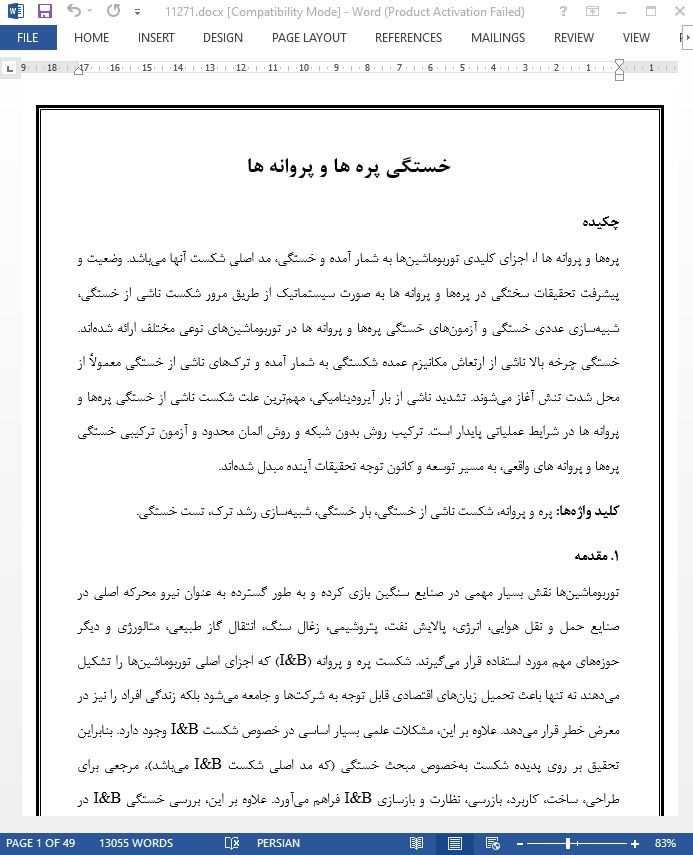
خستگی پره ها و پروانه ها
عنوان انگلیسی
The fatigue of impellers and blades
صفحات مقاله فارسی
49
صفحات مقاله انگلیسی
24
سال انتشار
2016
رفرنس
دارای رفرنس در داخل متن و انتهای مقاله
نشریه
الزویر - Elsevier
فرمت مقاله انگلیسی
pdf و ورد تایپ شده با قابلیت ویرایش
فرمت ترجمه مقاله
pdf و ورد تایپ شده با قابلیت ویرایش
فونت ترجمه مقاله
بی نازنین
سایز ترجمه مقاله
14
نوع مقاله
ISI
نوع نگارش
مقاله مروری (Review Article)
نوع ارائه مقاله
ژورنال
پایگاه
اسکوپوس
ایمپکت فاکتور(IF) مجله
3.458 در سال 2019
شاخص H_index مجله
67 در سال 2020
شاخص SJR مجله
0.853 در سال 2019
شناسه ISSN مجله
1350-6307
شاخص Q یا Quartile (چارک)
Q1 در سال 2019
کد محصول
11271
وضعیت ترجمه عناوین تصاویر و جداول
ترجمه نشده است ☓
وضعیت ترجمه متون داخل تصاویر و جداول
ترجمه نشده است ☓
وضعیت ترجمه منابع داخل متن
به صورت عدد درج شده است ✓
ضمیمه
ندارد ☓
بیس
نیست ☓
مدل مفهومی
ندارد ☓
پرسشنامه
ندارد ☓
متغیر
ندارد ☓
رفرنس در ترجمه
در انتهای مقاله درج شده است
رشته و گرایش های مرتبط با این مقاله
مهندسی مکانیک، سیستم محرکه خودرو، طراحی جامدات، ساخت و تولید
مجله
تجزیه و تحلیل شکست مهندسی - Engineering Failure Analysis
دانشگاه
دانشکده مهندسی مکانیک، دانشگاه شاندونگ، چین
کلمات کلیدی
پره و پروانه، شکست ناشی از خستگی، بار خستگی، شبیهسازی رشد ترک، تست خستگی
کلمات کلیدی انگلیسی
Impellers and blades - Fatigue failure - Fatigue load - Crack growth simulation - Fatigue test
doi یا شناسه دیجیتال
https://doi.org/10.1016/j.engfailanal.2016.02.001
۰.۰
(هنوز امتیازی ثبت نشده است)