.svg)
.svg)

.svg)


ترجمه مقاله ویژگی های بهداشتی درک شده در صنعت هتلداری - نشریه الزویر

عنوان فارسی
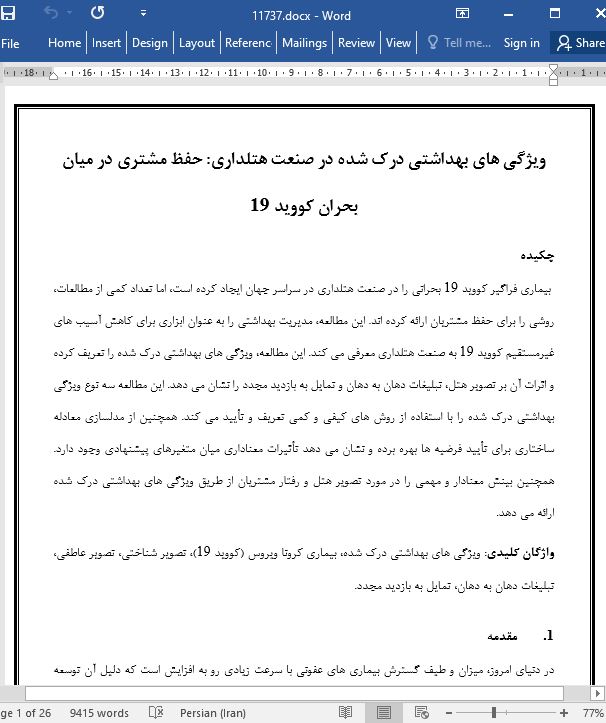
ویژگی های بهداشتی درک شده در صنعت هتلداری: حفظ مشتری در میان بحران کووید 19
عنوان انگلیسی
Perceived hygiene attributes in the hotel industry: customer retention amid the COVID-19 crisis
صفحات مقاله فارسی
26
صفحات مقاله انگلیسی
9
سال انتشار
2021
رفرنس
دارای رفرنس در داخل متن و انتهای مقاله
نشریه
الزویر - Elsevier
فرمت مقاله انگلیسی
PDF
فرمت ترجمه مقاله
pdf و ورد تایپ شده با قابلیت ویرایش
فونت ترجمه مقاله
بی نازنین
سایز ترجمه مقاله
14
نوع مقاله
ISI
نوع نگارش
مقالات پژوهشی (تحقیقاتی)
نوع ارائه مقاله
ژورنال
پایگاه
اسکوپوس
ایمپکت فاکتور(IF) مجله
8.432 در سال 2020
شاخص H_index مجله
106 در سال 2021
شاخص SJR مجله
2.217 در سال 2020
شناسه ISSN مجله
0278-4319
شاخص Q یا Quartile (چارک)
Q1 در سال 2020
کد محصول
11737
وضعیت ترجمه عناوین تصاویر و جداول
ترجمه شده است ✓
وضعیت ترجمه متون داخل تصاویر و جداول
ترجمه شده است ✓
وضعیت ترجمه منابع داخل متن
به صورت انگلیسی درج شده است ✓
وضعیت فرمولها و محاسبات در فایل ترجمه
تایپ شده است ✓
ضمیمه
ندارد ☓
بیس
است ✓
مدل مفهومی
دارد ✓
پرسشنامه
ندارد ☓
متغیر
دارد ✓
رفرنس در ترجمه
در انتهای مقاله درج شده است
رشته و گرایش های مرتبط با این مقاله
مدیریت، پزشکی، مدیریت هتلداری، اپیدمیولوژی
مجله
مجله بین المللی مدیریت مهمان نوازی - International Journal of Hospitality Management
دانشگاه
دانشکده گردشگری، دانشگاه هانیانگ، سئونگدونگو، کره جنوبی
کلمات کلیدی
ویژگی های بهداشتی درک شده، بیماری کرونا ویروس (کووید 19)، تصویر شناختی، تصویر عاطفی، تبلیغات دهان به دهان، تمایل به بازدید مجدد
کلمات کلیدی انگلیسی
perceived hygiene attributes - coronavirus disease (COVID-19) - cognitive image - affective image - word of mouth - revisit intention
doi یا شناسه دیجیتال
https://doi.org/10.1016/j.ijhm.2020.102768
۰.۰
(هنوز امتیازی ثبت نشده است)