.svg)
.svg)

.svg)


ترجمه مقاله تعامل سیاست های پولی و مالی با عدم شفافیت بانک مرکزی و سرمایهگذاری عمومی - نشریه الزویر

عنوان فارسی
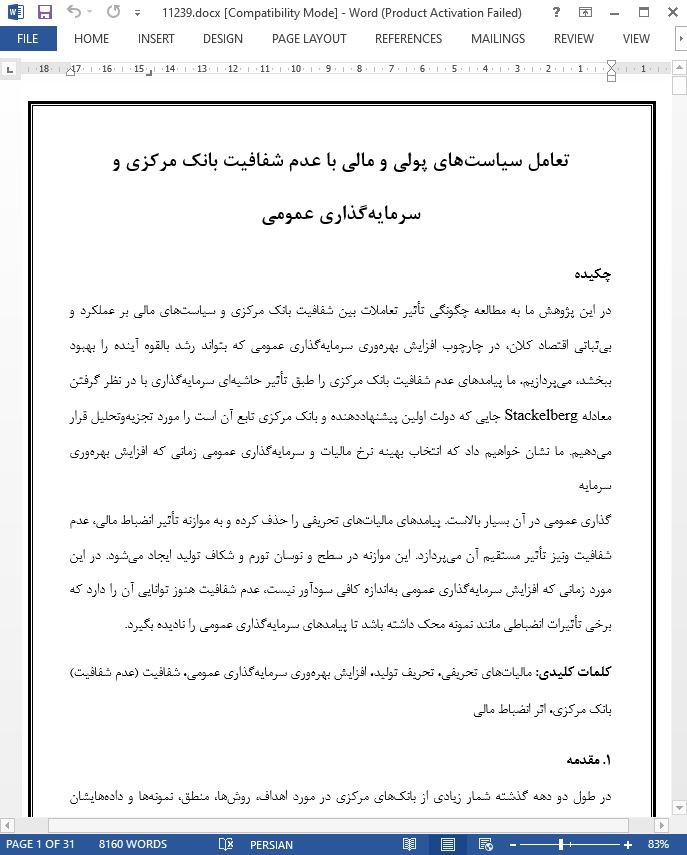
تعامل سیاست های پولی و مالی با عدم شفافیت بانک مرکزی و سرمایهگذاری عمومی
عنوان انگلیسی
Monetary and fiscal policy interactions with central bank transparency and public investment
صفحات مقاله فارسی
31
صفحات مقاله انگلیسی
14
سال انتشار
2011
رفرنس
دارای رفرنس در داخل متن و انتهای مقاله
نشریه
الزویر - Elsevier
فرمت مقاله انگلیسی
PDF
فرمت ترجمه مقاله
pdf و ورد تایپ شده با قابلیت ویرایش
فونت ترجمه مقاله
بی نازنین
سایز ترجمه مقاله
14
نوع مقاله
ISI
نوع نگارش
مقالات پژوهشی (تحقیقاتی)
نوع ارائه مقاله
ژورنال
پایگاه
اسکوپوس
ایمپکت فاکتور(IF) مجله
1.403 در سال 2019
شاخص H_index مجله
25 در سال 2020
شاخص SJR مجله
0.624 در سال 2019
شناسه ISSN مجله
0.624 در سال 2019
شاخص Q یا Quartile (چارک)
Q2 در سال 2019
کد محصول
11239
وضعیت ترجمه منابع داخل متن
درج نشده است ☓
وضعیت فرمولها و محاسبات در فایل ترجمه
به صورت عکس، درج شده است ✓
ضمیمه
دارد و ترجمه شده است ✓
بیس
نیست ☓
مدل مفهومی
ندارد ☓
پرسشنامه
ندارد ☓
متغیر
ندارد ☓
رفرنس در ترجمه
در انتهای مقاله درج شده است
رشته و گرایش های مرتبط با این مقاله
مدیریت و اقتصاد، بانکداری، اقتصاد مالی، اقتصاد پولی، مدیریت مالی، اقتصاد پول و بانکداری
مجله
تحقیق در اقتصاد - Research in Economics
دانشگاه
دانشگاه استراسبورگ، فرانسه
کلمات کلیدی
مالیاتهای تحریفی، تحریف تولید، افزایش بهرهوری سرمایهگذاری عمومی، شفافیت (عدم شفافیت) بانک مرکزی، اثر انضباط مالی
کلمات کلیدی انگلیسی
Distortionary taxes - Output distortions - Productivity-enhancing public investment - Central bank transparency (opacity) - Fiscal-disciplining effect
doi یا شناسه دیجیتال
https://doi.org/10.1016/j.rie.2010.09.002
۰.۰
(هنوز امتیازی ثبت نشده است)