

ترجمه مقاله نقش ضروری ارتباطات 6G با چشم انداز صنعت 4.0
- مبلغ: ۸۶,۰۰۰ تومان
ترجمه مقاله پایداری توسعه شهری، تعدیل ساختار صنعتی و کارایی کاربری زمین
- مبلغ: ۹۱,۰۰۰ تومان


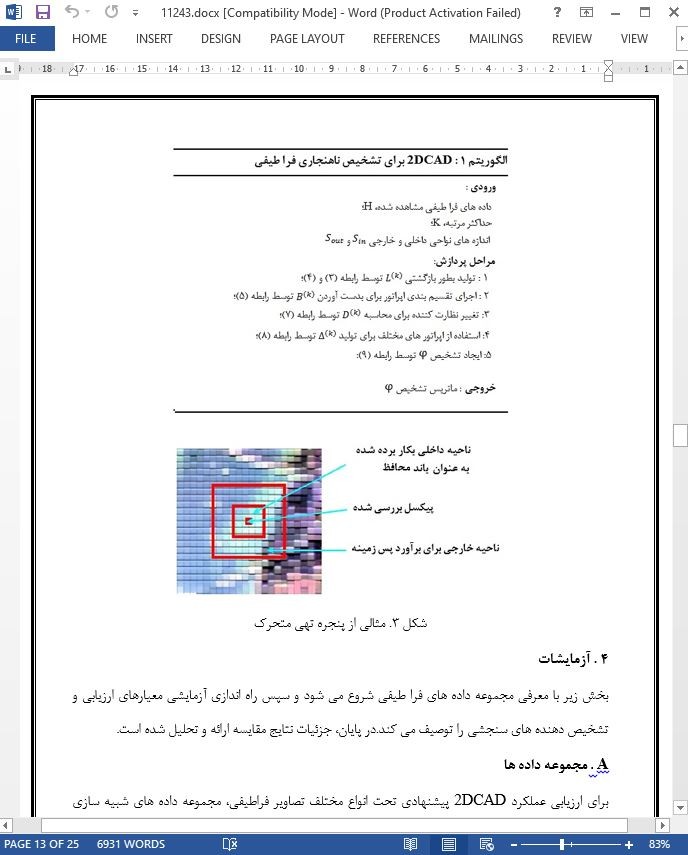
Anomaly detection has been an important topic in hyperspectral image analysis. This technique is sometimes more preferable than the supervised target detection because it requires no a priori information for the interested materials. Many efforts have been made in this topic; however, they usually suffer from excessive time cost and a high false-positive rate. There are two major problems that lead to such a predicament. First, the construction of the background model and affinity estimation are often overcomplicated. Second, most of these methods have to impose a stringent assumption on the spectrum distribution of background; however, these assumptions cannot hold for all practical situations. Based on this consideration, this paper proposes a novel method allowing for fast yet accurate pixel-level hyperspectral anomaly detection. We claim the following main contributions: construct a high-order 2-D crossing approach to find the regions of rapid change in the spectrum, which runs without any a priori assumption; and design a low-complexity discrimination framework for fast hyperspectral anomaly detection, which can be implemented by a series of filtering operators with linear time cost. Experiments on three different hyperspectral images containing several pixel-level anomalies demonstrate the superiority of the proposed detector compared with the benchmark methods.
I. INTRODUCTION
HYPERSPECTRAL imaging systems have the ability to collect digital images with very densely sampled or nearly continuous radiance spectra for each pixel in the scene. The captured rich information about the spectral signatures can help identify minor differences between various materials. This characteristic enables hyperspectral images to be beneficial to a wide range of applications. For example, they have already been successfully applied to environmental monitoring [1], production quality inspection [2], medical imaging [3], biological analysis [4], etc.
V. CONCLUSION
Anomalies in the hyperspectral image often represent crucial occurrences worthy of further investigation. Therefore, reliably detecting these anomalies is important in both academia and industry. In this regard, traditional hyperspectral anomaly detectors are far from satisfying due to their excessive time costs and high FPRs. In this paper, a novel hyperspectral anomaly detector has been proposed based on the formulation of the high-order 2-D crossing analysis. The proposed detector is termed 2DCAD, which can allow for fast examination of the testing pixels with respect to their neighborhoods, without losing accuracy.
تشخیص ناهنجاری در تحلیل فراطیفی تصاویر موضوعی مهم می باشد. این روش برخی مواقع به روش های تشخیص هدف های دارای اولویت ترجیح داده می شود، چون نیازمند هیچ اطلاعات اولیه ای برای موضوعات مطلوب ما نمی باشد. در این زمینه تلاش های بسیاری صورت گرفته است. با این حال، آنها معمولا از هزینه زمانی بیش از حد و نرخ مثبت کاذب بالا رنج می برند. دو مشکل اصلی که منجر به چنین وضع نامساعدی می شود وجود دارد. اولا، ساختار مدل پس زمینه و برآورد وابستگی اغلب بیش از حد پیچیده هستند. دوما، بیشتر این روش ها باید فرضی دقیق در توزیع طیف پس زمینه ایجاد کنند؛ با این حال، این فرضیات نمی توانند برای همه ی شرایط عملی به کار روند. براساس این نظریات، این مقاله روشی جدید برای تشخیص سریع و در عین حال دقیق ناهنجاری فرا طیفی در سطح پیکسل ارائه داده است. کارهای انجام شده در این مقاله: 1) ساختار روش عبوری دو بعدی مرتبه بالا نواحی تغییر سریع را در طیف پیدا می کند، که بدون هیچ فرض اولیه ای اجرا می شود؛ و 2) طراحی چارچوبی برای تفکیک پذیری پیچیدگی کم به منظور تشخیص سریع ناهنجاری فرا طیفی، که می تواند توسط مجموعه ای از اپراتورهای فیلتر گذاری با تابع هزینه زمانی خطی اجرا شود. آزمایشات بر روی سه تصویر فرا طیفی مختلف که شامل چندین ناهنجاری در سطح پیکسل انجام شده که برتری تشخیص دهنده ارائه شده را در مقایسه با روش های سنجشی نشان می دهد.
1 . مقدمه
سیستم های تصویربرداری فرا طیفی توانایی جمع آوری تصاویر دیجیتال با نمونه گیری متراکم یا طیف درخشندگی تاحدی پیوسته برای هر پیکسل در صفحه نمایش دارند. اطلاعات بدست آمده در رابطه با اثرات طیفی می تواند به تشخیص تفاوت های جزئی بین مواد مختلف کمک کند. این مشخصه، تصاویر فرا طیفی را قادر می سازد تا برای طیف گسترده ای از کاربردها مفید باشند. برای مثال، این مشخصه ها قبلا با موفقیت در نظارت بر محیط زیست [1]، بررسی کیفیت تولید[2]، تصویربرداری پزشکی[3]، تحلیل بیولوژیکی [4] و غیره بکار رفته اند.
5 . نتیجه گیری
ناهنجاری های موجود در تصویر فراطیفی اغلب نشان دهنده وقایع حیاتی هستند که باید در بررسی شوند. بنابراین قابلیت اطمینان در تشخیص این ناهنجاری ها در صنعت و دانشگاه بسیار مهم می باشد. در این راستا، تشخیص دهنده های فرا طیفی مرسوم عملکردی رضایت بخش ندارند به دلیل اینکه هزینه های زمانی FPRها بیش از حد بالا است. در این مقاله، یک تشخیص دهنده ناهنجاری فراطیفی جدید بر اساس فرمول تحلیل عبور دو بعدی مرتبه بالا پیشنهاد شده است. تشخیص دهنده پیشنهادی 2DCAD نامیده می شود، که می تواند برای بررسی سریع آزمایش پیکسل ها با توجه به همسایگانشان، بدون از دست دادن دقت اجرا شود.

