.svg)
.svg)

.svg)


ترجمه مقاله چارچوب مفهومی آسیب پذیری و انعطاف پذیری اقتصادی در سطوح ملی و منطقه ای

عنوان فارسی
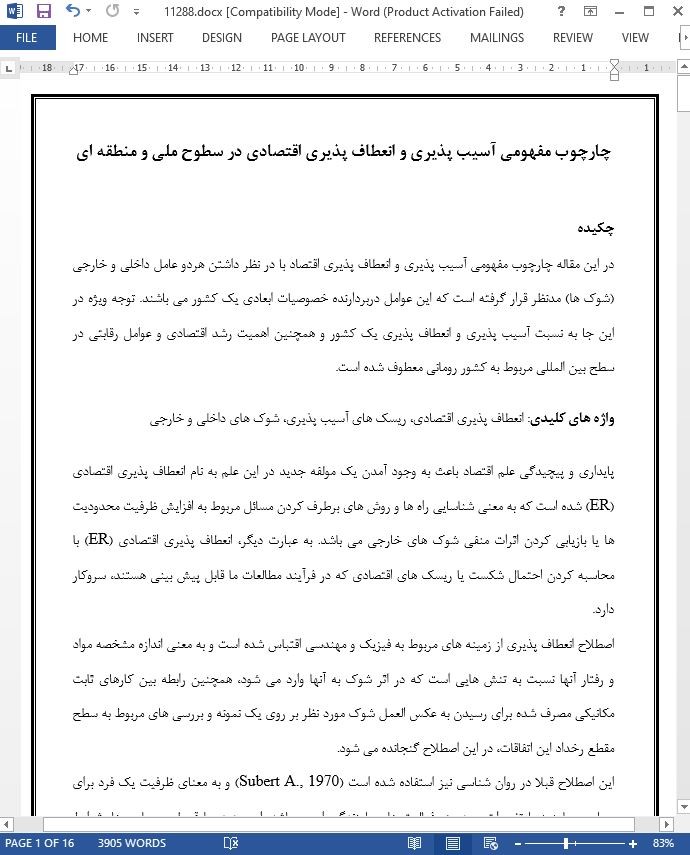
چارچوب مفهومی آسیب پذیری و انعطاف پذیری اقتصادی در سطوح ملی و منطقه ای
عنوان انگلیسی
Conceptual framework of economic resilience and vulnerability at national and regional levels
صفحات مقاله فارسی
16
صفحات مقاله انگلیسی
14
سال انتشار
2014
رفرنس
دارای رفرنس در داخل متن و انتهای مقاله
فرمت مقاله انگلیسی
pdf و ورد تایپ شده با قابلیت ویرایش
فرمت ترجمه مقاله
pdf و ورد تایپ شده با قابلیت ویرایش
فونت ترجمه مقاله
بی نازنین
سایز ترجمه مقاله
14
نوع ارائه مقاله
ژورنال
کد محصول
11288
وضعیت ترجمه عناوین تصاویر و جداول
ترجمه شده است✓
وضعیت ترجمه متون داخل تصاویر و جداول
ترجمه شده است✓
وضعیت ترجمه منابع داخل متن
به صورت انگلیسی درج شده است✓
ضمیمه
ندارد
بیس
نیست ☓
مدل مفهومی
ندارد ☓
پرسشنامه
ندارد ☓
متغیر
ندارد ☓
رفرنس در ترجمه
در انتهای مقاله درج شده است
رشته و گرایش های مرتبط با این مقاله
اقتصاد، برنامه ریزی سیستم های اقتصادی، توسعه اقتصادی و برنامه ریزی
دانشگاه
انستیتوی اقتصاد ملی، آکادمی رومانی
کلمات کلیدی
انعطاف پذیری اقتصادی، ریسک های آسیب پذیری، شوک های داخلی و خارجی
کلمات کلیدی انگلیسی
economic resilience - vulnerability risks - external/internal shocks
۰.۰
(هنوز امتیازی ثبت نشده است)