.svg)
.svg)

.svg)


ترجمه مقاله آمینو اسیدهای شاخه دار و آرژنین عملکرد جسمانی - نشریه الزویر

عنوان فارسی
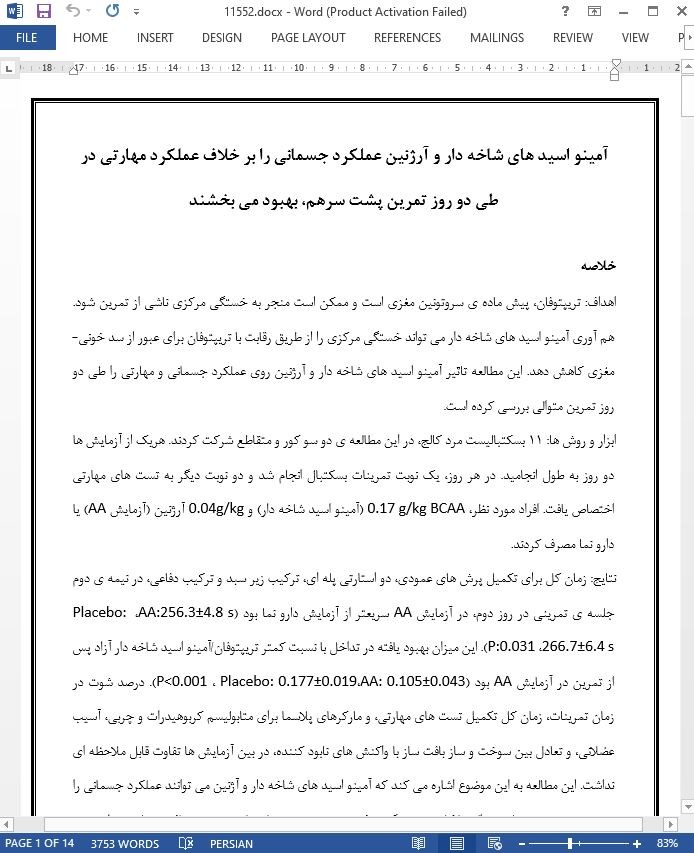
آمینو اسیدهای شاخه دار و آرژنین عملکرد جسمانی را بر خلاف عملکرد مهارتی در طی دو روز تمرین پشت سرهم، بهبود می بخشند
عنوان انگلیسی
Branched-chain amino acids and arginine improve physical but not skill performance in two consecutive days of exercise
صفحات مقاله فارسی
14
صفحات مقاله انگلیسی
8
سال انتشار
2017
رفرنس
دارای رفرنس در داخل متن و انتهای مقاله
نشریه
الزویر - Elsevier
فرمت مقاله انگلیسی
PDF
فرمت ترجمه مقاله
pdf و ورد تایپ شده با قابلیت ویرایش
فونت ترجمه مقاله
بی نازنین
سایز ترجمه مقاله
14
نوع مقاله
ISI
نوع نگارش
مقالات پژوهشی (تحقیقاتی)
نوع ارائه مقاله
ژورنال
پایگاه
اسکوپوس
ایمپکت فاکتور(IF) مجله
0.578 در سال 2019
شاخص H_index مجله
22 در سالا 2020
شاخص SJR مجله
0.255 در سال 2019
شناسه ISSN مجله
0765-1597
شاخص Q یا Quartile (چارک)
Q4 در سال 2019
کد محصول
11552
وضعیت ترجمه عناوین تصاویر و جداول
ترجمه شده است ✓
وضعیت ترجمه متون داخل تصاویر و جداول
ترجمه شده است ✓
وضعیت ترجمه منابع داخل متن
به صورت عدد درج شده است ✓
ضمیمه
ندارد ☓
بیس
نیست ☓
مدل مفهومی
ندارد ☓
پرسشنامه
ندارد ☓
متغیر
ندارد ☓
رفرنس در ترجمه
در انتهای مقاله درج شده است
رشته و گرایش های مرتبط با این مقاله
تربیت بدنی، فیزیولوژی ورزشی
مجله
علم و ورزش - Science & Sports
دانشگاه
دفتر تربیت بدنی، دانشگاه آسیا، تایوان
کلمات کلیدی
تریپتوفان، خستگی مرکزی، عملکرد مهارت، ورزش متناوب با شدت زیاد
کلمات کلیدی انگلیسی
Tryptophan - Central fatigue - Skill performance - High-intensity intermittent exercise
doi یا شناسه دیجیتال
https://doi.org/10.1016/j.scispo.2017.06.004
۰.۰
(هنوز امتیازی ثبت نشده است)