.svg)
.svg)

.svg)


ترجمه مقاله یک سیستم موتور مبدل-معکوسکننده جریان مستقیم باک-بوست DC/DC - نشریه IEEE

عنوان فارسی
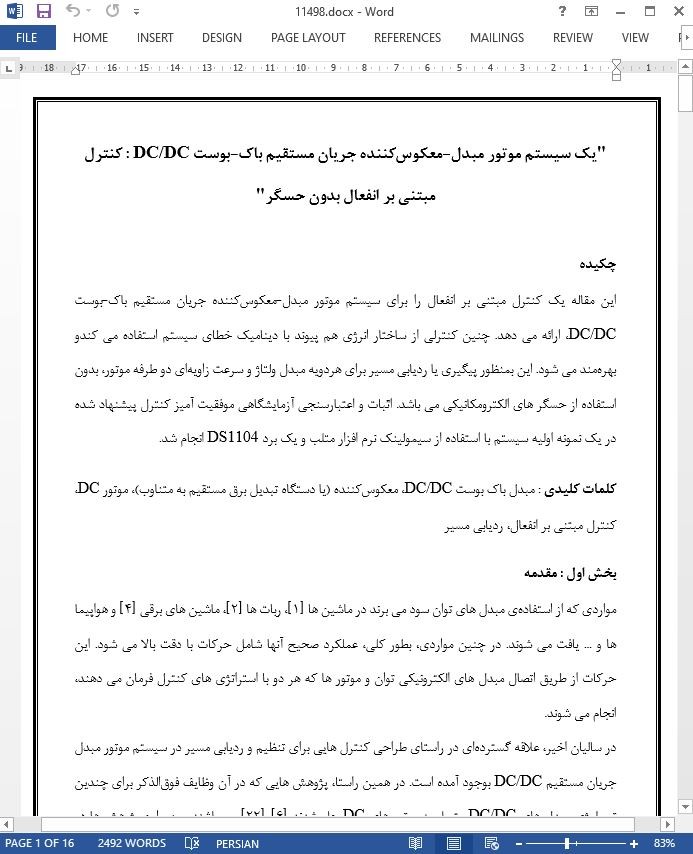
یک سیستم موتور مبدل-معکوسکننده جریان مستقیم باک-بوست DC/DC : کنترل مبتنی بر انفعال بدون حسگر
عنوان انگلیسی
A DC/DC Buck-Boost Converter–Inverter–DC Motor System: Sensorless Passivity-Based Control
صفحات مقاله فارسی
16
صفحات مقاله انگلیسی
6
سال انتشار
2018
رفرنس
دارای رفرنس در داخل متن و انتهای مقاله
نشریه
آی تریپل ای - IEEE
فرمت مقاله انگلیسی
PDF
فرمت ترجمه مقاله
pdf و ورد تایپ شده با قابلیت ویرایش
فونت ترجمه مقاله
بی نازنین
سایز ترجمه مقاله
14
نوع مقاله
ISI
نوع ارائه مقاله
ژورنال
پایگاه
اسکوپوس
ایمپکت فاکتور(IF) مجله
4.983 در سال 2020
شاخص H_index مجله
86 در سال 2021
شاخص SJR مجله
0.775 در سال 2020
شناسه ISSN مجله
2169-3536
شاخص Q یا Quartile (چارک)
Q2 در سال 2020
کد محصول
11498
وضعیت ترجمه عناوین تصاویر و جداول
ترجمه نشده است ☓
وضعیت ترجمه متون داخل تصاویر و جداول
ترجمه نشده است ☓
وضعیت ترجمه منابع داخل متن
به صورت عدد درج شده است ✓
وضعیت فرمولها و محاسبات در فایل ترجمه
به صورت عکس، درج شده است ✓
ضمیمه
ندارد ☓
بیس
نیست ☓
مدل مفهومی
ندارد ☓
پرسشنامه
ندارد ☓
متغیر
ندارد ☓
رفرنس در ترجمه
در انتهای مقاله درج شده است
رشته و گرایش های مرتبط با این مقاله
مهندسی برق، سیستم های قدرت، مهندسی الکترونیک، مهندسی کنترل
دانشگاه
موسسه پلی تکنیک ملی، مکزیکو سیتی، مکزیک
کلمات کلیدی
مبدل باک بوست DC/DC، معکوسکننده (یا دستگاه تبدیل برق مستقیم به متناوب)، موتور DC، کنترل مبتنی بر انفعال، ردیابی مسیر
کلمات کلیدی انگلیسی
DC/DC Buck-Boost converter - inverter - DC motor - passivity-based control - trajectory tracking
doi یا شناسه دیجیتال
https://doi.org/10.1109/ACCESS.2018.2846614
۰.۰
(هنوز امتیازی ثبت نشده است)