.svg)
.svg)

.svg)


ترجمه مقاله اخلاق کاری و تعهد سازمانی به عنوان شرایط رفتار غیراخلاقی حامی سازمان - نشریه وایلی

عنوان فارسی
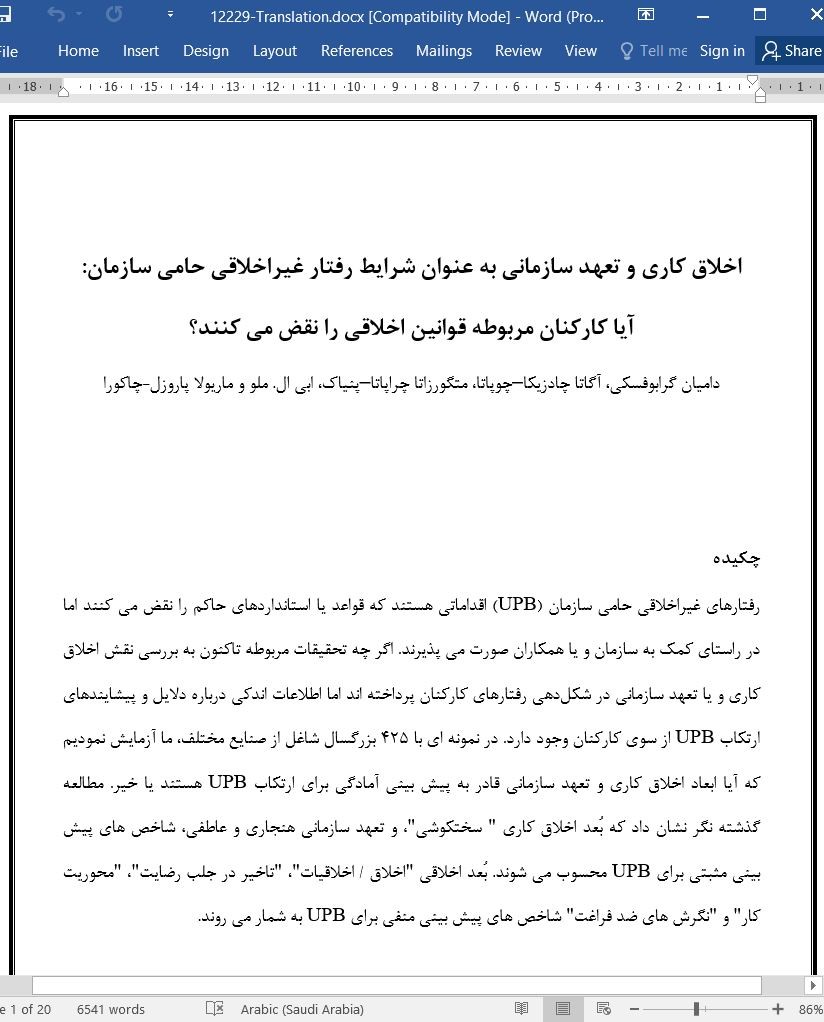
اخلاق کاری و تعهد سازمانی به عنوان شرایط رفتار غیراخلاقی حامی سازمان: آیا کارکنان مربوطه قوانین اخلاقی را نقض می کنند؟
عنوان انگلیسی
Work ethic and organizational commitment as conditions of unethical pro‐organizational behavior: Do engaged workers break the ethical rules?
صفحات مقاله فارسی
20
صفحات مقاله انگلیسی
10
سال انتشار
2019
رفرنس
دارای رفرنس در داخل متن و انتهای مقاله
نشریه
وایلی - Wiley
فرمت مقاله انگلیسی
pdf و ورد تایپ شده با قابلیت ویرایش
فرمت ترجمه مقاله
pdf و ورد تایپ شده با قابلیت ویرایش
فونت ترجمه مقاله
بی نازنین
سایز ترجمه مقاله
14
نوع مقاله
ISI
نوع نگارش
مقالات پژوهشی (تحقیقاتی)
نوع ارائه مقاله
ژورنال
پایگاه
اسکوپوس
ایمپکت فاکتور(IF) مجله
1.846 در سال 2020
شاخص H_index مجله
61 در سال 2021
شاخص SJR مجله
0.812 در سال 2020
شناسه ISSN مجله
1468-2389
شاخص Q یا Quartile (چارک)
Q2 در سال 2020
کد محصول
12229
وضعیت ترجمه منابع داخل متن
ترجمه شده است ✓
وضعیت فرمولها و محاسبات در فایل ترجمه
ندارد ☓
ضمیمه
ندارد ☓
بیس
نیست ☓
مدل مفهومی
ندارد ☓
پرسشنامه
ندارد ☓
متغیر
ندارد ☓
فرضیه
ندارد ☓
رفرنس در ترجمه
در داخل متن و انتهای مقاله درج شده است
رشته و گرایش های مرتبط با این مقاله
مدیریت، روانشناسی، مدیریت منابع انسانی، مدیریت استراتژیک، مدیریت اجرایی، مدیریت کسب و کار و روانشناسی صنعتی و سازمانی
مجله
مجله بین المللی انتخاب و ارزیابی - International Journal of Selection and Assessment
دانشگاه
گروه روانشناسی رفتار اجتماعی و سازمانی، دانشکده روانشناسی کاتوویتس، دانشگاه علوم اجتماعی و انسانی SWPS، کاتوویتس، لهستان
کلمات کلیدی
محوریت کار، تعهد سازمانی، تعلق خاطر سازمانی، رفتار غیراخلاقی حامی سازمان، اخلاق کاری
کلمات کلیدی انگلیسی
centrality of work - organizational commitment - organizational identification - unethical pro‐ organizational behavior - work ethic
doi یا شناسه دیجیتال
https://doi.org/10.1111/ijsa.12241
۰.۰
(هنوز امتیازی ثبت نشده است)