.svg)
.svg)

.svg)


ترجمه مقاله صف انتظار، سیستم های کارامد ارائه خدمت بانک ها و خدمات فناوری مدار در نیجریه

عنوان فارسی
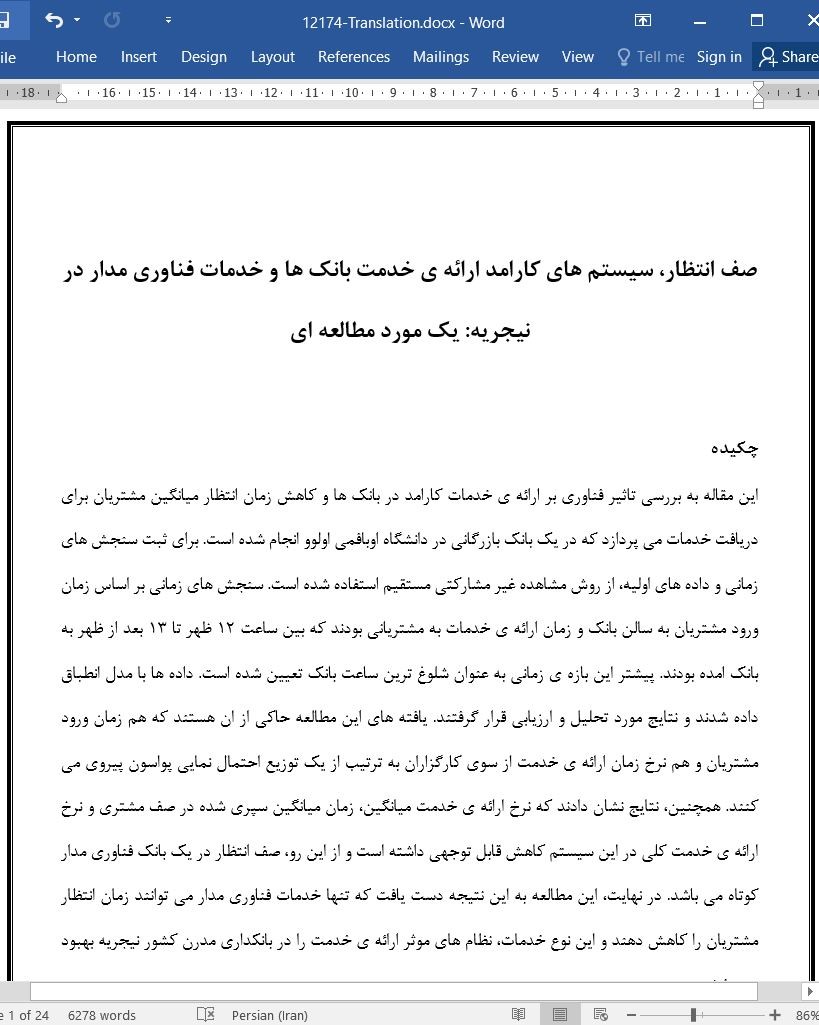
صف انتظار، سیستم های کارامد ارائه خدمت بانک ها و خدمات فناوری مدار در نیجریه: یک مورد مطالعه ای
عنوان انگلیسی
Waiting Lines, Banks’ Effective Delivery Systems and Technology Driven Services in Nigeria: A Case Study
صفحات مقاله فارسی
22
صفحات مقاله انگلیسی
8
سال انتشار
2016
رفرنس
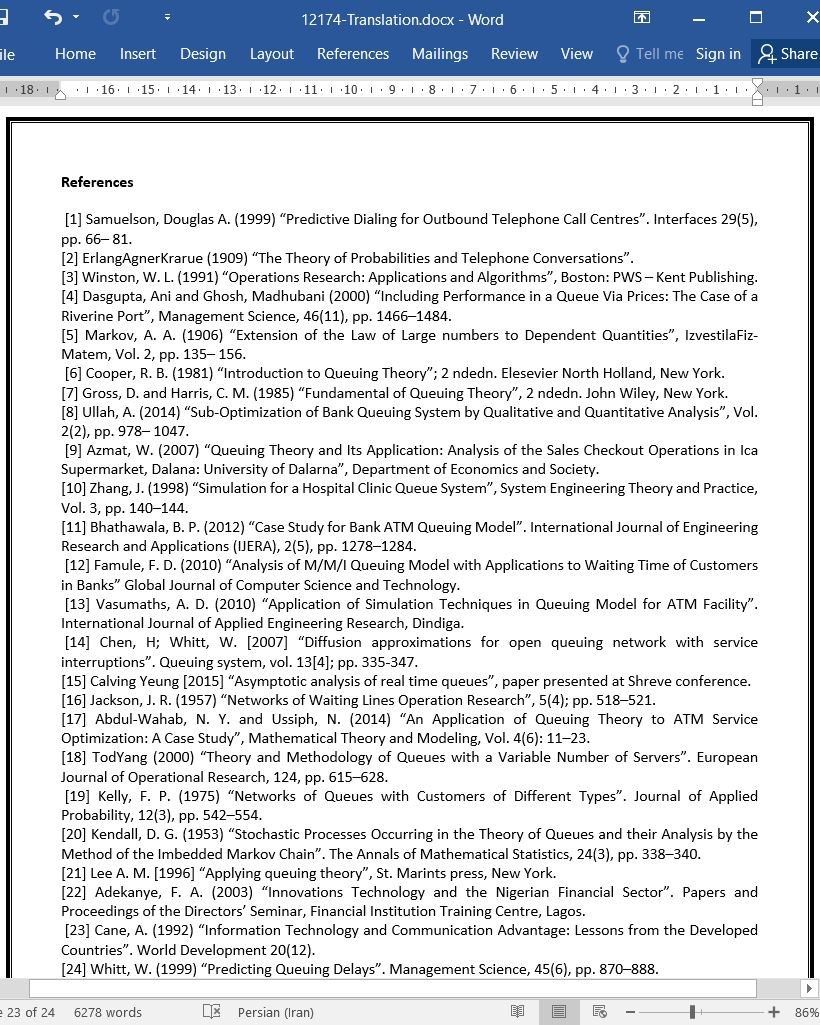
دارای رفرنس در داخل متن و انتهای مقاله
فرمت مقاله انگلیسی
PDF
فرمت ترجمه مقاله
pdf و ورد تایپ شده با قابلیت ویرایش
فونت ترجمه مقاله
بی نازنین
سایز ترجمه مقاله
14
نوع مقاله
ISI
نوع ارائه مقاله
ژورنال
شناسه ISSN مجله
2472-226X
کد محصول
12174
وضعیت ترجمه عناوین تصاویر و جداول
ترجمه شده است ✓
وضعیت ترجمه متون داخل تصاویر و جداول
ترجمه شده است ✓
وضعیت ترجمه منابع داخل متن
به صورت عدد درج شده است ✓
وضعیت فرمولها و محاسبات در فایل ترجمه
به صورت عکس، درج شده است ✓
ضمیمه
ندارد ☓
بیس
نیست ☓
مدل مفهومی
ندارد ☓
پرسشنامه
ندارد ☓
متغیر
ندارد ☓
فرضیه
ندارد ☓
رفرنس در ترجمه
در انتهای مقاله درج شده است
رشته و گرایش های مرتبط با این مقاله
مدیریت، مهندسی صنایع، مدیریت فناوری اطلاعات، بانکداری، برنامه ریزی و تحلیل سیستم ها، بهینه سازی سیستم ها
مجله
مجله بین المللی تحقیقات مالی و بانکی - International Journal of Finance and Banking Research
دانشگاه
گروه مدیریت و حسابداری، دانشگاه Obafemi Awolowo، نیجریه
کلمات کلیدی
صف های انتظار، فناوری، خدمات بانک ها، توزیع پواسون
کلمات کلیدی انگلیسی
Waiting Lines - Technology - Banks’ Services - Poisson Distribution
doi یا شناسه دیجیتال
https://doi.org/10.11648/j.ijfbr.20160206.11
۰.۰
(هنوز امتیازی ثبت نشده است)