Abstract
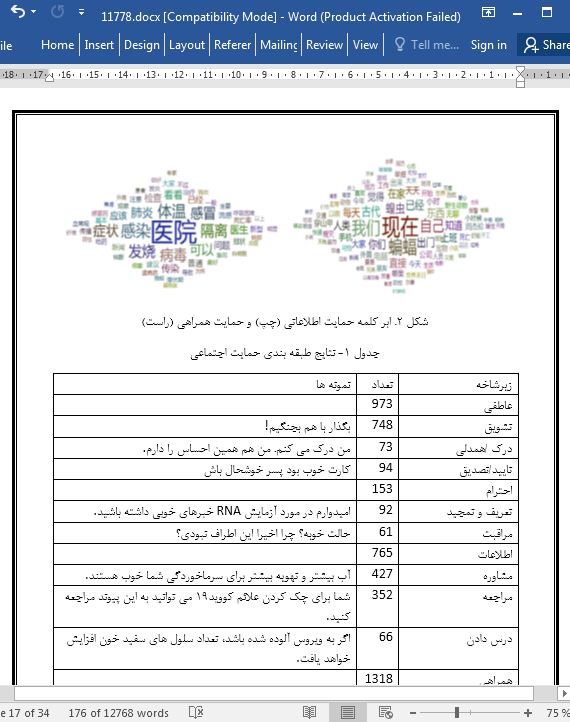
The sudden outbreak of coronavirus disease 2019 (COVID-19) in early 2020 has dramatically changed people's lives. Some countries have taken mass home quarantine to control the virus. However, the side effects of quarantine have rarely been interrogated by current COVID-19 research. This study thus investigates the effects of online social support on the public's beliefs in overcoming COVID-19 by embracing their cognition and emotion during the epidemic. First, by crawling and content analysis of the messages posted on "Baidu COVID-19 bar1", this study identified 5 types of online social support given or received by the public during COVID-19. On this basis, a model explaining the public's beliefs was developed from the perspectives of online social support, cognition and emotion. 334 valid online questionnaires were collected to examine the proposed model and hypotheses. The results show that cognition has a direct effect on the belief, while emotion affects the belief via a full mediating effect of cognition. Tangible support and esteem support can directly affect the public's beliefs, and educational level significantly moderates these effects. In addition, the public's cognition is influenced by informational support, however, emotion is not influenced by social support but by other factors (e.g., information disclosure, material supplies and frustration caused by the epidemic). These research results provide a deep insight into how to reduce the negative effects of quarantine, consolidate the theoretical basis of the public's beliefs, and have important practical implications for individuals and the government in dealing with such emergencies.
1. Introduction
In 2020, a new type of coronavirus, named coronavirus disease 2019 (COVID-19) by the World Health Organization2 (WHO), had caused a pandemic outbreak in the world. WHO has declared COVID-19 a public health emergency and has called for global concern and support. As of April 3, 2020, there were 1,011,193 confirmed cases and 207 countries with cases3 . To prevent the uncontrolled spread of the virus, Chinese authorities have taken prompt and rigid public health measures, including lockdown and home quarantine. Fortunately, these actions function well and help to effectively prevent uncontrolled spread. On April 3, 2020, 1,562 confirmed cases remained in China4 .
6.3. Limitations and future research
This study investigated what factors influence the public’s belief to overcome COVID-19 and how these factors exert that influence. Under the mass quarantine context, online social support, emotion, and cognition were embraced. Although this study has initial and promising findings, there are some limitations. First, we collected data online, and the online questionnaires were diffused randomly. This leads to a deficiency that most of our respondents were from areas with middle or low risk for the pandemic because these areas are in higher proportion in China. The number of people in high-risk areas in this study was limited. Undoubtedly, individuals located in areas with different risk levels have different cognition, emotions or behaviors toward COVID-19. Therefore, the results from this study are more beneficial and practical for areas with middle or low risk, while generalization of the results to areas with high risk requires further validation. Future research could focus specifically on citizens in high-risk areas to reveal the perception and behavior of people there.