.svg)
.svg)

.svg)


ترجمه مقاله مدل معتبر EMT نوع عمومی توربین بادی مبدل کامل - نشریه IEEE

عنوان فارسی
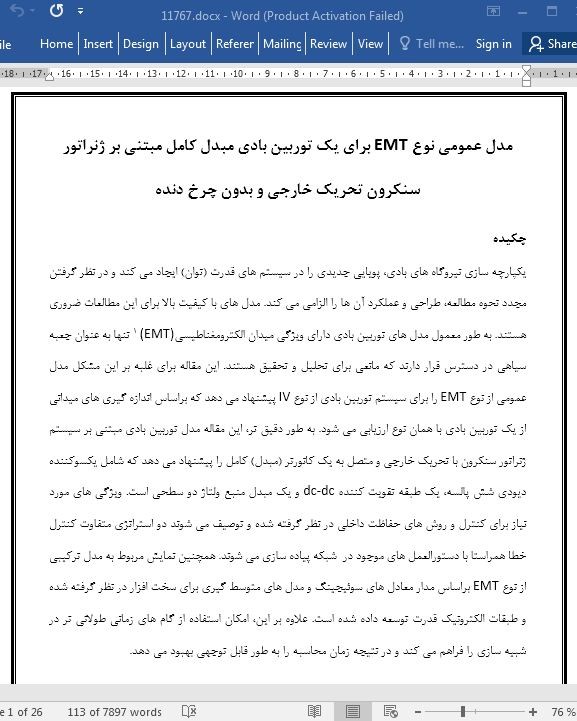
مدل معتبر EMT نوع عمومی توربین بادی مبدل کامل مبنی بر ژنراتور سنکرون تحریک خارجی بدون چرخ دنده
عنوان انگلیسی
Field Validated Generic EMT-Type Model of a Full Converter Wind Turbine Based on a Gearless Externally Excited Synchronous Generator
صفحات مقاله فارسی
26
صفحات مقاله انگلیسی
10
سال انتشار
2018
رفرنس
دارای رفرنس در داخل متن و انتهای مقاله
نشریه
آی تریپل ای - IEEE
فرمت مقاله انگلیسی
pdf و ورد تایپ شده با قابلیت ویرایش
فرمت ترجمه مقاله
pdf و ورد تایپ شده با قابلیت ویرایش
فونت ترجمه مقاله
بی نازنین
سایز ترجمه مقاله
14
نوع مقاله
ISI
نوع ارائه مقاله
ژورنال
پایگاه
اسکوپوس
ایمپکت فاکتور(IF) مجله
5.474 در سال 2020
شاخص H_index مجله
188 در سال 2021
شاخص SJR مجله
1.570 در سال 2020
شناسه ISSN مجله
0885-8977
شاخص Q یا Quartile (چارک)
Q1 در سال 2020
کد محصول
11767
وضعیت ترجمه عناوین تصاویر و جداول
ترجمه شده است ✓
وضعیت ترجمه متون داخل تصاویر و جداول
ترجمه شده است ✓
وضعیت ترجمه منابع داخل متن
به صورت عدد درج شده است ✓
وضعیت فرمولها و محاسبات در فایل ترجمه
به صورت عکس، درج شده است ✓
ضمیمه
ندارد ☓
بیس
نیست ☓
مدل مفهومی
ندارد ☓
پرسشنامه
ندارد ☓
متغیر
ندارد ☓
فرضیه
ندارد ☓
رفرنس در ترجمه
در انتهای مقاله درج شده است
رشته و گرایش های مرتبط با این مقاله
مهندسی برق و مهندسی الکترونیک، سیستم های قدرت، مهندسی کنترل
دانشگاه
گروه مهندسی برق، پلیتکنیک مونترال، مونترال، کانادا
کلمات کلیدی
توربین بادی همراه با مبدل کامل، نیروگاه های برق بادی، سیستم قدرت ، مدل ترکیبی، مدل متوسط، مدل کارکرد سوئیچینگ، کاربرد لحظه ای، اندازه گیری های میدانی
کلمات کلیدی انگلیسی
Full Converter Wind Turbine - Wind Power Plants - Power system - Hybrid model - Average model - Switching function model - Real-time application - Field measurements
doi یا شناسه دیجیتال
https://doi.org/10.1109/TPWRD.2018.2850848
۰.۰
(هنوز امتیازی ثبت نشده است)